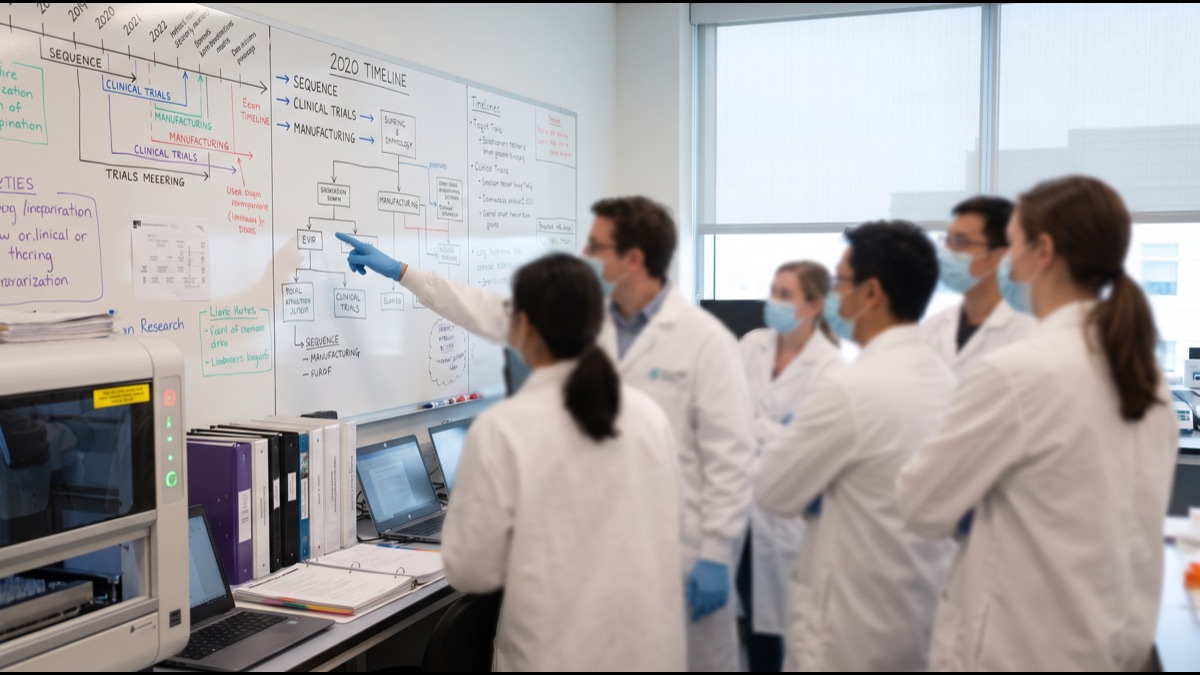
To most of the public, mRNA vaccine technology seemed to materialize almost overnight, developed, tested, and approved for widespread use in a fraction of the time vaccines had historically taken to reach the public. That speed understandably raised questions and skepticism for many people, since the traditional vaccine development timeline had long been measured in years or even decades rather than months, and a sudden acceleration on that scale naturally invited scrutiny about what corners, if any, might have been cut along the way.
The reality is considerably more reassuring, and arguably more interesting, than a simple story of rushed development. The speed was real, but it wasn't achieved by skipping standard safety steps; it was achieved because a huge amount of the foundational scientific groundwork had already been quietly built over several prior decades, positioning researchers to move unusually fast once the specific target and urgent need arrived.
What mRNA Actually Is
Messenger RNA, or mRNA, is a molecule that cells throughout the body use constantly and naturally as part of normal, everyday biological function, essentially serving as a temporary set of instructions copied from a cell's DNA and carried to the cellular machinery responsible for building proteins, the fundamental molecules that carry out nearly every function within the body.
In ordinary biology, a cell's DNA remains safely stored within its nucleus, while mRNA acts as a disposable working copy of a specific set of genetic instructions, delivered to the protein-building machinery, used briefly, and then broken down and recycled by the cell within a matter of hours to days, a natural process that happens constantly in every cell throughout the human body.
mRNA vaccines work by introducing a carefully designed synthetic mRNA sequence into cells, instructing them to temporarily produce a single specific, harmless viral protein, which the immune system then learns to recognize and respond to, building the immunological memory needed to mount a much faster and stronger defense if it later encounters the actual virus that protein came from.
Why This Approach Differs From Older Vaccine Technology
Traditional vaccine approaches have generally relied on either weakened or inactivated versions of an actual virus, or on isolated viral proteins produced through more complex and time-consuming biological or chemical manufacturing processes, both of which require growing significant quantities of virus or cultured cells, a process that can take many months and is difficult to scale rapidly on short notice.
mRNA vaccine technology sidesteps that lengthy biological manufacturing bottleneck almost entirely, since the vaccine itself doesn't require growing any actual virus at all. Instead, once researchers know a virus's genetic sequence, the corresponding mRNA can be synthesized directly through a comparatively fast, largely chemical manufacturing process, which is one of the central reasons this platform can move from a target sequence to a testable vaccine candidate so much faster than older methods.
This fundamental manufacturing difference is what made mRNA technology particularly well suited to a fast-moving public health emergency specifically, since the same underlying production process and infrastructure can, in principle, be quickly redirected to target a new or different virus simply by swapping in a new genetic sequence, without needing to rebuild the entire manufacturing pipeline from the ground up each time.
Decades of Prior Research Made the Speed Possible
The foundational scientific research behind mRNA vaccine technology actually stretches back several decades before its first widespread public use, with early laboratory work exploring the basic feasibility of using synthetic mRNA to direct protein production inside living cells beginning in earnest as far back as the 1990s, long before there was any specific public health emergency driving that research forward.
For much of that period, mRNA-based approaches faced serious practical obstacles that limited their use to laboratory research settings rather than real-world medical applications, particularly around the molecule's natural instability outside a cell and the tendency of the immune system to react to injected raw synthetic mRNA in ways that caused unwanted inflammation rather than the specific, targeted immune response researchers were actually trying to achieve.
Persistent, often underfunded research work across multiple academic labs over roughly two subsequent decades gradually solved these core problems one at a time, developing chemical modifications to the mRNA molecule itself that reduced unwanted immune reactions, alongside separate advances in the lipid nanoparticle delivery systems needed to protect fragile mRNA and successfully carry it into human cells intact.
The Lipid Nanoparticle Problem and How It Was Solved
Raw, unprotected mRNA is an extremely fragile molecule that breaks down almost immediately when exposed to enzymes naturally present throughout the human body, meaning that simply injecting synthetic mRNA directly into a person without any protective delivery mechanism would result in the molecule being destroyed before it could ever reach and enter target cells in meaningful quantities.
The solution researchers eventually developed involves encasing the fragile mRNA inside microscopic lipid nanoparticles, tiny fatty spheres that both physically shield the mRNA from immediate enzymatic breakdown and, importantly, also help the molecule successfully cross a cell's outer membrane to actually deliver its genetic instructions to the interior of the cell where they can be used.
Developing lipid nanoparticle technology to the point of being reliable, consistent, and safe enough for use in humans took years of dedicated pharmaceutical engineering research in its own right, conducted largely independently of mRNA vaccine research specifically, since lipid nanoparticles also had separate, valuable applications in delivering other types of genetic therapies being developed around the same general period.
How Prior Outbreaks Provided a Crucial Head Start
Several smaller viral disease outbreaks in the years leading up to the major pandemic that ultimately brought mRNA vaccines to widespread public attention had already prompted various research groups to begin actively testing mRNA vaccine platforms against a range of other, related viral targets, building up meaningful practical experience with the technology well before it was needed at true global scale.
This earlier, smaller-scale outbreak-driven research meant that by the time researchers needed to rapidly develop a vaccine against an entirely new viral threat, the core mRNA vaccine platform itself was no longer a purely theoretical, untested concept, but rather a technology that had already been trialed, refined, and meaningfully de-risked to some real degree in prior, smaller research and clinical efforts.
This head start is a large part of why development could move so quickly once the new specific viral genetic sequence became available to researchers worldwide: the underlying vaccine platform and manufacturing process were essentially already built and proven to some extent, meaning developers primarily needed to substitute in a new target sequence rather than invent an entirely new vaccine technology completely from scratch under severe, unprecedented time pressure.
Why Clinical Trial Phases Overlapped Instead of Running Sequentially
Under conventional vaccine development timelines, the standard three phases of human clinical trials are typically conducted sequentially, one after another, with each successive phase only beginning once the previous phase's full results have been completed, thoroughly analyzed, and reviewed by regulators, a sequential structure that adds considerable additional calendar time to overall development even when each individual phase itself moves reasonably efficiently.
During the accelerated development effort, regulators in several countries specifically authorized a shift toward running trial phases with substantial, deliberate overlap instead, allowing later-phase trials to begin once earlier-phase data reached a sufficient, predetermined safety and efficacy threshold, rather than requiring one phase to be fully and completely finished before the next could formally begin.
This overlapping structure meaningfully compressed the overall calendar timeline without actually reducing the total amount of safety and efficacy data ultimately collected and reviewed before any vaccine received emergency or full regulatory authorization for use, since every one of the same required trial phases and data checkpoints was still fully completed, just organized and scheduled considerably more efficiently in parallel rather than in a rigid, sequential order.
Why Manufacturing Began Before Trials Had Fully Finished
One of the more genuinely novel and financially unusual aspects of the accelerated development effort involved manufacturers beginning large-scale vaccine production well before clinical trials had actually concluded and while full regulatory approval remained genuinely uncertain, representing a substantial, deliberate financial risk normally avoided entirely under conventional vaccine development and commercial timelines.
This unusual at-risk manufacturing approach was made possible in large part through significant government funding and advance-purchase commitments specifically designed to absorb that financial risk on behalf of individual manufacturers, allowing companies to begin building manufacturing capacity and stockpiling finished doses in genuine parallel with the clinical trial process instead of waiting until formal regulatory approval before starting production from a standing start.
Had trials ultimately failed at some point along the way, all doses manufactured in advance under this arrangement would simply have been discarded entirely, representing a substantial and deliberate sunk cost; the fact that trials succeeded meant that meaningful vaccine supply was already sitting ready to distribute essentially immediately once formal regulatory authorization was actually granted, rather than manufacturing having to begin entirely from scratch only afterward.
The Role of Emergency Regulatory Pathways
Regulatory agencies in multiple countries made active use of existing emergency authorization pathways that allowed vaccines to be approved for use based on a substantial but technically still-accumulating body of safety and efficacy data, rather than requiring the full, complete, and typically much longer dataset conventionally required for standard, full, non-emergency regulatory approval.
These specific emergency pathways weren't newly invented for this particular situation; they had already existed within most national regulatory frameworks for years prior specifically to handle genuine public health emergencies, but they had rarely been used at this particular scale or level of public visibility and scrutiny before this specific global health crisis brought them into the spotlight.
Regulators emphasized at the time, and have continued to emphasize since, that emergency authorization pathways still require meeting clearly defined, substantial safety and efficacy thresholds; the process moves faster primarily because of parallel review procedures, prioritized regulatory staffing and resources, and rolling data submission from manufacturers, not because the required underlying evidentiary safety bar itself was meaningfully lowered in any way.
How Unprecedented Global Funding Accelerated Every Stage
The overall level of public and private funding directed toward vaccine research and development during this specific period was genuinely unprecedented in modern medical history, with governments, private foundations, and pharmaceutical companies collectively investing sums far beyond what vaccine development for a single new pathogen had ever previously received in such a compressed timeframe.
This dramatically elevated funding level allowed multiple different vaccine platforms and candidate approaches to be pursued fully and genuinely in parallel rather than sequentially, meaning that if any single specific technology or approach had ultimately failed at some point along the way, several other credible backup candidates were already well underway simultaneously rather than development having to restart entirely from the beginning.
Funding on this scale also directly enabled manufacturers to build and expand physical production facilities well ahead of confirmed demand, hire and train significantly larger dedicated research and production teams, and run multiple large clinical trial sites fully in parallel across many different countries simultaneously, all factors that meaningfully compressed the overall development and rollout timeline considerably.
What the Real-World Data Since Then Has Shown
In the years since initial widespread public rollout, an enormous volume of real-world safety and effectiveness data has been collected from hundreds of millions of vaccine doses administered globally, providing a substantially larger and more statistically robust dataset than even the largest individual clinical trials alone were able to generate during the initial, compressed development period.
This large-scale post-authorization safety monitoring has allowed regulators and independent researchers worldwide to identify and characterize even quite rare side effects that wouldn't necessarily have appeared within the smaller populations enrolled in the original clinical trials, demonstrating that the ongoing safety monitoring and surveillance system continued functioning actively and effectively well beyond the point of initial emergency authorization itself.
The accumulated real-world data has generally continued to support the original favorable safety and effectiveness profile established during the initial, accelerated clinical trial process, reinforcing that the underlying scientific evidence supporting these vaccines has been consistently reaffirmed by a much larger, more diverse, and more statistically powerful body of ongoing real-world evidence collected over an extended period since initial authorization.
How This mRNA Platform Is Now Being Applied Beyond Its Original Use
Having proven the underlying mRNA vaccine platform genuinely works at real global scale, researchers are now actively applying the same fundamental core technology to develop candidate vaccines targeting several entirely different viral and non-viral diseases, leveraging the platform's fundamental core speed and flexibility advantages for a considerably broader range of potential medical applications well beyond its original specific use case.
Some of the most actively watched current research applications involve using mRNA technology to develop highly personalized cancer treatment vaccines, designed to train an individual patient's own immune system to specifically recognize and attack the unique genetic mutations present within that particular patient's own tumor cells, an approach that would have been genuinely impractical using older, slower, more traditional vaccine manufacturing methods.
This broader expansion into new applications well beyond the original use case is widely viewed within the scientific and medical research community as one of the most significant and lasting long-term legacies of the accelerated development period, since it means the underlying core research and manufacturing infrastructure investment made during that period continues actively paying meaningful dividends across an expanding range of otherwise unrelated medical fields today.
Addressing the Persistent "Rushed" Perception Directly
The lingering public perception that development moved dangerously or recklessly fast primarily stems from an understandable but ultimately mistaken assumption that the entire scientific and technological process began from a true blank slate at the exact moment the new specific public health emergency was first identified, when in fact the vast majority of the truly foundational underlying scientific groundwork had already been quietly completed well over the preceding two decades.
A more genuinely accurate framing describes the process as an unusually fast final integration and deployment phase built directly on top of a very long, patient, and largely unglamorous prior period of foundational basic research, rather than an entirely novel technology being invented, tested, and deployed all within the span of a single compressed year under severe time pressure.
Public health communicators and independent researchers have continued actively working since then to explain this longer underlying scientific timeline more clearly and accessibly, since understanding the genuine decades-long history behind the technology directly addresses much of the specific skepticism that understandably stemmed from the surface-level, but ultimately misleading, appearance of a single sudden, unexplained scientific breakthrough.
The speed with which mRNA vaccines moved from a research concept into widespread public use was genuinely remarkable, but it wasn't the product of skipped safety steps or reckless shortcuts through the standard, established scientific process. It was the product of several converging, largely independent factors: decades of quiet, patient, and often underfunded foundational research into mRNA biology and delivery technology, valuable practical experience gained from smaller prior outbreak-driven vaccine research efforts, deliberately overlapping rather than strictly sequential clinical trial phases, financially risky at-risk manufacturing undertaken well before trials had concluded, existing emergency regulatory pathways applied at an unprecedented scale, and a genuinely unprecedented level of coordinated global funding across public and private institutions alike. Understanding that fuller, more accurate picture doesn't just help explain one specific historic vaccine development effort after the fact; it also helps clarify why mRNA technology is now being actively and rapidly extended toward entirely new medical applications well beyond its original use, from highly personalized cancer treatments to a growing range of other infectious diseases. The foundational scientific and manufacturing groundwork built and proven during that intensely accelerated period didn't simply disappear once the immediate global public health emergency passed; it became a durable, lasting platform that medical researchers around the world continue actively building on today.
Sources
- Wikipedia — overview of mRNA vaccine technology, history, and development
- World Health Organization — global public health guidance on vaccine development and safety monitoring
- U.S. Food and Drug Administration — regulatory information on vaccine authorization pathways
- National Institutes of Health — background on foundational mRNA and immunology research
- Nature — peer-reviewed scientific research on mRNA vaccine platforms
FAQ
Did mRNA vaccine research really start decades before it became widely known?
Yes — foundational research into using synthetic mRNA to direct protein production began as far back as the 1990s, long before any specific recent public health emergency.
Does mRNA vaccine technology require growing an actual virus?
No — once a virus's genetic sequence is known, the corresponding mRNA can be synthesized through a largely chemical process, avoiding the lengthy biological manufacturing that older vaccine methods require.
Why did manufacturing begin before clinical trials had finished?
Governments and institutions funded at-risk manufacturing to absorb the financial risk, allowing production to run in parallel with trials rather than waiting for full approval before starting.
Were safety standards lowered to speed up approval?
No — regulators have emphasized that emergency authorization pathways still require meeting the same substantial safety and efficacy thresholds, with speed coming from parallel review and rolling data submission instead.
Is mRNA technology only used for the vaccine it became famous for?
No — researchers are now applying the same platform to develop candidate vaccines and treatments for several other diseases, including personalized cancer treatment vaccines.
About the Author
We reference Wikipedia, World Health Organization, U.S. Food and Drug Administration, National Institutes of Health, and Nature to explain the background and current understanding of this topic.
Loved This Article?
Share it on WhatsApp → Share it on WhatsApp
Get more guides in your inbox — Subscribe to our newsletter for weekly surprising stories from Egypt, Saudi Arabia, Dubai, and beyond.