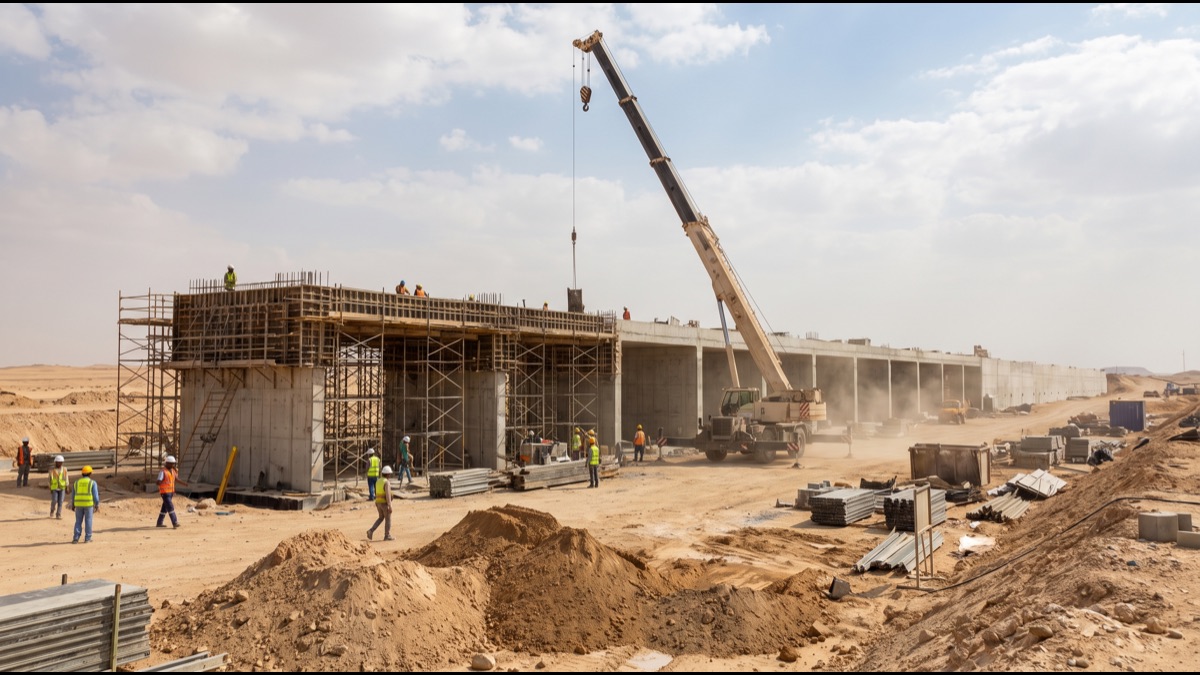
When Saudi Arabia unveiled The Line in 2021, the pitch was startling even by megaproject standards: a single mirrored building 170 kilometers long, 200 meters wide, and 500 meters tall, housing up to nine million residents inside a car-free, fully AI-managed vertical city carved through the desert and mountains of northwest Saudi Arabia. Years into construction, the project's actual progress looks considerably more modest and more complicated than the original renderings suggested, with reporting describing a substantially scaled-back near-term scope, revised population expectations, and construction that remains, by any account, in its early stages relative to the project's full original ambition. Understanding what has genuinely been built, what has been rescoped, and what remains speculative is the clearest way to judge where The Line actually stands today.
The Original Vision: A 170-Kilometer Mirrored City
Crown Prince Mohammed bin Salman unveiled The Line in January 2021 as the centerpiece of NEOM, describing a linear city with no cars, no streets, and no carbon emissions, where residents would have access to all daily necessities within a five-minute walk and could traverse the entire 170-kilometer length via a high-speed underground transit line in roughly 20 minutes.
The concept broke sharply from conventional urban planning by proposing a single continuous structure rather than a sprawling city footprint, with officials arguing the design would preserve 95 percent of the surrounding natural land by building vertically and linearly instead of horizontally across the desert.
Renderings depicted twin mirrored towers running the full 170-kilometer length, reflecting the surrounding mountains and sky, an aesthetic choice that became the project's most recognizable visual signature well before any structure existed on the ground.
Where The Line Fits Inside NEOM and Vision 2030
The Line is the flagship residential and urban component of NEOM, the roughly $500 billion giga-region project in Saudi Arabia's Tabuk province that also includes the industrial city of Oxagon, the mountain tourism destination Trojena, and the luxury island development Sindalah.
NEOM itself sits within Saudi Arabia's broader Vision 2030 economic diversification strategy, conceived as a demonstration of the Kingdom's ability to build an entirely new economic and urban model less dependent on oil revenue, with The Line specifically positioned as proof that radically different urban design could work at scale.
Because The Line carries so much of NEOM's public visibility and branding, its construction pace has become something of a bellwether that outside observers use to gauge the credibility of Saudi Arabia's broader giga-project timeline commitments.
Groundbreaking and Early Construction Milestones
Site preparation and early excavation work began in 2022, with construction contracts awarded to major international engineering and construction firms for foundational work, utility corridors, and the initial structural segments of the project.
Early construction focused on a starting segment rather than simultaneous work across the full 170-kilometer length, a phased approach consistent with how large linear infrastructure projects are typically sequenced, though the specific pace and scope of that initial segment has been the subject of extensive independent reporting and satellite imagery analysis.
Supporting infrastructure, including desalination facilities, workforce accommodation, access roads, and utility trenching, has been visible in satellite imagery well ahead of the iconic mirrored structure itself, reflecting the reality that a project of this scale requires substantial preparatory infrastructure before its signature architecture becomes visible.
The Engineering Challenge of Building a Structure This Long
Constructing a single continuous 500-meter-tall structure spanning 170 kilometers presents engineering challenges with few direct precedents anywhere in the world, including seismic considerations, thermal expansion across such an extreme length, and the logistics of moving materials and workers along a construction corridor that long.
The mirrored glass facade concept alone requires manufacturing and installing an enormous surface area of climate-resistant reflective glazing capable of withstanding desert heat, sandstorms, and decades of structural movement, a materials and installation challenge distinct from anything in conventional high-rise construction.
Independent engineers and architecture critics have periodically raised questions about aspects of the original concept's feasibility at full scale, including ventilation, natural light distribution deep within such a tall, narrow structure, and the practicality of the proposed high-speed underground transit system running the entire length.
Why Reports Describe a Sharply Scaled-Back Near-Term Scope
Reporting from international outlets beginning around 2024 described internal reassessments within NEOM's leadership regarding the project's near-term construction targets, citing cost overruns, execution challenges, and a broader recalibration of what could realistically be delivered by the original target dates.
Multiple reports indicated the initially built and near-term operational section of The Line was expected to cover a small fraction of the full 170-kilometer vision, with the complete structure pushed to a considerably later and less specific timeframe rather than the originally implied completion window.
Saudi officials have generally not disputed that construction pacing has been adjusted, framing changes as normal megaproject scope management rather than an abandonment of the underlying vision, while declining to commit to a fully revised public timeline for the structure's complete length.
The Revised Population Targets Explained
Original NEOM planning documents and public statements referenced population targets in the range of 1.5 million residents by 2030 and up to 9 million at full build-out, figures widely cited in early international coverage of the project's ambition.
Subsequent reporting described internal NEOM projections revised sharply downward for the 2030 near-term target, to a figure reported in some outlets as closer to a few hundred thousand residents rather than 1.5 million, reflecting the construction slowdown on the initial built segment.
NEOM's official communications have generally continued to reference the project's long-term ambitions without publicly confirming specific revised population figures, leaving much of the detailed timeline and target information in the public domain sourced primarily to investigative reporting rather than official NEOM statements.
How the Mirrored Facade and Modular Construction Actually Work
The Line's construction approach has relied on prefabricated modular components manufactured off-site and assembled at the construction corridor, an approach intended to accelerate the build relative to fully on-site construction methods for a project of this unusual scale.
The mirrored facade system uses large-format glass and metal composite panels engineered for structural performance and reflectivity simultaneously, with panel installation proceeding section by section along the built portion of the structure rather than across the full eventual length at once.
Construction contractors involved in the project have included major international engineering firms with experience in large-scale infrastructure and high-rise construction, brought in specifically for expertise in the unusual combination of linear infrastructure and vertical building techniques the design requires.
Financing The Line: The Public Investment Fund's Role
NEOM, including The Line, is financed primarily through Saudi Arabia's Public Investment Fund, the sovereign wealth fund chaired by Crown Prince Mohammed bin Salman that serves as the central financing vehicle for the Kingdom's Vision 2030 giga-projects.
As construction costs for NEOM's various components have grown beyond original estimates, reporting has described discussions around supplementing PIF capital with additional debt issuance and efforts to attract international co-investors for specific NEOM components, part of a broader financing strategy adjustment across Saudi Arabia's giga-project portfolio.
The overall NEOM project's total cost has been estimated in various reports well beyond the originally cited $500 billion figure, with The Line representing one of the largest individual cost components within that broader budget given its unprecedented engineering requirements.
Workforce, Labor Conditions, and Construction Camps
Construction on The Line has employed a large international workforce housed in dedicated worker accommodation facilities built specifically to support the project, a common model for large Gulf infrastructure projects that rely heavily on migrant labor from South Asia and other regions.
International labor rights organizations have periodically raised concerns about working and living conditions on NEOM construction sites, concerns Saudi officials and NEOM's own communications have generally responded to by citing labor standards and worker welfare programs specific to the project.
The scale of the workforce required for a project of this size has itself been cited in reporting as one practical factor behind the project's rescoped near-term timeline, alongside the broader financing and engineering considerations.
The Spine Metro and The Line's Transport Concept
The original transport concept for The Line centered on a high-speed underground rail line, sometimes referred to as the Spine, intended to move residents along the full 170-kilometer corridor in approximately 20 minutes, a speed and scale without precedent in existing urban rail systems worldwide.
Engineering such a transit system requires tunneling and rail infrastructure matching the pace and scope of the above-ground structure itself, meaning the transit system's construction timeline is directly tied to the same rescoping and phasing decisions affecting the rest of the project.
Early construction phases have understandably prioritized foundational structure and habitable space over the full transit system, meaning near-term residents of any completed initial segment would likely depend on more conventional transport options until a fuller transit build-out is completed.
Displacement of the Howeitat Tribe and Ongoing Criticism
Construction of The Line has required the relocation of members of the Howeitat tribe, an indigenous community with generations of history in the region NEOM occupies, a displacement that has drawn sustained international human rights criticism and, in one widely reported case, led to a fatal confrontation with Saudi security forces.
Saudi authorities have stated that affected residents were offered compensation and relocation support as part of the broader NEOM development process, while human rights organizations and some affected community members have disputed the adequacy and voluntariness of those arrangements in public statements and legal actions.
This displacement issue has remained one of the most consistently cited criticisms of The Line specifically and NEOM broadly in international human rights and investigative journalism coverage of the project throughout its construction period.
How The Line Compares to NEOM's Other Sub-Projects
Within NEOM's broader portfolio, other components including Trojena, the planned mountain destination for the 2029 Asian Winter Games, and Sindalah, a smaller luxury island resort, have in some reporting appeared to progress on more conventional and verifiable construction timelines than The Line's unprecedented linear structure.
Oxagon, NEOM's planned floating industrial and port city, faces its own distinct engineering and financing challenges as one of the world's few proposed floating industrial structures at this scale, though it has generally drawn less intense scrutiny than The Line given The Line's much larger public profile and residential ambitions.
Analysts covering the broader NEOM project have generally suggested The Line's scale and technical novelty make it the single most execution-risky component of the giga-region, a assessment consistent with the disproportionate share of critical reporting the project has attracted relative to NEOM's other sub-projects.
What Independent Analysts and Satellite Imagery Have Shown
Commercial satellite imagery analyzed by independent researchers and journalists has been used repeatedly to track visible construction progress along The Line's corridor, generally showing substantial earthworks, foundation work, and supporting infrastructure alongside a built structural footprint considerably shorter than the eventual 170-kilometer vision.
This satellite-based tracking has become one of the primary independent sources of information about the project's actual pace, given that NEOM's own public communications have generally emphasized long-term vision and selected progress milestones rather than detailed, regularly updated construction metrics.
Independent infrastructure analysts have generally described the visible progress as genuine but consistent with the reported rescoping, cautioning against both dismissing the project as vaporware and taking the original 2030 timeline and scale at face value.
Common Misconceptions About The Line's Progress
A common misconception is that The Line has been entirely canceled or abandoned; available reporting and satellite evidence indicate construction is genuinely ongoing, even as the near-term scope and completion timeline have been significantly revised from the original 2021 announcement.
Another misconception assumes the full 170-kilometer mirrored structure already exists in some substantial form; built and under-construction sections represent a small fraction of that eventual length, with the vast majority of the originally envisioned structure not yet under active construction.
A third misconception treats the population target revision as evidence the entire NEOM giga-region has failed; the revision applies specifically to The Line's near-term 2030 occupancy figures rather than necessarily reflecting the trajectory of NEOM's other sub-projects or the broader region's eventual long-term ambitions.
How The Line Compares to NEOM's Other Sub-Projects
The Line represents the most controversial and heavily covered project within the broader NEOM region, but it is not the only one under development; the region also includes Oxagon, an industrial and logistics hub, Trojena, a mountain ski resort, and Sindalah, a Red Sea tourism island, each with a different scope and engineering ambition than The Line itself.
These other sub-projects have shown varying rates of progress, with some independent reporting suggesting a few are tracking closer to realistic timelines than The Line specifically, indicating The Line's unique engineering and financing challenges, the unprecedented mirrored vertical structure, may be a factor specific to that project rather than necessarily reflecting the trajectory of the entire NEOM region.
Economic analysts view the Public Investment Fund's continued parallel funding of these multiple projects, despite The Line's rescoping, as reflecting a broader Saudi commitment to the economic diversification strategy under Vision 2030, rather than the overall success of NEOM being tied to the fate of any single project, however media-prominent.
The Line today sits in a genuinely difficult-to-summarize middle ground: neither the fully realized 170-kilometer mirrored megacity of the original 2021 renderings, nor an abandoned or purely speculative concept. Real construction, real financing through the Public Investment Fund, and real, unresolved human rights criticism over the Howeitat displacement all coexist alongside a substantially rescoped near-term build and population target that independent reporting suggests looks considerably more modest than what Saudi Arabia originally promised the world.
Sources
- NEOM Official Site — Official project communications and vision documents for The Line and NEOM broadly.
- Saudi Public Investment Fund — Financing structure and giga-project portfolio information.
- Reuters — Middle East — Independent investigative reporting on NEOM construction timelines and scope changes.
- Human Rights Watch — Reporting and analysis on the Howeitat tribe displacement and NEOM labor conditions.
- Bloomberg — Financial and construction-progress reporting on NEOM and The Line.
FAQ
How long will The Line actually be when finished?
The original plan called for a full 170-kilometer structure, but reporting since 2024 has indicated the initially operational and near-term-built section is expected to cover only a small fraction of that length, with the full-length build pushed to a much later, unspecified date.
Has NEOM's population target for The Line changed?
Yes, reporting has indicated NEOM's near-term population expectations for 2030 were revised sharply downward from the original multi-million figure to a much smaller number, reflecting the construction slowdown and rescoping.
Who is paying for The Line?
Financing runs primarily through Saudi Arabia's Public Investment Fund, supplemented by debt issuance and, more recently, discussions around attracting additional international co-investors as construction costs and timelines have grown.
Why did The Line's design and scope change from the original vision?
Reported design and scope adjustments followed a combination of engineering challenges tied to the structure's unprecedented scale, cost overruns, and a broader reassessment of realistic near-term construction targets across NEOM's giga-project portfolio.
Is any part of The Line actually built yet?
Foundation and early structural work has been underway on an initial segment since construction began, alongside supporting infrastructure like workforce housing, desalination, and roads, though the iconic full mirrored facade concept remains substantially under construction rather than complete.
About the Author
We reference NEOM's official communications, Saudi Arabia's Public Investment Fund, Reuters Middle East reporting, Human Rights Watch, and Bloomberg to explain the background and current understanding of this topic.
Loved This Article?
Share it on WhatsApp → Share it on WhatsApp
Get more guides in your inbox — Subscribe to our newsletter for weekly surprising stories from Egypt, Saudi Arabia, Dubai, and beyond.