What Is NEOM?
Imagine a city powered entirely by renewable energy. No traditional cars. No carbon emissions. Technology that exceeds what we know today. This is not science fiction. This is the NEOM project — one of the largest urban development projects in human history, located on the land of the Kingdom of Saudi Arabia.
If you are asking: what is NEOM and why is everyone talking about it? You are in the right place. This guide answers every question on your mind, with numbers and facts only, without exaggeration or empty marketing.
We will cover the project's history from the beginning, examine every sub-city, discuss the cost and timeline, and look at the challenges and opportunities. This is your guide to understanding, not just admiring.
What Is NEOM Exactly?
NEOM is a massive development project located in northwestern Saudi Arabia, along the Red Sea coast. It covers an area of up to 26,500 square kilometers — larger than countries like Qatar and Bahrain combined. The project aims to build an integrated urban community powered by renewable energy and advanced technologies.
NEOM is not a single city. It is a development region that includes multiple cities and specialized projects. The project is part of Saudi Vision 2030, and represents a radical shift in urban planning and sustainable development thinking.
Announced in 2017, some sub-projects have already begun construction on the ground. However, the entire project is planned to be completed in phases extending over decades. The name "NEOM" derives from the Greek word "neo" (new) and the Arabic letter "M" representing the future (from Mustaqbal). But the official explanation does not change the physical reality: it is a place that wants to be built from scratch with the latest human technologies.
The core idea of NEOM goes beyond construction. It extends to a new lifestyle experiment: a city managed by artificial intelligence, using robots for services, and allowing residents to access everything within a few minutes. This level of planning has never been tested at this scale before.
Where Is NEOM Located?
The NEOM project is located in northwestern Saudi Arabia, along the Red Sea coast. It is bordered by Jordan and Egypt to the north, and the Gulf of Aqaba to the east. It includes the coastline from Tabuk southward to the Jordanian border.
The location features three critical geographic elements:
- Red Sea Coast: Provides deep-water ports and clear waters suitable for tourism and maritime trade.
- Coastal Mountains: Offer topographic diversity and potential for mountain tourism.
- Vast Desert: Provides ample space for development without constraints.
The site also sits on global trade routes between Asia, Europe, and Africa, making it strategically important economically. It can serve as a maritime bridge between the Suez Canal and East Asia, providing an alternative route for international trade. This location allows NEOM to become a strategic hub for shipping and commerce, especially with the development of deep-water ports within Oxagon.
The Sub-Projects of NEOM
The Line
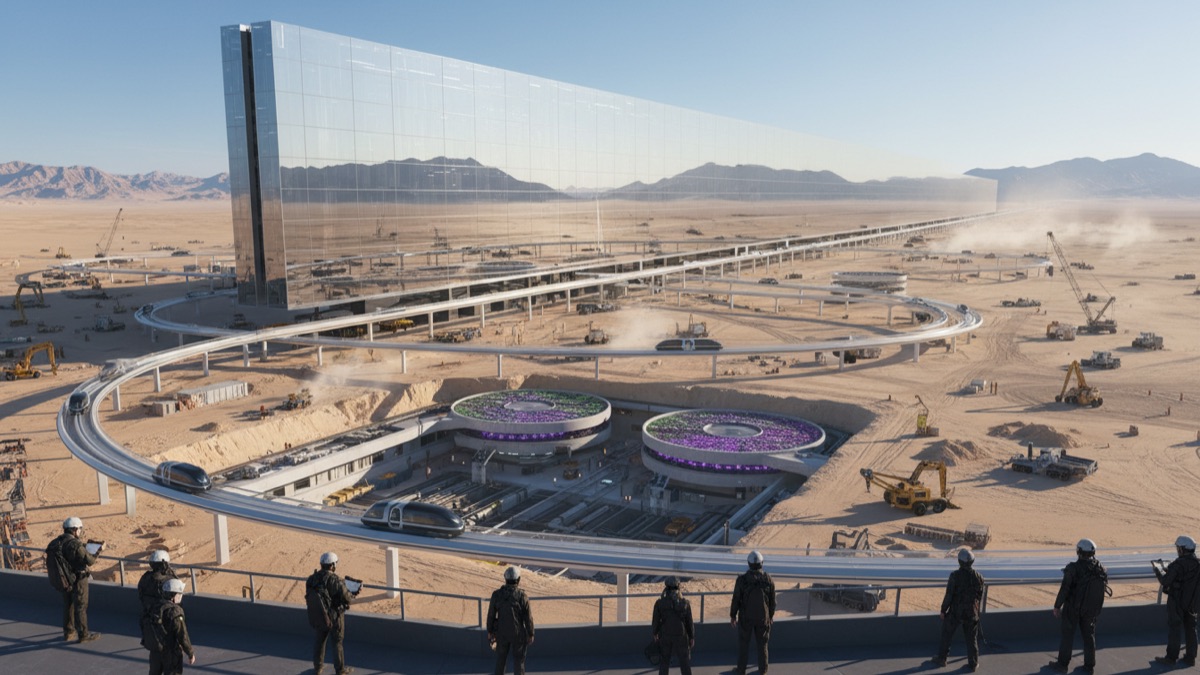
The Line is the most controversial and talked-about project. It is planned as a linear city 170 kilometers long, 500 meters tall, and only 200 meters wide. It is designed to house 9 million people, run entirely on renewable energy, and operate without traditional cars. Instead, residents travel via a high-speed train that takes no more than 20 minutes from end to end.
The design of The Line is unique: everything is vertical. Homes, offices, gardens, schools, and hospitals are all built in layers above one another. The distance between any two points in The Line will not exceed a 5-minute walk. This means a life without cars, without traffic, and without pollution.
The city is designed to be managed entirely by an intelligent system. Electricity will come from renewable sources. Water will be recycled. Waste will be converted to energy. Buildings will be constructed using environmentally friendly materials. This level of integration between planning and technology is what makes The Line a unique project, but also the most difficult to execute.
Does it sound hard to believe? Yes, which is why it generates so much discussion. But the project is actually advancing: excavation work has begun, and some phases have been accelerated. However, final numbers may change over time. Some observers question the feasibility of building a city at this scale in this timeframe. But the actual progress is undeniable.
Oxagon
Oxagon is a planned industrial and logistics hub shaped like an octagon, located on the Red Sea. It aims to be the world's largest renewable energy-powered industrial center. It combines manufacturing, shipping, and storage in one place, relying on maritime ports and connection to the rest of NEOM.
Oxagon is planned to be a center for advanced industries: renewable energy, biotechnology, digital manufacturing, and robotics. It is expected to host a deep-water port capable of receiving the world's largest commercial vessels. The octagonal design allows ships to enter from one side and exit from the opposite side, reducing waiting time and logistics costs.
The targeted industries in Oxagon are not traditional. There are plans for solar power plants, battery storage facilities, advanced materials, and robotics technologies. This means Oxagon will not be just an industrial zone, but a laboratory for future manufacturing. Companies that settle there will benefit from cheap energy, strategic location, and integrated infrastructure.
Trojena
Trojena is a mountain tourism and sports region, located at altitudes exceeding 1,500 meters above sea level. It is planned to be a winter destination with natural and artificial skiing, and international sports events. NEOM has already hosted international sports tournaments in Trojena, proving that the project is not just on paper.
Trojena targets international tourism primarily. It plans to host world-class sports events, music festivals, and conferences. The climate in the mountains differs from the plain: temperatures drop significantly in winter, allowing natural snow formation in some seasons. This means Trojena could become a real winter destination for the region, not just an artificial snow resort.
Sindalah
Sindalah is a luxury island destination on the Red Sea, designed for yacht tourism and diving. It features resorts, marinas, and retail spaces. Some facilities in Sindalah have already begun receiving visitors, making it "the first island" to open in NEOM.
Sindalah is the most advanced project so far. If you want to see NEOM with your own eyes, Sindalah is the closest place to reality. The island offers luxury experiences for yachts, diving, and water sports. It represents the model that NEOM seeks to replicate in other areas: a sustainable, high-quality tourism experience. The resorts in Sindalah are designed with architectural styles that respect the marine environment, using local materials and technologies that reduce environmental impact.
Leyja
Leyja is a protected natural area planned for sustainable development, with hotels designed in architectural styles that harmonize with the desert environment. The goal is to attract tourists seeking authentic natural experiences. It includes surrounding mountains, rocky valleys, and desert plants that adapt to the harsh climate.
Leyja represents a different approach: instead of building everything from scratch, it invests in the existing natural environment. This attracts a different type of tourist: those interested in hiking, climbing, meditation, and photography. It is also an opportunity to study the Saudi desert environment up close. The hotels in Leyja are designed to be part of the landscape, not to replace it.
The Cost and Timeline
This is the question everyone is searching for. Official estimates indicate that the NEOM project will require investments reaching $500 billion USD over decades. But it is important to understand that these numbers are flexible and change with developments.
- Saudi Investments: Funded by the Public Investment Fund (PIF), the Kingdom's sovereign wealth fund.
- International Partnerships: NEOM is conducting talks with investors and developers from the United States, China, Japan, and Europe.
- Private Sector: The private sector is planned to participate in financing and operating many sub-projects.
But not all this money is expected to be spent at once. The project is being implemented in phases, and some say that some phases may be canceled or modified based on economic evaluations. Financing requires sustained political stability and international confidence. In a world where economic and geopolitical conditions change rapidly, the financing schedule may be affected by global market fluctuations.
Some economic reports suggest that The Line alone could cost more than $100 billion. This means infrastructure costs for transportation, energy, and water are inflating rapidly. In contrast, proponents argue that the project will generate long-term investment returns through tourism, industry, and technology. They point out that similar projects in other countries started with high costs and became profitable over time.
Why NEOM Matters
Regardless of your opinion on the project's feasibility, NEOM Saudi Arabia represents a turning point in the Kingdom's development thinking. It goes beyond being just a real estate project to:
- New Urban Experiment: NEOM tests governance, legislation, and energy models that have never been tried at this scale before.
- Economic Diversification: Reduces dependence on oil and builds new sectors: tourism, technology, industry, and logistics.
- Job Creation: Aims to create hundreds of thousands of jobs for Saudis and residents.
- Regional Balance: Develops northern Saudi regions that have historically been less developed.
NEOM also sends a message to the world: that Saudi Arabia is investing in its future and wants to be part of the new global economy. This is not an abandonment of oil, but an addition of new sectors that make the economy more flexible and sustainable. In the context of Saudi Vision 2030, NEOM is one of the pillars that demonstrate the Kingdom's commitment to comprehensive economic and developmental transformation.
Environmental Considerations
One of the most exciting aspects of the NEOM project is its declared commitment to environmental sustainability. The city is planned to run entirely on renewable energy: solar, wind, and advanced storage technologies. This means zero carbon emissions in city operations.
But the environmental challenge goes beyond energy. Building in a sensitive desert environment requires protecting coral reefs, wildlife, and biodiversity. The NEOM project is located near areas of global environmental importance, so any construction must be carefully calculated.
NEOM is planned to be a showcase for green technology. From smart buildings that automatically manage energy consumption, to water recycling systems, to electric transportation. These technologies are not new, but applying them at this scale is what makes NEOM a unique experiment. If it succeeds, it will be a model for future cities around the world.
Challenges and Realities
We cannot talk about NEOM without mentioning the challenges. Any project of this size faces obstacles:
- Rising Costs: Some estimates suggest that actual costs may significantly exceed the announced budget.
- Timeline: Early phases may be delayed due to engineering and logistical complexities.
- Environmental Sustainability: Building in a sensitive desert environment requires extreme caution to protect coral reefs and marine life.
- Attracting Residents: Building a city is one thing, but attracting millions of people to live in it is another challenge.
- Geopolitical Changes: International relations and the global economy may affect the flow of foreign investment.
But these challenges do not mean the project is impossible. They only confirm that NEOM needs precise management, flexible planning, and periodic evaluation of goals.
Economic Opportunities
NEOM represents a real opportunity for Saudi youth. The project is planned to create hundreds of thousands of jobs in diverse fields:
- Construction and Engineering: Opportunities for engineers, architects, and technicians.
- Technology: Developers, data analysts, and artificial intelligence experts.
- Tourism and Hospitality: Hotel managers, tour guides, and chefs.
- Industry: Workers, technicians, and production engineers.
- Research and Development: Scientists, researchers, and renewable energy experts.
The project focuses on training Saudis and qualifying them to work in these fields. This means NEOM is not just a new city, but a development project that builds human capabilities for the Kingdom.
Quick Facts
| Indicator | Value |
|---|---|
| Total Area | 26,500 km² |
| The Line Length | 170 km |
| Estimated Cost | $500 billion |
| The Line Capacity | 9 million people |
| Location | Northwest Saudi Arabia |
| Official Announcement | 2017 |
| Owner | Public Investment Fund |
| Sub-Projects | The Line, Oxagon, Trojena, Sindalah, Leyja |
Sources
- NEOM Official Website — Official project updates, sub-project details, and visitor information.
- Saudi Vision 2030 — Official Saudi government portal on economic transformation and development goals.
- Public Investment Fund — Saudi sovereign wealth fund financing and governance details.
- Bloomberg — NEOM project updates, cost analysis, and international investment coverage.
- Reuters — Saudi Arabia economy and NEOM construction progress reporting.
- Saudi Gazette — Local Saudi coverage of NEOM and Vision 2030 developments.
FAQ
What is NEOM in short?
NEOM is a massive development project in northwestern Saudi Arabia covering 26,500 km². It includes multiple cities and projects aiming to build a sustainable community powered by renewable energy. It is part of Saudi Vision 2030 and includes sub-projects like The Line, Oxagon, Trojena, Sindalah, and Leyja.
Is NEOM one city?
No. NEOM is a development region containing multiple cities: The Line (linear city), Oxagon (industrial hub), Trojena (mountain destination), Sindalah (luxury island), and Leyja (natural valley). Each sub-project has its own purpose, location, and design.
When will NEOM be finished?
The project is being implemented in phases extending over decades. Some facilities are already operational (Sindalah, Trojena events), while early phases of The Line are expected to welcome residents around 2030 or later. The full project may extend to 2045 and beyond.
Can you visit NEOM now?
Yes, partially. Some islands and tourist sites in Sindalah are receiving visitors. Major projects like The Line and Oxagon are still under construction. If you want to visit, follow the official NEOM website for available events and tours.
Who funds NEOM?
The primary funder is the Public Investment Fund (PIF), Saudi Arabia's sovereign wealth fund. International investments and private sector partnerships are also being pursued. Some sub-projects may be independently financed through international partnerships or private investments.
About the Author
doyouknow.app AI-assisted Editorial Workflow — This article was prepared with AI-assisted research and editing, using the sources listed on the page. It is not based on firsthand testing, on-the-ground reporting, or a claim of personal experience or professional credentials. Please check official sources for current details.
Loved This Article?
Share it on WhatsApp → Share on WhatsApp
Get more Saudi facts in your inbox — Subscribe to our newsletter for weekly surprising stories from Saudi Arabia, the UAE, and beyond.