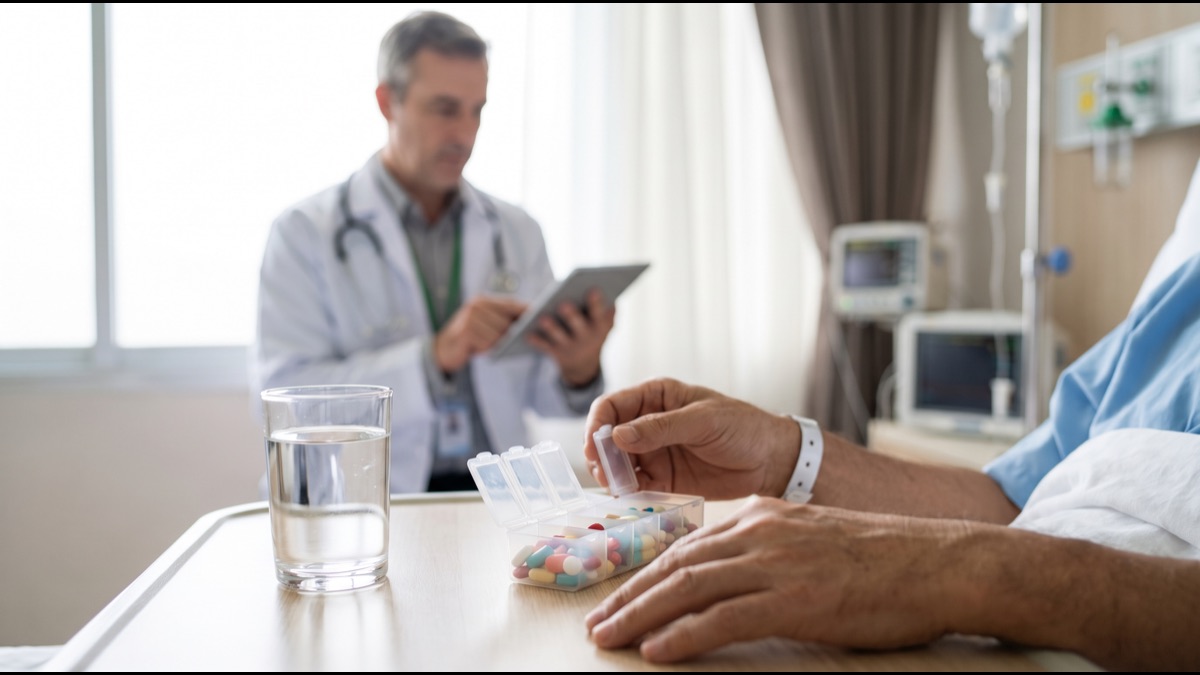
A transplanted kidney, liver, or heart is, from the immune system's perspective, an invading foreign object that must be destroyed. The tissue arrives carrying a genetic identity distinct from the recipient's own, and the body's defenses are precisely engineered over millions of years of evolution to recognize exactly that kind of difference and eliminate it as efficiently as possible.
The entire discipline of transplant medicine exists to solve this seemingly paradoxical problem: convincing the body's defenses to tolerate an invader indefinitely without leaving the patient dangerously defenseless against actual infections and cancers that a fully functioning immune system would otherwise catch. Understanding how that balance actually gets struck explains why transplant patients take medication for the rest of their lives, why some organs reject despite everything doctors do, and why matching donors to recipients matters so much before surgery ever happens, and why the field remains one of the more delicate balancing acts in all of modern medicine.
Why the Immune System Sees a New Organ as an Invader
Every cell in the human body displays a set of proteins on its surface called human leukocyte antigens, commonly abbreviated HLA, which the immune system uses as an identity badge to distinguish the body's own tissue from anything foreign. These proteins are highly variable between individuals, inherited from both parents, and essentially unique to each person aside from identical twins.
When a donor organ is transplanted, the recipient's immune system inspects the HLA proteins displayed on the new organ's cells and, in the overwhelming majority of cases, recognizes them as different from its own, triggering the same defensive cascade that would activate against a genuine pathogen, since the immune system has no built-in mechanism to distinguish a life-saving transplant from a threat.
What HLA Matching Actually Tests
The HLA system encompasses several distinct gene regions, and laboratories typically assess matches across multiple specific loci rather than treating HLA compatibility as a single simple pass-or-fail measurement, since different loci contribute differently to overall rejection risk depending on the specific organ being transplanted and the surrounding clinical circumstances.
Before a transplant proceeds, laboratories typically test how closely a potential donor's HLA proteins match the recipient's own, since a closer match generally reduces both the intensity of the immune response and the amount of immunosuppressive medication ultimately required to keep the organ functioning long-term.
A perfect HLA match is exceptionally rare outside of identical twins, since the relevant genes exist in enormously many possible combinations across the population, which is why even carefully matched donor-recipient pairs, including close relatives, still require lifelong immunosuppressive medication rather than achieving the kind of automatic tolerance seen only between genetically identical twins.
How T Cells Drive the Rejection Response
T cells, a category of white blood cell central to the immune system's targeted defense against specific threats, play the leading role in organ rejection, specifically recognizing foreign HLA proteins on transplanted tissue and coordinating an attack designed to destroy the cells displaying them.
Once activated, T cells recruit additional immune components and can directly damage transplanted tissue through several distinct mechanisms, including releasing toxic compounds that kill cells directly and signaling other immune cells to join the attack, which is why suppressing T cell activity specifically has become the central pharmacological target of essentially every modern anti-rejection drug regimen.
The Three Types of Rejection Doctors Watch For
Beyond T cells, antibody-mediated rejection represents a distinct pathway in which the recipient's B cells produce antibodies specifically targeting donor HLA proteins, a process that can occur even when T cell activity is well controlled by standard immunosuppression, requiring separate diagnostic testing and sometimes different treatment approaches from cell-mediated rejection alone.
Transplant physicians distinguish between hyperacute rejection, which occurs within minutes to hours of transplant surgery due to pre-existing antibodies in the recipient reacting immediately to the new organ, acute rejection, which typically develops within the first weeks to months, and chronic rejection, a slower deterioration that can unfold over years even with medication.
Hyperacute rejection is now rare because pre-transplant blood testing specifically screens for the antibodies that cause it, while acute rejection remains a real ongoing risk managed through immunosuppressive medication and close monitoring, and chronic rejection remains one of the most significant unsolved challenges in transplant medicine, since it progresses gradually and is considerably harder to detect and reverse than the acute form.
How Calcineurin Inhibitors Actually Work
Calcineurin inhibitors, a drug class including tacrolimus and cyclosporine, form the backbone of most modern immunosuppressive regimens by blocking a specific enzyme, calcineurin, that T cells require to activate and multiply in response to a perceived threat, effectively disabling the core mechanism driving organ rejection without destroying the immune system's other functions entirely.
These drugs represented a genuine breakthrough when introduced, dramatically improving transplant survival rates compared to earlier, cruder immunosuppressive approaches, though they require careful, individualized dosing since too little medication risks rejection while too much increases toxicity to the kidneys and other organs, a narrow therapeutic window that demands frequent blood monitoring throughout the patient's life, not merely in the immediate post-transplant period.
Why Transplant Drug Regimens Combine Multiple Medications
Cyclosporine, an earlier calcineurin inhibitor discovered in the 1970s and derived from a soil fungus, was itself a genuine revolution in transplant survival when it entered widespread clinical use, and tacrolimus, developed later and now more commonly prescribed for many organ types, generally offers a somewhat more favorable side-effect profile for a comparable level of immunosuppressive effectiveness.
Rather than relying on a single powerful immunosuppressant, transplant teams typically combine several drugs working through different biological mechanisms simultaneously, a strategy that allows each individual medication to be used at a lower, less toxic dose while still achieving comprehensive suppression of the rejection response across multiple points in the immune pathway.
A typical regimen might combine a calcineurin inhibitor, a drug that blocks cell division in rapidly proliferating immune cells, and a corticosteroid that broadly dampens inflammation, an approach that mirrors combination therapy strategies used in other fields of medicine where attacking a problem from several angles at once proves more effective and safer than maximizing any single treatment alone.
The Trade-Off Between Rejection and Infection Risk
Physicians manage this balance by continuously weighing individual patient risk factors, including how well an organ has matched immunologically, how long since transplant surgery, and any history of prior rejection episodes, adjusting immunosuppression dosage upward or downward over time rather than applying a single fixed dose indefinitely regardless of how the patient's specific situation evolves.
Every immunosuppressive drug that reduces rejection risk necessarily also reduces the immune system's ability to fight off genuine infections, creating an unavoidable balancing act that defines essentially every clinical decision in transplant medicine, since the same suppressed T cell activity that spares the transplanted organ also leaves the patient more vulnerable to bacterial, viral, and fungal infections that a healthy immune system would normally handle without difficulty.
Transplant recipients also face elevated long-term risk of certain cancers, particularly skin cancers and specific lymphomas, since immune surveillance against abnormal or cancerous cells is itself partly suppressed alongside the anti-rejection response, which is why transplant patients typically undergo more frequent cancer screening than the general population throughout their lives.
Why the First Year After Transplant Is the Riskiest
Transplant centers typically use standardized induction therapy immediately around the time of surgery itself, often involving a short, intensive course of powerful immunosuppressive agents delivered intravenously, specifically to blunt the immune system's strongest initial response before transitioning the patient onto the lower, more sustainable maintenance regimen they will continue taking for years afterward.
Rejection risk is highest in the weeks and months immediately following surgery, when the immune system first encounters the new organ in full and mounts its strongest initial response, which is why immunosuppression is typically most intensive during this early period and gradually tapered to lower maintenance doses over the following months as the acute risk subsides.
This front-loaded risk profile also explains why transplant recipients require the most frequent monitoring, including regular blood tests and sometimes biopsies of the transplanted organ, during the first year, with visit frequency generally decreasing over time as the organ demonstrates stable, sustained function under a settled medication regimen.
How Doctors Actually Detect Rejection Early
Some transplant centers now also use noninvasive blood tests that detect small fragments of donor-derived genetic material circulating in the recipient's bloodstream, a technique that can flag early signs of organ damage before conventional markers change enough to raise alarm, offering an additional layer of surveillance alongside traditional testing and biopsy.
Blood tests measuring organ-specific markers, such as creatinine for kidney transplants or liver enzymes for liver transplants, provide an early warning system that can flag declining organ function before a patient experiences any noticeable symptoms, allowing treatment adjustments well before rejection progresses to a critical stage.
When blood markers raise concern, doctors frequently confirm the diagnosis through a biopsy, extracting a small tissue sample directly from the transplanted organ for microscopic examination, which remains the most definitive way to distinguish rejection from other causes of declining organ function, such as medication toxicity or an unrelated infection producing similar warning signs.
Why Blood Levels Must Be Monitored So Closely
Even subtle changes in a patient's other medications, diet, or overall health can shift how their body processes an immunosuppressant drug, since many of these drugs are metabolized through liver enzyme pathways that numerous other common medications and even certain foods, most notably grapefruit, can significantly interfere with, making routine monitoring an ongoing necessity rather than a one-time calibration performed shortly after surgery.
Because immunosuppressive drugs like tacrolimus have a notably narrow therapeutic window, meaning the gap between an effective dose and a toxic one is relatively small, transplant patients undergo frequent blood tests specifically measuring drug concentration to ensure levels stay within the precise range that suppresses rejection without causing excessive kidney damage or other toxicity.
Individual variation in how patients metabolize these drugs, driven partly by genetics, diet, and interactions with other medications, means the correct dose for one patient can differ substantially from another, which is why transplant medicine relies heavily on personalized, continuously adjusted dosing rather than a single standard regimen applied uniformly to every patient regardless of their individual metabolic profile.
What "Operational Tolerance" Actually Means
Some early case reports of operational tolerance emerged from patients who had received a combined bone marrow and organ transplant from the same donor, an approach that appears to help reset part of the recipient's immune system to recognize donor tissue as familiar rather than foreign, though this remains an experimental strategy rather than routine clinical practice for the vast majority of transplant recipients today.
A small subset of transplant recipients, for reasons researchers do not yet fully understand, develop what is called operational tolerance, maintaining a fully functioning transplanted organ with minimal or occasionally no ongoing immunosuppressive medication, without triggering rejection, a phenomenon documented in medical literature but currently impossible to reliably predict or intentionally induce in most patients.
Researchers are actively investigating several experimental approaches aimed at inducing tolerance more deliberately, including specialized cell therapies and modified transplant protocols, with the ultimate goal of eventually reducing or eliminating the lifelong medication burden that currently defines the transplant experience for the overwhelming majority of recipients worldwide.
Why Living Donor Organs Tend to Fare Better
Beyond the medical factors, living donation also allows extensive pre-transplant testing and health optimization for both donor and recipient that simply is not possible when an organ becomes available unexpectedly from a deceased donor, further contributing to the measurably better average outcomes researchers have documented for living-donor transplants across most major organ types studied.
Organs from living donors, most commonly kidneys and partial livers, generally show better long-term outcomes than organs from deceased donors, a difference attributed to several factors including shorter time between organ removal and transplantation, better overall organ health prior to donation, and the ability to schedule surgery under optimal, carefully planned conditions rather than the urgent, unpredictable circumstances surrounding deceased donation.
This outcome gap has made living donation an increasingly important part of transplant programs in many countries, alongside paired donation exchange systems that match incompatible donor-recipient pairs with other similarly incompatible pairs, allowing more patients to benefit from the generally superior outcomes associated with a living donor even when their own willing donor is not a direct match, a system that has meaningfully expanded the pool of viable living-donor transplants over the past two decades and continues to grow as more transplant centers adopt matched exchange programs.
Sources
- World Health Organization — global data and guidance on organ transplantation
- National Institutes of Health — research on transplant immunology and immunosuppression
- Wikipedia — mechanisms and classification of transplant rejection
- United Network for Organ Sharing — data on transplant outcomes and organ allocation
- Encyclopaedia Britannica — background on immunology and transplant medicine
FAQ
Why does the body reject a transplanted organ?
The immune system identifies proteins on the surface of donor cells as foreign, since they differ from the recipient's own tissue markers, and mounts an attack designed to destroy anything it perceives as an invader.
Do transplant patients take medication forever?
Yes — with rare exceptions, transplant recipients take immunosuppressant medication for the rest of their lives, since stopping the drugs allows the immune system to resume attacking the organ.
What is HLA matching?
HLA matching compares specific proteins on donor and recipient cells that the immune system uses to distinguish self from foreign tissue; closer matches generally reduce rejection risk, though perfect matches are rare outside identical twins.
Why do transplant patients get sick more easily?
Because immunosuppressant drugs deliberately weaken the immune response that would otherwise attack the transplanted organ, they also reduce the body's ability to fight off ordinary infections and certain cancers.
Can the body ever fully accept an organ without drugs?
A small number of patients achieve «operational tolerance», maintaining a functioning graft with minimal or no immunosuppression, but this remains rare and unpredictable, and researchers have not yet found a reliable way to induce it deliberately in most patients.
About the Author
We reference the World Health Organization, the National Institutes of Health, Wikipedia, the United Network for Organ Sharing, and Encyclopaedia Britannica to explain the background and current understanding of this topic.
Loved This Article?
Share it on WhatsApp → Share it on WhatsApp
Get more guides in your inbox — Subscribe to our newsletter for weekly surprising stories from Egypt, Saudi Arabia, Dubai, and beyond.