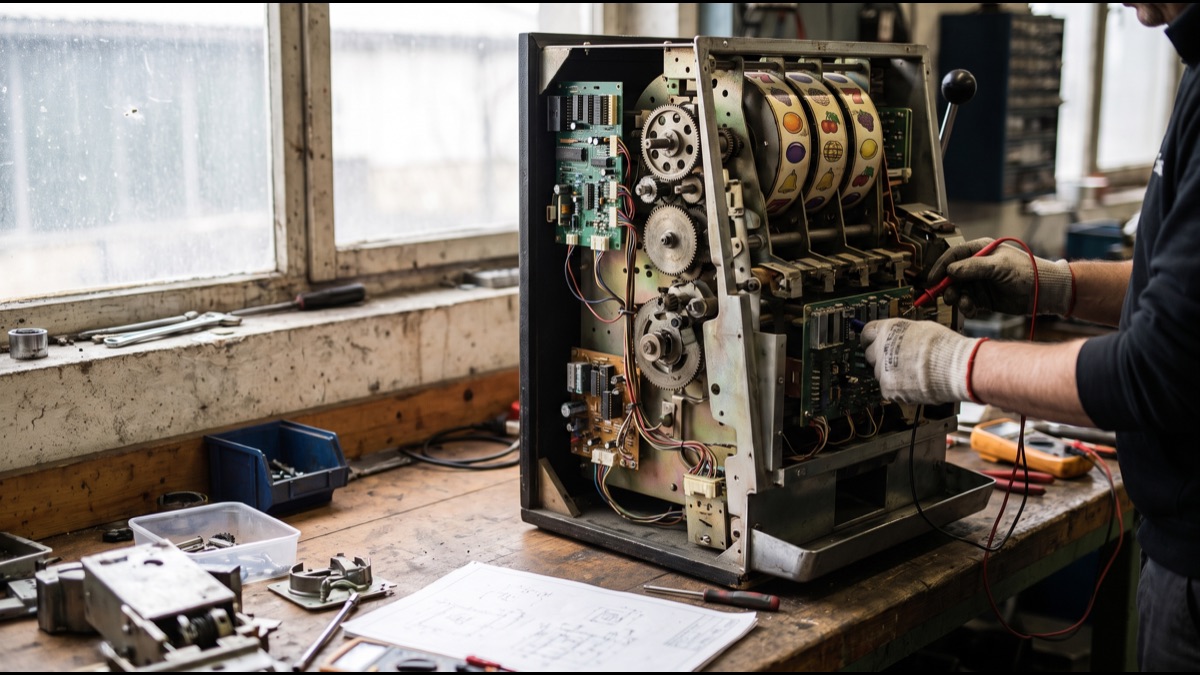
Modern slot machines run on a random number generator, a chip that produces thousands of numbers every second, continuously, even when nobody is playing. The instant a player presses the button or pulls the handle, the machine locks in whichever number the generator landed on at that exact moment, and that number determines the outcome.
Everything that follows, the spinning reels, the sound effects, the brief pause before the symbols land, is essentially a show. The result was already decided before the animation even started; the spin exists purely to make the outcome feel like a physical, suspenseful event.
The Random Number Generator Behind Every Spin
Why Near-Misses Feel So Common
Regulators require each machine to pay out a set percentage of what it takes in over the long run, often somewhere between 85% and 98% depending on the jurisdiction and machine, which guarantees the house a steady edge no matter how any single session goes.
A 1984 patent by engineer Inge Telnaes introduced "virtual reel mapping," letting a computer assign different odds to each symbol invisibly, so a losing symbol can appear to land just one position above or below the payline far more often than pure chance would allow. Research led by neuroscientist Luke Clark at Cambridge found these near-misses activate reward-related brain regions in ways strikingly similar to actual wins, which helps explain why they keep players engaged.
Sources
- UK Gambling Commission — regulated payout percentages
- Scientific American — the psychology of near-misses
- University of Cambridge — Luke Clark's research on gambling and reward
FAQ
Is the outcome of a slot machine decided before the reels stop, or while they're spinning?
It's decided the instant you press the button or pull the handle; the spinning animation afterward has no effect on the result.
Can a slot machine be "due" for a win after a losing streak?
No, each spin is an independent event decided by the random number generator, so previous spins have no influence on what comes next.
Why do near-misses feel so frequent on slot machines?
Machines are programmed with virtual reel mapping that can make losing symbols land just above or below the payline more often than random chance alone would produce.
About the Author
We reference UK Gambling Commission, Scientific American, University of Cambridge to explain the background and current understanding of this topic.
Loved This Article?
Share it on WhatsApp → Share it on WhatsApp
Get more guides in your inbox — Subscribe to our newsletter for weekly surprising stories from Egypt, Saudi Arabia, Dubai, and beyond.