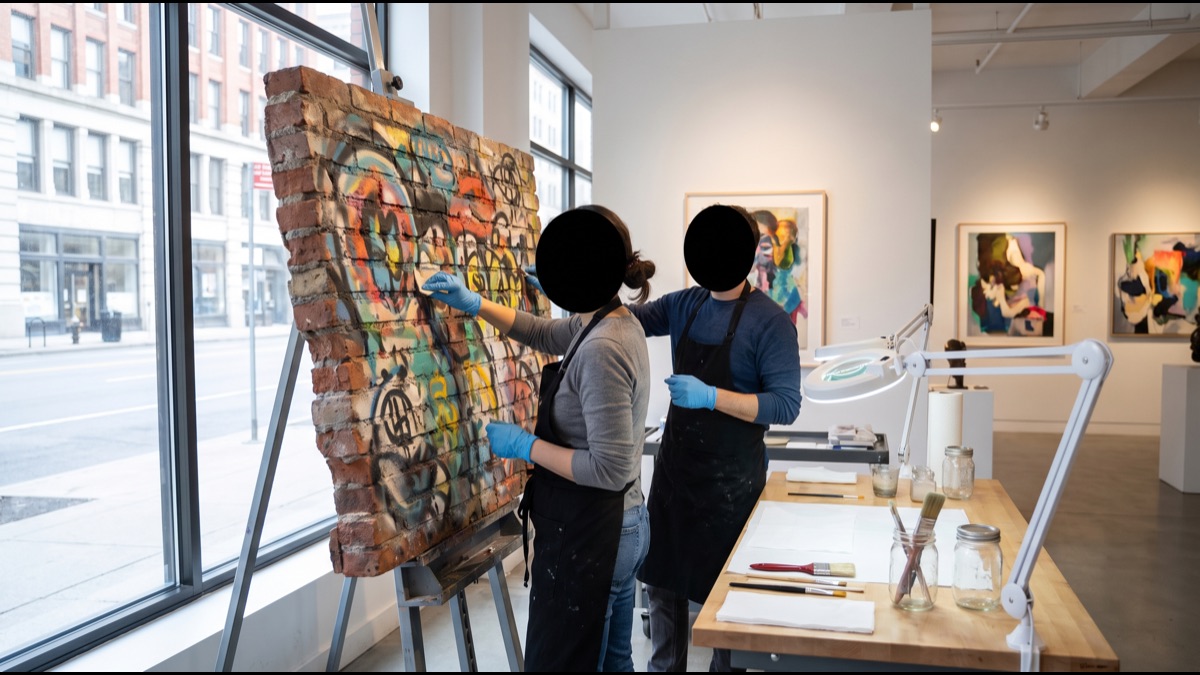
A spray-painted piece that would have gotten someone arrested in the 1980s can now sell at Sotheby's for millions of dollars. That shift from criminal offense to blue-chip art category didn't happen overnight, and it didn't happen without serious resistance from both the art establishment and, notably, from street artists themselves.
From Vandalism Charge to Auction House
Street art originated largely from graffiti writing culture in 1970s and 1980s New York, where tagging subway cars and buildings was treated as a criminal offense subject to arrest and prosecution, not an art form deserving institutional recognition.
The transformation into a recognized fine art category took decades, moving through underground gallery scenes, a handful of high-profile individual artists, and eventually formal museum retrospectives and record-breaking auction sales.
This trajectory from prosecutable offense to auction house centerpiece is unusual among art movements, most of which gained legitimacy through academic or institutional channels rather than starting as an explicitly illegal practice.
The Legal Line Between Graffiti and Street Art
Legal status remains one of the clearest dividing lines within the broader category: unsanctioned graffiti on private property without permission is still prosecutable as vandalism in most jurisdictions, regardless of artistic merit.
Commissioned murals and legally sanctioned street art, by contrast, involve property owner or municipal permission, which removes the legal risk but also changes the practice's relationship to the rebellious, unauthorized spirit that originally defined it.
This legal distinction creates an ongoing tension within the field itself: some of the most commercially successful street artists built their reputations on illegal work before transitioning to legal commissions, a shift some critics view as a loss of the practice's original edge.
Early Figures Who Shifted the Conversation
Artists like Jean-Michel Basquiat and Keith Haring, working in New York in the late 1970s and 1980s, moved between street work and gallery exhibition earlier and more successfully than most of their peers, building bridges between the two worlds.
Both artists gained mainstream art-world recognition during their lifetimes, which was unusual for the era and helped establish precedent that street-originated work could be taken seriously by galleries and collectors.
Their crossover success is frequently cited by historians as a key inflection point that made later widespread institutional acceptance of street art more plausible, even though full mainstream legitimacy took decades longer to arrive.
Banksy and the Anonymity Strategy
Banksy, whose real identity remains publicly unconfirmed, built a career strategy around anonymity that paradoxically increased both media attention and market value, generating scarcity and mystique that conventional named artists cannot replicate.
Banksy's pieces have set auction records for a living street artist, including a widely covered incident where a piece partially shredded itself immediately after selling at auction, a stunt that itself became a subject of art-world commentary and further inflated the work's value.
This anonymity-driven fame model has become something of a case study in how street art's market dynamics differ meaningfully from traditional fine art, where artist biography and gallery representation typically drive value.
How Museums Started Paying Attention
Major museum exhibitions dedicated to street art began appearing more frequently from the 2000s onward, including large-scale retrospectives at institutions that had previously treated the genre as outside their traditional collecting scope.
These exhibitions typically required significant curatorial reframing, since much of the original work existed on outdoor walls or public infrastructure and could not simply be relocated indoors without losing context or, in some cases, physically destroying the piece.
Museums increasingly commission new indoor or gallery-specific works from street artists rather than attempting to preserve or transport original outdoor pieces, a practical workaround to the medium's site-specific nature.
The Role of Commissioned Murals
Cities worldwide have increasingly commissioned large-scale murals from street artists as part of urban revitalization programs, effectively converting what was once an illicit practice into a municipally sanctioned economic development tool.
This shift gave many artists their first legal, paid outlet for large-scale public work, and gave cities a relatively low-cost way to generate tourism interest and improve the visual appeal of specific neighborhoods.
Critics within the street art community have pointed out that commissioned mural programs can end up sanitizing or defanging work that originally carried political or social critique, since municipal sponsors typically have approval rights over content.
Why Auction Houses Got Involved
Major auction houses began including street art in dedicated sales categories once demonstrated buyer interest and price appreciation made the category commercially viable, following a pattern similar to how other previously marginal art categories gained market recognition.
Auction records for individual pieces climbed substantially over roughly two decades, with certain works by top-tier artists reaching prices comparable to established contemporary art categories.
This market validation created a feedback loop: rising auction prices increased media coverage, which increased public and institutional interest, which further supported price growth, a pattern common across art market categories once they cross a critical recognition threshold.
The Authentication Problem Unique to Street Art
Authenticating street art presents challenges that don't apply as cleanly to traditional studio work, since pieces are frequently created without witnesses, without formal documentation, and sometimes without the artist's later willingness to publicly confirm authorship.
Banksy's organization, Pest Control, exists specifically to authenticate or deny attribution for works claimed to be Banksy pieces, an unusual institutional structure created largely because of the authentication difficulties inherent to anonymous street work.
This authentication problem has real financial stakes: unauthenticated or disputed pieces can lose most of their market value even when stylistic and circumstantial evidence strongly suggests a specific artist's involvement.
Removal, Preservation, and Ownership Disputes
Street art's site-specific, outdoor nature has generated a distinct category of ownership and preservation disputes not common in traditional art markets, particularly when a building owner attempts to remove and sell a piece created without the artist's commercial involvement.
Several high-profile legal disputes have centered on whether property owners have the right to remove, sell, or destroy street art on their buildings, versus whether the artist retains some ongoing rights over the work's public display and context.
These disputes highlight an unresolved tension in how legal systems, largely built around traditional studio-based art production, apply to a medium whose meaning is frequently tied to a specific physical location and public accessibility.
Gentrification and the Commercial Turn
Researchers and urban studies scholars have documented a recurring pattern where street art and murals appear in economically struggling neighborhoods, contribute to increased area desirability, and are followed by rising property values and demographic displacement.
This pattern, sometimes referred to critically as "artwashing," has made some street artists and community advocates wary of commissioned mural programs, viewing them as potentially accelerating the same gentrification pressures the original grassroots scene often implicitly critiqued.
This tension between street art's history as a voice for marginalized urban communities and its current role in commercial neighborhood branding remains one of the more contested aspects of its institutional acceptance.
Criticism From Within the Movement
Some of the most pointed criticism of street art's commercialization has come from within the movement itself, with certain artists and early practitioners arguing that gallery and auction success represents a betrayal of the practice's originally anti-establishment, anti-commercial roots.
This internal critique echoes debates in other subcultural art forms — punk music and skateboarding culture, for instance — where commercial mainstream success is viewed by some practitioners as fundamentally incompatible with the movement's original values.
Not all street artists share this view; many have explicitly embraced commercial success and institutional recognition as validation rather than betrayal, reflecting genuine disagreement within the community about what legitimacy should mean.
Institutional Exhibitions and Their Contradictions
Museum and gallery exhibitions of street art create a specific contradiction: the work is typically displayed in controlled, ticketed, curated environments, which is close to the opposite of the free, unauthorized, publicly accessible context that originally defined the practice.
Some curators have specifically tried to address this tension by commissioning site-specific installations or preserving original contextual elements, while others have been criticized for essentially decontextualizing the work into a more conventional gallery format.
This contradiction is part of a broader pattern art historians note whenever subcultural or outsider art forms are absorbed into mainstream institutions, where legitimacy is gained but some original meaning or context is frequently lost in the process.
The Market Value Question
Art market analysts generally caution that street art's relatively short price history, roughly two to three decades compared to centuries for traditional fine art categories, makes long-term value trends harder to predict with confidence.
Some economists studying art markets note that categories experiencing rapid early price appreciation, as street art has, can be more susceptible to speculative bubbles than categories with longer, more established pricing histories.
This doesn't mean street art prices are necessarily overvalued, but it does mean the market remains younger and less predictable than more established fine art categories, a genuine consideration for collectors and institutions alike.
Where the Legitimacy Debate Still Stands
Street art has unquestionably achieved formal recognition as a fine art category, with museum collections, academic scholarship, and auction records that would have seemed implausible to its 1980s practitioners facing vandalism charges.
That institutional acceptance hasn't resolved the underlying tensions around commercialization, gentrification, and authenticity that the movement's own artists and critics continue to debate, suggesting the legitimacy question isn't fully settled so much as it has moved to a different set of arguments.
Street art's path from criminalized subculture to auction house mainstay illustrates a broader pattern in how art movements gain institutional legitimacy — usually incompletely, unevenly, and not without real cost to some of what made the original practice distinctive.
How Insurance and Conservation Practices Adapted to Street Art
As street art entered museum collections and high-value private sales, the insurance and conservation industries had to develop entirely new practices for a medium that was never originally intended to be preserved, valued, or transported like traditional studio artwork.
Conservators specializing in contemporary and outdoor art have developed techniques for stabilizing and, in some cases, physically removing street art from its original wall for preservation, a technically difficult and ethically debated process since removal fundamentally changes a work's original site-specific context.
Insurance providers covering high-value street art pieces now typically require documentation practices, including photographic evidence and provenance records, that didn't traditionally exist for work created illegally and often without the artist's direct involvement in subsequent sales.
The Role of Social Media in Street Art's Rise
Social media platforms, particularly Instagram, have played a significant role in street art's growing visibility and market value, allowing images of ephemeral or geographically remote pieces to reach a global audience far beyond anyone who could physically visit the original location.
This digital amplification effect means a piece's cultural impact and market value can now be substantially decoupled from its physical accessibility, a genuine shift from earlier eras when appreciating street art required physical presence in a specific city or neighborhood.
Some artists have specifically designed pieces with social media documentation in mind, a meta-level adaptation of the medium that reflects how thoroughly digital distribution has reshaped street art's practical relationship with its audience compared to earlier decades.
Legal Precedents That Shaped Street Artists' Rights
Several landmark legal cases have established meaningful precedent for street artists' rights over their work even after it's placed on someone else's property, including cases addressing whether property owners can destroy or paint over recognized street art without consequence.
Legal frameworks like the Visual Artists Rights Act in the United States, originally designed for traditional studio art, have been tested and in some cases successfully applied to protect street art from destruction, establishing that certain moral rights can persist even when a work exists on property the artist doesn't own.
These legal developments remain unevenly applied across jurisdictions and continue to evolve, but they represent a genuine expansion of legal recognition for a medium that originated entirely outside any formal legal protection for artistic work.
How Street Art Festivals Changed the Practice
Organized street art festivals, where cities or private organizers formally invite artists to create legal large-scale works over a defined period, have become a significant channel through which the medium reaches new audiences and locations beyond its traditional urban strongholds.
These festivals typically provide artists with paid commissions, professional-grade materials, and formal recognition, benefits rarely available through the illegal practice the movement originated from, while also generating tourism revenue and media coverage for host cities.
Some longtime practitioners have criticized festival culture as further diluting street art's original oppositional character, while others view festivals as simply another legitimate venue among many, reflecting the broader unresolved debate within the community about commercialization discussed earlier in this article.
What Comes Next for Street Art's Institutional Status
Art market analysts generally expect street art's institutional integration to continue deepening, with more museum acquisitions, academic programs, and formal art history curricula treating the movement as an established category rather than an emerging or marginal one.
At the same time, new generations of street artists continue to work illegally and anonymously, suggesting the tension between institutional acceptance and the practice's original oppositional roots is likely to persist rather than resolve cleanly in either direction.
Why Regional Scenes Developed Different Reputations
Street art scenes in different cities developed distinct stylistic and cultural reputations, from Berlin's post-reunification wall culture to São Paulo's pichação lettering movement, reflecting how local political and urban conditions shaped the medium differently across regions rather than producing one uniform global style.
These regional differences continue to inform how museums and collectors categorize and value work from different scenes, with some regional traditions gaining international market recognition faster than others despite comparable artistic significance within their local context.
Sources
- Museum of Modern Art (MoMA) — Curatorial context on street art's institutional history.
- Tate — Research and exhibition materials on street art and graffiti history.
- Sotheby's — Auction records and market data for street art sales.
- Smithsonian Magazine — Historical and cultural reporting on street art's evolution.
FAQ
When did street art become recognized as fine art?
The transition happened gradually from the 1980s through the 2000s, with major museum exhibitions and record auction sales becoming common from the 2000s onward.
Is graffiti the same as street art?
Not legally — unsanctioned graffiti on private property remains prosecutable as vandalism in most places, while commissioned or permitted street art carries no legal risk.
Why is Banksy's identity kept secret?
Anonymity has become part of Banksy's career strategy, generating scarcity and media attention that has helped drive auction prices to records for a living street artist.
Do street artists support the movement's commercialization?
Opinions are genuinely divided — some view gallery and auction success as validation, while others see it as a betrayal of the practice's anti-establishment roots.
Is street art a stable long-term investment?
Analysts caution that its price history is short, roughly two to three decades, making long-term trends harder to predict than more established fine art categories.
About the Author
We reference the Museum of Modern Art, Tate, Sotheby's, and Smithsonian Magazine to explain the background and current understanding of this topic.
Loved This Article?
Share it on WhatsApp → Share it on WhatsApp
Get more guides in your inbox — Subscribe to our newsletter for weekly surprising stories from Egypt, Saudi Arabia, Dubai, and beyond.