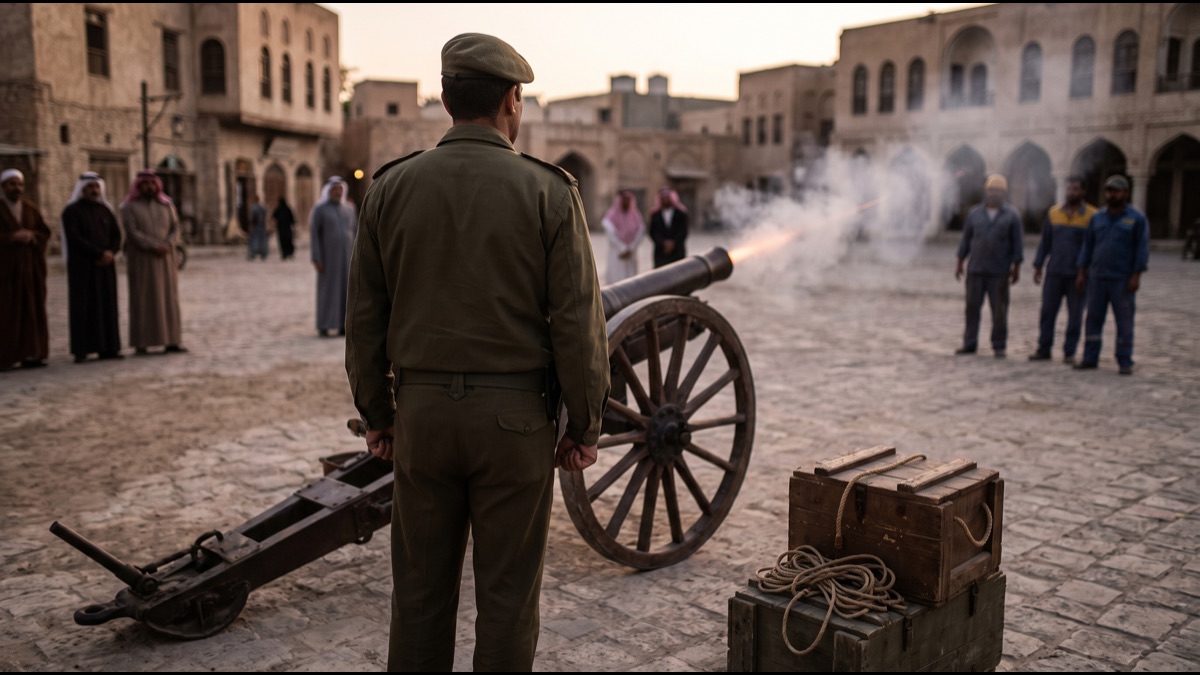
At the exact moment the sun sets during Ramadan in Cairo, and in a growing number of other cities across the region, a genuine artillery cannon fires a single loud blast, the traditional signal telling millions of fasting people that it is now time to break their fast. The tradition is centuries old, but maintaining it today involves a surprisingly formal combination of military cooperation, precise astronomical timing, and, in many cities, careful modern safety management around firing an actual cannon in a densely populated urban center.
Understanding how this tradition actually works, from the specific historical account most commonly told about its origin to how modern cities coordinate the exact firing moment with sunset calculations, reveals a genuinely interesting case of an old military signal repurposed entirely for religious and cultural use, one that has proven remarkably durable even as most other functions of ceremonial artillery have long since disappeared from everyday urban life.
It also explains why some cities have moved away from firing an actual cannon at all, replacing the historic boom with recorded audio or other signals, while others have deliberately preserved the real artillery piece specifically because of what it represents culturally rather than for any continued practical necessity.
A Boom Heard Across an Entire City
The midfa al-iftar, literally the iftar cannon, fires once at the precise moment of sunset during each day of Ramadan, a sound loud enough to be heard across a wide radius of the surrounding city, serving as an unmistakable, simultaneous signal that reaches far more people at once than any single announcement, call, or broadcast could reliably guarantee.
This shared, city-wide audible signal is precisely what has kept the tradition culturally significant even in an era of smartphones, prayer time apps, and instant digital notifications, since there remains something distinctly communal about an entire neighborhood or city hearing the same signal at the exact same instant rather than each individual checking a private device separately.
The Legend Behind How the Tradition Actually Began
The most widely told origin story places the tradition in fifteenth-century Cairo, describing a ruler testing a newly acquired cannon around sunset during Ramadan, with the resulting loud blast coincidentally reaching the city precisely at the moment for breaking the fast, leading residents to associate the sound directly with the iftar signal and request its deliberate repetition the following evening.
A related version of the story credits the ruler's daughter with suggesting the cannon be fired deliberately every evening at that exact moment, transforming what began as an accidental coincidence into an intentional, repeated civic tradition that then continued long after the specific ruler and cannon involved in the original story had long since passed from the scene.
Why Historians Doubt the Popular Origin Story
Professional historians studying the tradition's actual documented origins generally treat the popular accidental-discovery legend with considerable skepticism, noting that similar charming origin stories attached to long-standing folk traditions worldwide often emerge well after the practice itself was already established, serving as a memorable explanatory narrative rather than a strictly accurate historical record.
What historical evidence does more reliably establish is that firing cannons and other loud signals to mark specific times, including prayer times and significant civic moments, was a broader practice across various historical Islamic and Ottoman-era cities, suggesting the Ramadan iftar cannon likely grew out of this wider established practice of using cannon fire as a public timekeeping signal rather than emerging from one single specific, dateable incident.
What Midfa al-Iftar Actually Means
The Arabic term midfa al-iftar translates directly to "the breaking-fast cannon," a name that describes its function plainly and directly rather than referencing any specific historical figure or incident, consistent with how many long-standing cultural traditions across the region are named descriptively based on what they do rather than commemoratively based on who supposedly started them.
This straightforward, functional naming convention has helped the tradition travel and adapt easily across different cities and countries over time, since a name describing the cannon's actual purpose transfers naturally to any new location adopting the practice, unlike a name tied to one specific city's particular historical figure or legend.
How the Tradition Spread Beyond Egypt
From its strongest historical association with Cairo, the iftar cannon tradition gradually spread to other cities across Egypt and eventually to various cities in the wider Arab world, adopted by local authorities specifically because the tradition already carried strong cultural recognition and emotional resonance connected to Ramadan across the region.
This spread illustrates how a specific local civic tradition can become a broader shared regional cultural practice over time, with each adopting city generally maintaining the tradition's core function and symbolic meaning while adapting the specific logistics, equipment, and firing location to its own local context and urban geography.
What Kind of Cannon Actually Gets Used Today
Cities maintaining a live-firing tradition generally use a decommissioned or ceremonial artillery piece specifically maintained for this purpose rather than active military hardware, loaded with a blank charge that produces the characteristic loud report without firing any actual projectile, a setup functionally similar to ceremonial cannons used for military salutes and civic celebrations worldwide.
Maintaining a functioning ceremonial cannon requires ongoing mechanical upkeep and a supply of appropriate blank charges, a genuine logistics commitment that some smaller municipalities have found harder to sustain over time compared to simply adopting a recorded or amplified electronic alternative that reproduces the sound without the equipment maintenance burden.
Who Is Actually Responsible for Firing It
In cities maintaining the live tradition, the cannon is typically operated by military personnel, civil defense authorities, or a designated municipal team trained specifically in safely handling and firing the ceremonial piece, rather than being left to informal or untrained volunteers given the genuine safety considerations involved in firing any kind of artillery piece, even one loaded only with a blank charge.
This formal institutional responsibility reflects how seriously authorities treat both the safety requirements of the practice and its cultural significance, generally coordinating the firing schedule and personnel assignment through official civil or military channels rather than leaving it to informal community arrangement.
How Timing Is Calculated to the Minute
The exact firing moment is calculated using the same precise sunset time calculations religious authorities use to determine the daily iftar time throughout Ramadan, accounting for the specific city's exact geographic coordinates and elevation, since sunset time shifts gradually day by day across the month and varies meaningfully between different cities even within the same country.
This precision matters genuinely, not just symbolically, since a cannon fired even a few minutes early or late would provide an inaccurate iftar signal to residents relying on it, which is why the specific firing schedule is generally coordinated directly with the same religious authorities responsible for publishing official daily prayer and fasting times.
Why Some Cities Switched to Recorded Sound
A number of cities have replaced live cannon firing with recorded audio played through public loudspeakers or broadcast systems, a shift driven by the genuine cost, safety, and logistics burden of maintaining working ceremonial artillery and trained firing personnel compared to the considerably simpler alternative of playing a recording at the calculated exact moment.
This shift has generated some public debate in affected cities, with some residents feeling the recorded version lacks the authentic physical presence and communal experience of an actual cannon blast, while others view the practical trade-off as reasonable given the genuine logistics and safety considerations involved in maintaining functioning artillery purely for ceremonial purposes.
The Safety Protocols Around Live Artillery in a City Center
Firing any artillery piece, even a ceremonial one loaded only with a blank charge, in a densely populated urban environment requires careful safety protocols covering firing location selection, crowd distance management, and equipment inspection, precautions municipal and military authorities take seriously precisely because the tradition's public visibility means any safety incident would receive considerable attention.
These safety requirements are part of why the tradition remains formally institutionalized rather than informally maintained, since only an organized municipal or military body can realistically maintain the equipment inspection, trained personnel, and location safety planning a live cannon-firing tradition genuinely requires at this scale and public visibility.
How the Suhoor Cannon Differs From the Iftar Cannon
Some cities maintaining the tradition also fire a second cannon shot before dawn to mark the end of the suhoor pre-dawn meal period, a practice less universally adopted than the sunset iftar cannon but following the same underlying logic of providing an unmistakable, city-wide audible signal for a specific Ramadan timing milestone.
Where both signals exist, the suhoor cannon generally receives less public attention and ceremony than the iftar cannon, likely because the moment it marks, the transition into the fasting day, carries a somewhat different emotional register than the anticipated, actively awaited moment of breaking the day's fast at sunset.
Why This Tradition Survived Modernization
Despite modern technology offering numerous more precise and less resource-intensive ways to signal iftar time, including smartphone apps, mosque loudspeaker announcements, and broadcast media, the cannon tradition has persisted specifically because its cultural and emotional value operates independently of its original practical timekeeping function.
This persistence illustrates a broader pattern common to many traditions that originated as practical solutions to a specific problem: once a practice becomes deeply woven into collective cultural memory and seasonal ritual, it often continues well past the point where its original practical necessity has been superseded by more efficient alternatives.
How Television and Radio Adopted the Cannon as a Symbol
Egyptian and regional broadcast media have long incorporated the sound and imagery of the iftar cannon into Ramadan programming, using the cannon blast as an audible marker within broadcasts and as a recurring visual and cultural symbol in Ramadan-season advertising, further reinforcing the tradition's cultural weight well beyond the cities that actually still fire a physical cannon.
This media reinforcement has helped extend the cannon's cultural resonance to audiences in cities and even countries that never adopted the physical tradition themselves, since the sound and imagery have become a broadly recognized symbol of Ramadan across the region regardless of whether a specific viewer's own city actually fires a cannon each evening.
What Happens When the Cannon Breaks Down
Mechanical failures or maintenance issues affecting a ceremonial cannon are generally treated as a matter requiring prompt attention given the tradition's public visibility, with municipal authorities in cities maintaining the live tradition typically arranging backup equipment or contingency plans specifically to avoid a Ramadan evening passing without the expected signal.
This institutional seriousness about maintaining continuity reflects how deeply the tradition has become embedded in public expectation during Ramadan, treating a missed or delayed cannon firing as a genuine public event worth avoiding through proper equipment maintenance rather than an inconsequential technical hiccup.
Why Gulf Cities Adopted Their Own Versions
Several Gulf cities have adopted their own iftar cannon traditions in recent decades, often as part of broader Ramadan cultural programming and public celebration efforts, reflecting both genuine regional cultural exchange around shared Ramadan practices and a deliberate effort by municipal and tourism authorities to create memorable, photogenic public Ramadan traditions for residents and visitors alike.
These newer Gulf adaptations generally draw explicitly on the historic Egyptian tradition's symbolism while adapting the specific staging, often held in prominent public spaces designed for community gathering, reflecting a broader regional pattern of borrowing and locally adapting culturally resonant traditions rather than each city independently inventing a similar practice by coincidence.
How Children's Traditions Grew Around the Cannon
In cities with a long-standing cannon tradition, children have historically developed informal customs around anticipating and reacting to the daily blast, including games and small rituals tied to being present or listening for the sound at the exact moment, adding a distinctly generational, family-oriented layer of meaning to the tradition beyond its purely religious timekeeping function.
This intergenerational transmission, older family members explaining the tradition's history and significance to children experiencing it themselves each Ramadan, is part of what has kept the practice culturally vital across generations rather than fading into a purely ceremonial or historical curiosity disconnected from lived, everyday experience.
How Restoration Projects Have Preserved Historic Cannons
Several of the specific historic cannons associated with the tradition in Egypt have themselves become subjects of heritage preservation efforts, with restoration specialists working to maintain aging artillery pieces that carry genuine historical value beyond their continued ceremonial function, treating them as artifacts worth preserving in their own right rather than simply disposable equipment to be replaced once worn out.
This preservation effort reflects a broader recognition that the specific physical cannons used in long-standing installations of the tradition carry accumulated historical significance of their own, having fired the same daily signal for generations, making their maintenance a genuine heritage conservation project rather than routine municipal equipment upkeep alone.
Why the Tradition Resonates Particularly Strongly With Older Generations
Older residents in cities with a long-established cannon tradition often describe a particularly strong emotional attachment to the sound, having grown up associating it directly with childhood Ramadan memories in a way that younger residents, raised alongside smartphone notifications and digital alternatives, may experience somewhat differently despite still recognizing and valuing the tradition.
This generational difference in emotional attachment has not diminished the tradition's overall cultural importance, but it has shaped how municipal authorities and cultural institutions talk about preserving it, often explicitly framing continuation of the practice as an intergenerational cultural inheritance worth actively maintaining rather than assuming its popularity is simply guaranteed to continue unchanged.
What the Tradition Reveals About Shared Ramadan Culture
The iftar cannon's continued relevance illustrates something genuinely distinctive about Ramadan culture across the region: a preference for shared, communal, publicly experienced markers of the month's daily rhythm rather than purely private, individually experienced ones, even as private digital tools for tracking prayer and fasting times have become nearly universally available.
That preference for a shared public signal, one an entire city experiences together at the exact same instant, is ultimately what has kept a centuries-old military tradition relevant and meaningful in cities that have otherwise transformed almost completely since the practice first began.
Sources
- Wikipedia — overview of the Ramadan iftar cannon tradition and its regional variants
- Dar al-Ifta al-Misriyyah — Egyptian religious authority background on Ramadan timing practices
- Egyptian State Information Service — background on Egyptian cultural heritage and Ramadan traditions
- Al Jazeera — regional reporting on Ramadan cultural traditions across the Arab world
FAQ
Is the popular origin story about the Ramadan cannon actually true?
Historians treat the popular accidental-discovery legend with considerable skepticism, since similar charming origin stories often emerge after a tradition is already established, though cannon fire marking specific times was a broader documented Ottoman-era practice.
What kind of cannon is actually used for the Ramadan iftar signal?
Cities maintaining the live tradition generally use a decommissioned or ceremonial artillery piece loaded only with a blank charge, functionally similar to ceremonial cannons used for military salutes and civic celebrations worldwide.
Why have some cities replaced the cannon with recorded sound?
The shift is generally driven by the genuine cost, safety, and logistics burden of maintaining working ceremonial artillery and trained firing personnel compared to simply playing a recording at the calculated exact sunset moment.
How precisely is the cannon firing time calculated?
It uses the same precise sunset time calculations religious authorities use to determine daily iftar time, accounting for each city’s specific geographic coordinates and elevation, since sunset shifts gradually day by day through Ramadan.
Why did Gulf cities start their own cannon traditions?
It reflects both genuine regional cultural exchange around shared Ramadan practices and deliberate municipal and tourism efforts to create memorable, photogenic public Ramadan traditions for residents and visitors, drawing on the historic Egyptian tradition’s symbolism.
About the Author
We reference Wikipedia and other authoritative sources to explain the background and current understanding of this topic.
Loved This Article?
Share it on WhatsApp → Share it on WhatsApp
Get more guides in your inbox — Subscribe to our newsletter for weekly surprising stories from Egypt, Saudi Arabia, Dubai, and beyond.