Introduction
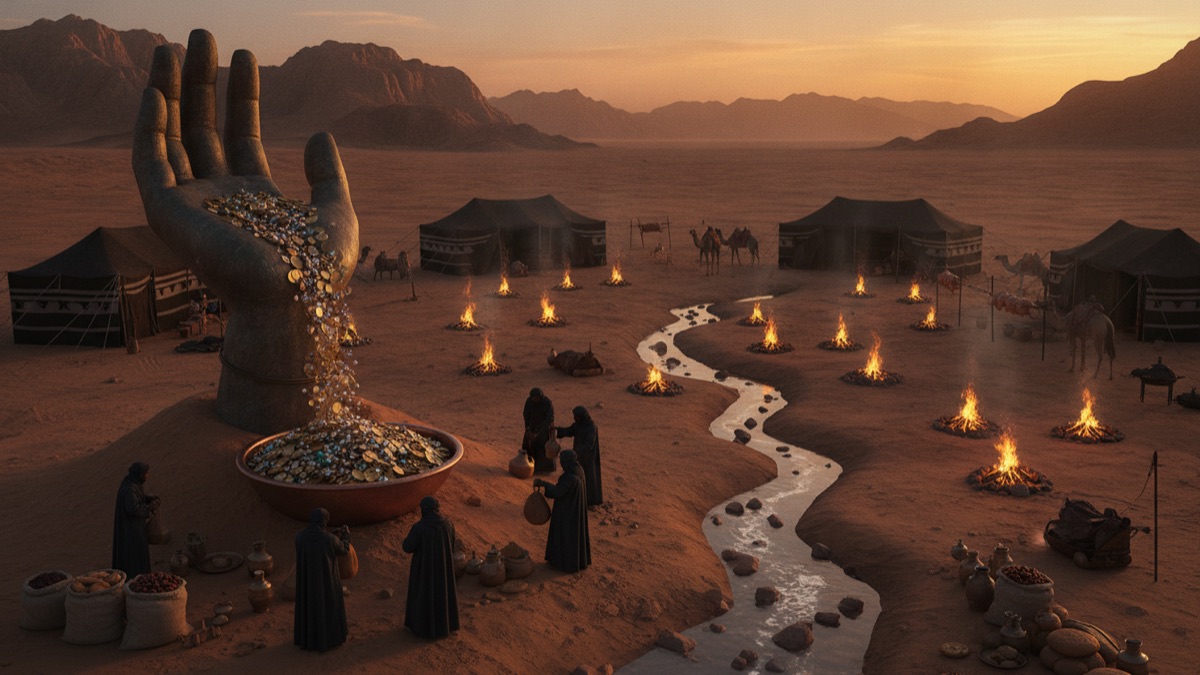
In Arabic, calling someone 'more generous than Hatim' remains one of the highest compliments a person can receive, a phrase that has endured for roughly 1,400 years. Hatim al-Tai was a real 6th-century poet and chieftain of the Tayy tribe in the Arabian Peninsula, whose reputation for extraordinary generosity outgrew historical record and became legend.
Unlike many pre-Islamic figures known mainly through oral tradition, Hatim's own poetry survives, giving historians rare direct insight into a man whose life became inseparable from centuries of embellished storytelling.
The Historical Figure Behind the Legend
Hatim ibn Abd Allah al-Tai lived in the region of Najd before the rise of Islam, leading his tribe and composing poetry that, unusually for the era's warrior culture, frequently celebrated hospitality and giving over conquest and plunder. Several of his surviving verses directly praise generosity as a defining virtue of honorable character.
Historical accounts describe Hatim slaughtering his own camels to feed guests or strangers, even during times of personal hardship, and giving away wealth so consistently that stories of his household running short of resources because of his generosity appear across multiple early Arabic sources.
The Famous Stories and Legends
One widely repeated tale describes the Byzantine Emperor testing Hatim's generosity by sending emissaries disguised as ordinary travelers; Hatim, not recognizing them, slaughtered his prized horse to prepare a feast when no other food was available, only for the emissaries to reveal their true purpose afterward.
Another popular legend claims that even after his death, guests who visited his grave and expressed hunger would find food mysteriously provided, a folkloric embellishment illustrating how his reputation for generosity was treated as almost supernatural by later generations of storytellers.
Why Hatim al-Tai Still Matters
Hatim's legend spread well beyond Arabia through translation and retelling, appearing in Persian and Indian literary traditions, including tales collected in versions resembling One Thousand and One Nights, and later inspiring Bollywood and animated adaptations of 'Hatim Tai' stories in South Asia.
In everyday Arabic today, 'Hatim's tent' and comparisons to his generosity remain common linguistic idioms, making him arguably the most durable cultural symbol of hospitality in the Arab world, a status built as much on documented poetry as on thirteen centuries of storytelling.
Sources
- Wikipedia — biography and legendary accounts of Hatim al-Tai
- Encyclopaedia Britannica — historical overview of Hatim al-Tai's life and reputation
- Encyclopaedia Iranica — Persian literary traditions surrounding Hatim al-Tai
FAQ
Was Hatim al-Tai a real historical person?
Yes. Hatim al-Tai was a real 6th-century pre-Islamic Arab poet and chieftain of the Tayy tribe, and several of his own poems survive today, though many stories about his generosity were embellished by later oral tradition.
Why is Hatim al-Tai famous?
He is famous for his extraordinary generosity and hospitality, becoming such an enduring symbol in Arab culture that "more generous than Hatim" remains a common compliment in Arabic today, roughly 1,400 years after his death.
What is the most famous story about Hatim al-Tai?
One widely told story describes Hatim slaughtering his own prized horse to feed disguised emissaries of the Byzantine Emperor who were secretly testing his generosity, only discovering afterward who his guests really were.
Did Hatim al-Tai's legend spread beyond Arabia?
Yes. His stories were translated and adapted into Persian and Indian literary traditions, and later inspired Bollywood films and animated adaptations called Hatim Tai across South Asia.
About the Author
We reference Wikipedia, Encyclopaedia Britannica, and Encyclopaedia Iranica sources on Hatim al-Tai's historical life and the legends that grew around him.
Loved This Article?
Share it on WhatsApp → Share on WhatsApp
Get more guides in your inbox — Subscribe to our newsletter for weekly surprising stories from Egypt, Saudi Arabia, Dubai, and beyond.