Introduction
The Montessori method is an educational approach developed by Italian physician and educator Maria Montessori in the early 20th century, now used in an estimated 20,000-plus schools worldwide across more than 100 countries, making it one of the most widely adopted alternative educational philosophies globally.
Montessori developed her method initially while working with young children from disadvantaged backgrounds in Rome, founding her first 'Casa dei Bambini' (Children's House) in 1907, basing her approach on direct scientific observation of how children naturally learn, rather than starting from a predetermined educational theory.
Core Principles of the Method
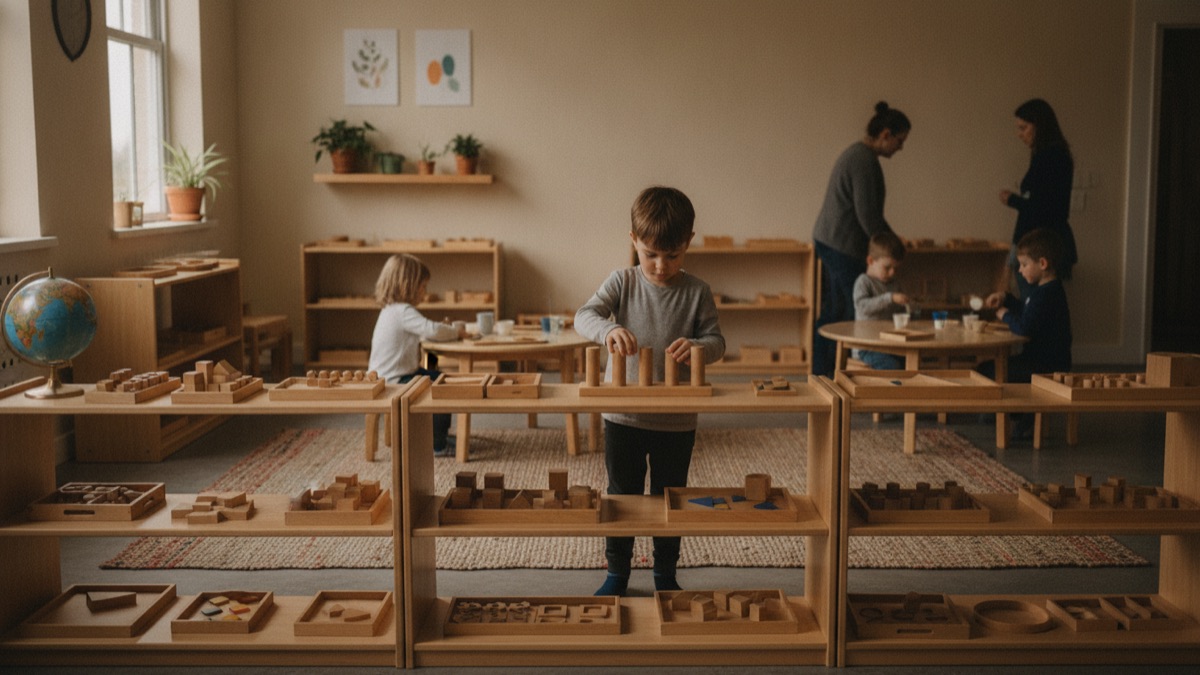
Montessori education rests on several core principles: child-led learning, where children choose activities from a prepared range of options based on their own interests and developmental readiness rather than following a fixed, teacher-directed curriculum; mixed-age classrooms, typically spanning three-year age ranges, allowing younger children to learn by observing older peers and older children to reinforce learning by teaching younger ones.
The method also emphasizes hands-on, sensory-based learning materials specifically designed by Montessori and refined over decades, such as manipulable math materials that make abstract concepts physically tangible, and uninterrupted work periods, typically extending to two or three hours, allowing children to engage deeply with an activity without the fragmented scheduling common in conventional classrooms.
The Teacher's Role: Guide Rather Than Instructor
A defining feature of Montessori classrooms is the teacher's role, deliberately reconceived as a 'guide' rather than a traditional instructor delivering lessons to the whole class simultaneously. Montessori guides observe individual children closely, introduce specific materials and lessons when a child appears developmentally ready, and otherwise largely allow children to direct their own exploration and learning pace.
This approach requires extensive specialized teacher training, and authentic Montessori schools generally require teachers to complete accredited Montessori certification programs, in addition to standard teaching credentials, a distinguishing factor since the term 'Montessori' is not legally trademarked or restricted in most countries, meaning schools can use the name with varying degrees of fidelity to the original method.
What the Research Evidence Shows
Research on Montessori education's effectiveness has grown substantially in recent decades, with some rigorous studies, including research published in peer-reviewed journals comparing lottery-admitted Montessori students to peers who didn't win admission, finding advantages in areas like executive function, social skills, and academic performance, particularly when the Montessori program is implemented with high fidelity to the original method.
However, researchers caution that evidence quality varies considerably across studies, program implementation fidelity varies significantly between schools using the Montessori name, and comparing outcomes is complicated by the fact that families who actively choose Montessori schooling may differ systematically from families who don't, making definitive causal claims about the method's superiority difficult to fully establish.
How Montessori Differs From Traditional Schooling
Traditional classrooms typically group children strictly by age, follow a standardized curriculum delivered to the whole class at a similar pace, and rely more heavily on textbooks, worksheets, and teacher-led instruction, whereas Montessori classrooms emphasize individualized pacing, hands-on materials, and significant student choice within a carefully prepared environment.
Grading and testing also typically differ: many Montessori schools, particularly at younger ages, minimize traditional letter grades and standardized testing in favor of detailed teacher observation and portfolio-based assessment of a child's individual developmental progress, though this varies by school and tends to shift somewhat as students reach secondary levels.
Sources
- American Montessori Society — Official reference on Montessori philosophy, principles, and teacher certification
- North American Montessori Teachers' Association — Reference on Montessori teacher training and classroom practice
- American Psychological Association — Reference on educational psychology research comparing schooling methods
FAQ
Who developed the Montessori method and when?
Italian physician and educator Maria Montessori developed the method in the early 20th century, founding her first 'Casa dei Bambini' (Children's House) in Rome in 1907, based on direct observation of how children naturally learn.
What is the teacher's role in a Montessori classroom?
Montessori teachers, called guides, observe individual children closely and introduce materials when a child appears developmentally ready, rather than delivering lessons to the whole class simultaneously as in traditional instruction.
Why are Montessori classrooms mixed-age?
Mixed-age classrooms, typically spanning three-year ranges, allow younger children to learn by observing older peers and older children to reinforce their own learning by teaching younger classmates.
Is there strong research evidence that Montessori education works?
Some rigorous studies, including research comparing lottery-admitted Montessori students to non-admitted peers, find advantages in executive function and academic performance, though evidence quality varies and implementation fidelity differs between schools.
Is the name 'Montessori' legally protected?
No. The term is not legally trademarked or restricted in most countries, meaning schools can use the name with varying degrees of fidelity to Maria Montessori's original method and teacher training standards.
About the Author
doyouknow.app Editorial Team — We reference official Montessori organizations and educational psychology research to explain the method and its evidence base.
Loved This Article?
Share it on WhatsApp → Share on WhatsApp
Get more guides in your inbox — Subscribe to our newsletter for weekly surprising stories from Egypt, Saudi Arabia, Dubai, and beyond.