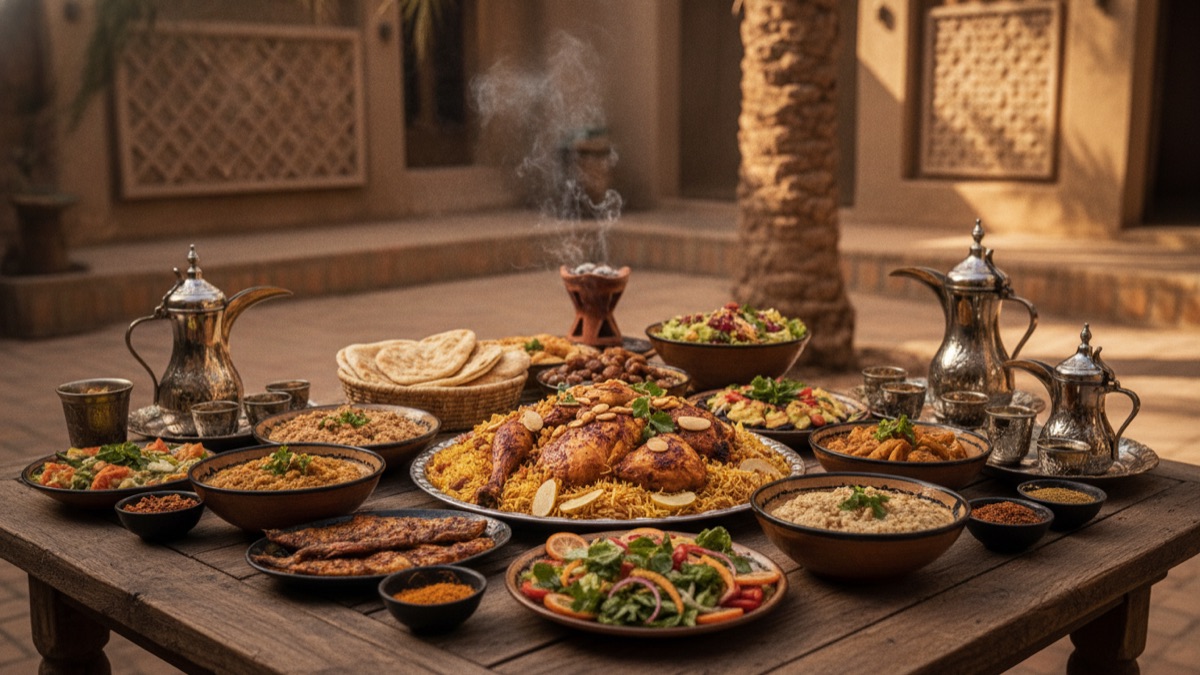
Introduction to Saudi Cuisine
Saudi Arabian cuisine is one of the most underexplored food traditions in the Middle East. While Lebanese and Turkish cuisines have achieved global recognition, Saudi food remains largely undiscovered outside the Kingdom. This is changing rapidly. Vision 2030 has opened Saudi Arabia to tourism, and with it, the world is discovering a food culture shaped by centuries of Bedouin tradition, spice trade routes, and regional agricultural diversity.
Saudi cuisine is fundamentally about hospitality. The traditional Saudi greeting includes offering dates and Arabic coffee, a ritual that predates Islam and continues today in every home and office. Meals are communal, served on large shared platters, and generosity is measured by the abundance of food offered to guests. Understanding this cultural context is essential to appreciating what makes traditional Saudi food distinctive.
The cuisine is also deeply regional. The vast expanse of Saudi Arabia encompasses coastal plains, mountain highlands, and desert interiors, each producing distinct culinary traditions. A meal in Jeddah bears little resemblance to one in Riyadh, and both differ dramatically from what you will find in the Asir mountains or the Eastern Province.
Essential Traditional Dishes
Every visitor to Saudi Arabia should seek out these foundational dishes. They represent the core of Saudi culinary traditions and appear in homes and restaurants across the Kingdom.
Kabsa — The national dish of Saudi Arabia. Kabsa is a spiced rice dish typically made with chicken, lamb, or camel meat. The rice is seasoned with a blend called baharat, which includes black lime, cardamom, cinnamon, cloves, and saffron. What distinguishes Saudi kabsa from similar dishes in the Gulf is the use of dried black lime (loomi), which adds a distinctive sour note. The dish is traditionally served on a communal platter, eaten with the right hand.
Jareesh — A dish of crushed wheat cooked with meat and yogurt, creating a porridge-like consistency. It is particularly associated with the central Najd region. The preparation is labor-intensive, requiring hours of slow cooking. Jareesh is often served during Ramadan and special occasions, and its comfort-food quality makes it a favorite among Saudis of all generations.
Tharid — A stew of meat and vegetables poured over layers of bread, which absorbs the broth and becomes soft and flavorful. This dish has direct historical significance: it was the favorite food of the Prophet Muhammad. The combination of bread and broth creates a uniquely satisfying texture, and the dish remains particularly popular during Ramadan.
Harees — Similar to jareesh but made with finely ground wheat rather than cracked grains. The texture is smoother and more paste-like. Harees is especially popular during the fasting month, when its high caloric density provides sustained energy. It is also a traditional dish for weddings and Eid celebrations.
Sayadiah — A fish and rice dish from the Red Sea coast, featuring cumin-spiced rice served with grilled or fried fish. The use of local fish, such as hammour and nagel, makes this a coastal specialty. The spice profile is simpler than kabsa, letting the freshness of the fish dominate.
Mutabbaq — A stuffed savory pastry that originated in the Hijaz region but is now found throughout the Kingdom. The filling typically includes minced meat, eggs, leeks, and spices, folded into a thin dough and fried until crispy. It serves as both a snack and a light meal, and roadside mutabbaq stands are a beloved feature of Saudi street food culture.
Hasawi Rice — A nutritious dark-grain rice native to the Al-Ahsa oasis region. It has a distinctive nutty flavor and is considered one of the healthiest rice varieties in the world. Hasawi rice dishes are increasingly appearing on modern Saudi restaurant menus as chefs rediscover indigenous ingredients.
Regional Specialties by Province
Saudi Arabia's size and geographic diversity create distinct regional cuisines that are worth exploring individually.
Najd (Riyadh and Central Region) — The heartland of Saudi cuisine. Najdi food emphasizes wheat-based dishes, dairy products, and slow-cooked meats. Jareesh, qursan (a bread-based dish), and various preparations of dates define the region. The traditional Najdi kitchen uses relatively mild spicing compared to coastal regions, letting the quality of ingredients speak. The central region is also famous for its dates, particularly the khalas and sukkari varieties, which are considered among the finest in the world.
Hijaz (Jeddah, Mecca, Medina) — The western coastal region has been shaped by centuries of pilgrimage traffic and Red Sea trade. Hijazi cuisine incorporates Yemeni, Indian, and African influences that arrived through Jeddah's port. Fish dishes are more common, and the spice profiles are bolder. The region is famous for its foul (fava bean stew) and tamees bread, a breakfast staple that pilgrims from around the world have encountered for generations.
Eastern Province (Dammam, Khobar, Al-Ahsa) — The cuisine here reflects proximity to Bahrain and the Gulf's fishing traditions. Seafood appears more frequently, and the influence of Iranian and South Asian trade is visible in the use of certain spices. The region is also known for its distinctive date varieties, including the barhi and khalas, and the Al-Ahsa oasis produces exceptional fruits and vegetables.
Asir and Southern Mountains — The highland region has a completely different climate and agriculture. The cuisine here is influenced by Yemeni traditions, with heavier use of chili peppers, fenugreek, and distinctive spice blends. Honey production is significant, and the region's honey is considered the finest in Saudi Arabia. The terraced agriculture produces unique grains and vegetables not found elsewhere in the Kingdom.
Northern Borders Region — The cuisine reflects Bedouin traditions and proximity to Jordan and Iraq. Meat dishes dominate, particularly lamb and camel. The cooking methods are simpler, often involving underground roasting or open-fire grilling. The region's gersan bread, a thin crispy bread baked in sand, is a unique culinary tradition.
Popular Street Food and Snacks
Beyond restaurant dining, Saudi street food offers an authentic and accessible entry point into the cuisine.
Shawarma — While not uniquely Saudi, the Saudi version of shawarma has distinct characteristics. The meat is heavily spiced with Saudi baharat, and the bread is often thicker and more textured than the Lebanese original. The tahini sauce is replaced or supplemented with a spicy tomato-based sauce. Late-night shawarma runs are a universal Saudi experience.
Falafel and Taameya — Available throughout the Kingdom, the Saudi falafel is typically made with chickpeas and served with a wider array of accompaniments than the Egyptian or Levantine versions. The bread is often tamees, a round flatbread that is softer and more pillowy than pita.
Sambousek — The Saudi version of samosa, typically filled with meat, cheese, or vegetables. These appear at every gathering, from family dinners to corporate events. The pastry is thinner and crispier than the Indian version, and the filling is more heavily spiced.
Luqaimat — Small fried dough balls drizzled with date syrup or honey. A ubiquitous dessert that appears at every Ramadan iftar and celebration. The texture is crispy outside and soft inside, and the sweetness is moderate rather than overwhelming.
Kleija — A traditional cookie from the Al-Qassim region, made with date paste and spices. It is now commercially produced and widely available, but the handmade versions in family kitchens remain superior. Kleija has become a popular souvenir for visitors to the central region.
Desserts and Sweets
Saudi desserts are deeply rooted in date and dairy traditions, with modern influences increasingly visible.
Umm Ali — Though originally Egyptian, this bread pudding has become a Saudi staple. The Saudi version is often richer, with more cream and nuts. It is a standard dessert at family gatherings and restaurants alike.
Baklava and Basbousa — These are common throughout the Middle East, but Saudi versions often incorporate local date varieties and nuts. The basbousa is particularly dense and sweet, and the saffron-tinged syrup is distinctive.
Muhallabia — A milk pudding flavored with rose water or orange blossom water, topped with pistachios. This light dessert is particularly popular after heavy meals, providing a refreshing conclusion without excessive richness.
Asida — A traditional dessert porridge made from wheat flour, honey, and butter. It is associated with celebrations and special occasions, particularly in the Najd region. The preparation is simple but the flavor is deeply comforting.
Modern Dessert Scene — Riyadh and Jeddah now have dessert-focused cafes that reinterpret traditional flavors in contemporary formats. Date milkshakes, saffron ice cream, and kunafa-inspired pastries appear on menus alongside international desserts. This fusion represents the evolving nature of Saudi food culture.
Traditional Beverages
Beverages are an integral part of Saudi cuisine, with several traditions that every visitor should experience.
Arabic Coffee (Qahwa) — The most important beverage in Saudi culture. Arabic coffee is lightly roasted, heavily cardamom-flavored, and served in small cups. The serving ritual is as important as the drink itself: the host continuously refills guests' cups until they signal they have had enough. Refusing the first cup is considered impolite. The quality of a host's Arabic coffee is a point of pride.
Karak Tea — Strong black tea with milk and spices, particularly cardamom and saffron. It is the Saudi equivalent of chai and is consumed throughout the day. The quality of karak varies dramatically, and enthusiasts will travel significant distances for their preferred vendor.
Jallab and Laban — Jallab is a sweet fruit syrup drink made with dates and rose water, while laban is a savory yogurt drink. Both are traditional refreshments, particularly during hot weather. Laban is especially valued for its digestive properties after heavy meals.
Tamarind and Karkade — Tamarind juice offers a sweet-sour refreshment, while karkade (hibiscus tea) is consumed both hot and cold. Karkade is particularly popular in the Hijaz region, where its vivid red color and tart flavor make it a signature drink.
Where to Eat Authentic Saudi Food
Finding authentic Saudi restaurants requires knowing where to look. While international chains dominate malls, traditional food is found in specific neighborhoods and venues.
Riyadh — Al-Najdiyah Restaurant in the city center remains the benchmark for traditional Najdi cuisine. For a more upscale experience, Maiz in Diriyah offers modern interpretations of classic dishes. The historic Al-Batha district contains numerous small restaurants serving authentic, unpretentious Saudi food. During Ramadan, the iftar buffets at major hotels provide comprehensive introductions to Saudi cuisine.
Jeddah — The Al-Balad historic district is the center for traditional Hijazi cuisine. Al-Parisa Restaurant serves excellent traditional dishes in a restored historic house. The fish markets along the Corniche offer the freshest seafood, prepared simply according to local traditions. For street food, the areas around Al-Andalus Street and Tahlia Street have numerous vendors.
Dammam and Khobar — The Eastern Province's seafood restaurants along the Corniche are exceptional. Al-Sayad in Khobar is a long-established seafood institution. The traditional markets in Al-Ahsa offer authentic regional specialties that are difficult to find elsewhere.
AlUla — The emerging tourism destination has seen rapid development of its dining scene. Several restaurants now offer traditional AlUla dishes alongside modern interpretations. The Old Town area contains authentic local eateries that cater to residents rather than tourists.
Festivals and Events — The Riyadh Season, Jeddah Season, and various date festivals provide excellent opportunities to sample regional specialties. These events often feature vendors from across the Kingdom, allowing visitors to compare regional variations in one location.
Dining Etiquette and Cultural Notes
Understanding Saudi dining customs enhances the culinary experience and shows respect for hosts.
Eating with the Right Hand — Traditionally, food is eaten with the right hand only. The left hand is considered unclean. While cutlery is increasingly common in restaurants, understanding this tradition is important when dining in homes or at traditional venues.
Communal Eating — Meals are typically served on shared platters. Guests should eat from the portion directly in front of them rather than reaching across the platter. Hospitality demands that hosts keep offering food, and guests are expected to eat everything they take.
Arabic Coffee Ritual — When offered Arabic coffee, accept the cup with your right hand. After drinking, shake the cup slightly to indicate you have finished. The host will refill until you signal you have had enough. Never refuse the first cup.
Gender Considerations — In traditional settings, men and women may dine separately. In modern restaurants, mixed dining is increasingly common, particularly in Riyadh and Jeddah. Family sections are universally available. Solo female travelers should request family sections.
Ramadan Observance — During Ramadan, eating and drinking in public during daylight hours is prohibited for Muslims and strongly discouraged for non-Muslims. Restaurants close during the day and open after sunset for iftar. The evening iftar meals are spectacular and open to all, but reservations are essential.
Sources
- Visit Saudi Official Tourism Portal — Official tourism information and dining recommendations
- Saudi Gazette — Local news coverage of Saudi food culture and restaurant reviews
- Arab News — English-language coverage of Saudi culinary developments
- Food and Agriculture Organization of the United Nations — Information on Saudi agricultural products and date varieties
- Saudi Vision 2030 — Official documentation on tourism and cultural development
FAQ
What is the national dish of Saudi Arabia?
Kabsa is widely considered the national dish of Saudi Arabia. It consists of spiced rice cooked with chicken, lamb, or camel meat, seasoned with baharat spice blend including black lime, cardamom, and saffron. Every region has its own variation, and it is served at virtually every celebratory gathering.
Is Saudi food spicy?
Saudi cuisine is generally not heavily spicy by global standards. The spice profiles are aromatic rather than hot, emphasizing cardamom, cinnamon, cloves, and black lime. However, the southern Asir region does incorporate chili peppers, and individual preferences vary. Most traditional Saudi food is mild enough for sensitive palates.
Where can tourists try authentic Saudi food?
Authentic Saudi food is available at traditional restaurants in Riyadh, Jeddah, and Dammam. In Riyadh, Al-Najdiyah and Maiz are excellent options. In Jeddah, the Al-Balad district offers traditional Hijazi cuisine. Hotel iftar buffets during Ramadan also provide comprehensive introductions. Street food vendors offer accessible, authentic options.
Can non-Muslims eat Saudi food?
Yes. All traditional Saudi food is halal, but it is universally suitable for anyone regardless of religious background. Non-Muslims are welcome at all restaurants and can participate fully in Saudi dining culture. The only restriction is that alcohol is not served anywhere in the Kingdom.
What are the best Saudi dates?
Saudi Arabia produces over 200 date varieties. The most prized include Khalas, Sukkari, Ajwa, and Barhi. Ajwa dates from Medina are particularly revered and command premium prices. Al-Ahsa and Qassim are the major date-producing regions. Visitors should try multiple varieties, as the flavor profiles range from caramel-sweet to honey-like to slightly nutty.
About the Author
doyouknow.app AI-assisted Editorial Workflow — This article was prepared with AI-assisted research and editing, using the sources listed on the page. It is not based on firsthand testing, on-the-ground reporting, or a claim of personal experience or professional credentials. Please check official sources for current details.
Loved This Article?
Share it on WhatsApp → Share on WhatsApp
Get more food guides in your inbox — Subscribe to our newsletter for weekly surprising stories from Saudi Arabia, Dubai, and beyond.