Introduction
Every culture marks the turning of the year differently, and many of these customs look wonderfully strange to outsiders. Behind each ritual lies a genuine belief about luck, renewal, or protection for the year ahead, passed down through generations long before anyone thought of them as quirky.
From throwing furniture out of windows to wearing specific colors of underwear, these traditions reveal how universally people crave a fresh start — even if the methods for achieving one vary wildly from country to country.
Spain: Twelve Grapes for Twelve Months
In Spain, as the clock strikes midnight on December 31st, people eat exactly twelve grapes, one with each toll of the bell, a tradition known as las doce uvas de la suerte (the twelve lucky grapes). Each grape represents good fortune for one month of the coming year, and successfully finishing all twelve in time is believed to guarantee a lucky year ahead.
The custom reportedly began in 1909 when grape growers in Alicante had a surplus harvest and promoted the practice as a way to sell extra grapes, but it quickly became a genuine national tradition that Spaniards now take quite seriously, often practicing the rapid grape-eating in advance.
Denmark: Smashing Plates on Doorsteps
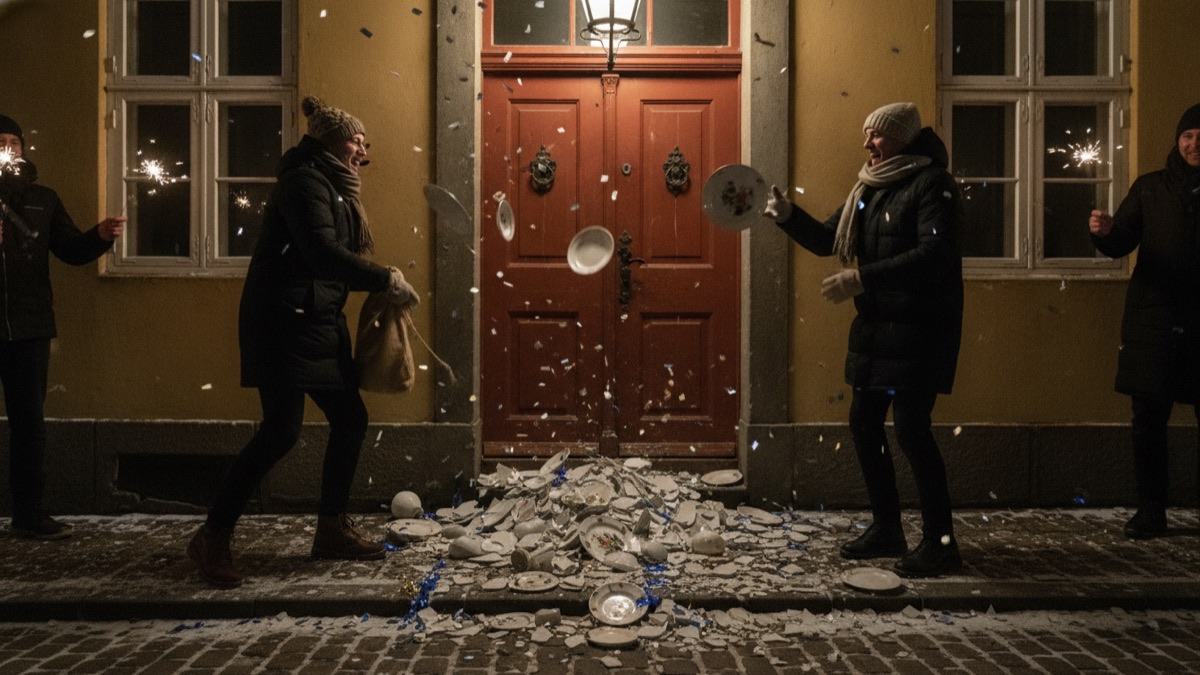
In Denmark, friends and family save up chipped or unused plates and dishes throughout the year, then smash them against the front doors of neighbors and loved ones on New Year's Eve. The bigger the pile of broken crockery on your doorstep the next morning, the more it signals you are well-liked and have many friends.
Danes also traditionally stand on chairs and literally jump off them together at midnight, symbolically 'leaping' into the new year, a lighthearted ritual meant to leave bad luck behind in the old year.
More Global New Year Customs
In Ecuador and several other Latin American countries, people burn effigies called año viejo (old year), stuffed scarecrow-like figures representing the past year's misfortunes, at midnight to symbolically destroy bad memories and start fresh. In the Philippines, round shapes are believed to bring prosperity, so families display round fruits and some people wear polka dots to attract coins and wealth in the new year.
In South Africa's Johannesburg, particularly in the Hillbrow neighborhood, an old and now largely discouraged tradition involved throwing old furniture and appliances out of apartment windows to symbolize discarding the old year, a practice authorities have worked to curb due to safety concerns. Meanwhile, in Brazil, many people dress in white and jump over seven ocean waves while making seven wishes, an offering to Yemanjá, the goddess of the sea in Afro-Brazilian religious traditions.
Why These Traditions Persist
Anthropologists note that New Year rituals across cultures share common themes: cleansing the old, welcoming the new, and taking symbolic action to influence luck, even when people don't literally believe smashing a plate guarantees popularity. These acts provide a sense of control and hope at a moment that otherwise feels arbitrary — the calendar flipping from one number to the next.
Globalization has also blended traditions, so it's now common to see people in many countries combining local customs with imported ones, like eating Spanish grapes in cities far from Spain, showing how these once-local rituals have become part of a shared global New Year culture.
Sources
- Encyclopaedia Britannica — Overview of New Year's Day customs and history
- Smithsonian Magazine — Cultural features on global New Year traditions
- National Geographic — Global culture coverage of New Year customs
FAQ
Why do Spaniards eat twelve grapes at midnight?
Each grape eaten with the twelve chimes of midnight represents good luck for one of the twelve months ahead, a tradition called las doce uvas de la suerte that began in the early 1900s.
What does breaking plates on doorsteps mean in Denmark?
Danes smash saved-up plates on the doorsteps of friends and family on New Year's Eve, and a large pile of broken crockery the next morning is seen as a sign of having many friends.
What is an año viejo in Latin American New Year traditions?
An año viejo is a stuffed effigy representing the past year's bad luck and misfortunes, which is burned at midnight in Ecuador and other Latin American countries to symbolically leave troubles behind.
Why do some people wear white and jump over waves on New Year's Eve?
In Brazil, many people dress in white and jump over seven ocean waves while making wishes, an offering tradition honoring Yemanjá, the sea goddess in Afro-Brazilian religious practice.
About the Author
doyouknow.app Editorial Team — We draw on cultural and anthropological references to explore how communities around the world mark the passage of time.
Loved This Article?
Share it on WhatsApp → Share on WhatsApp
Get more guides in your inbox — Subscribe to our newsletter for weekly surprising stories from Egypt, Saudi Arabia, Dubai, and beyond.