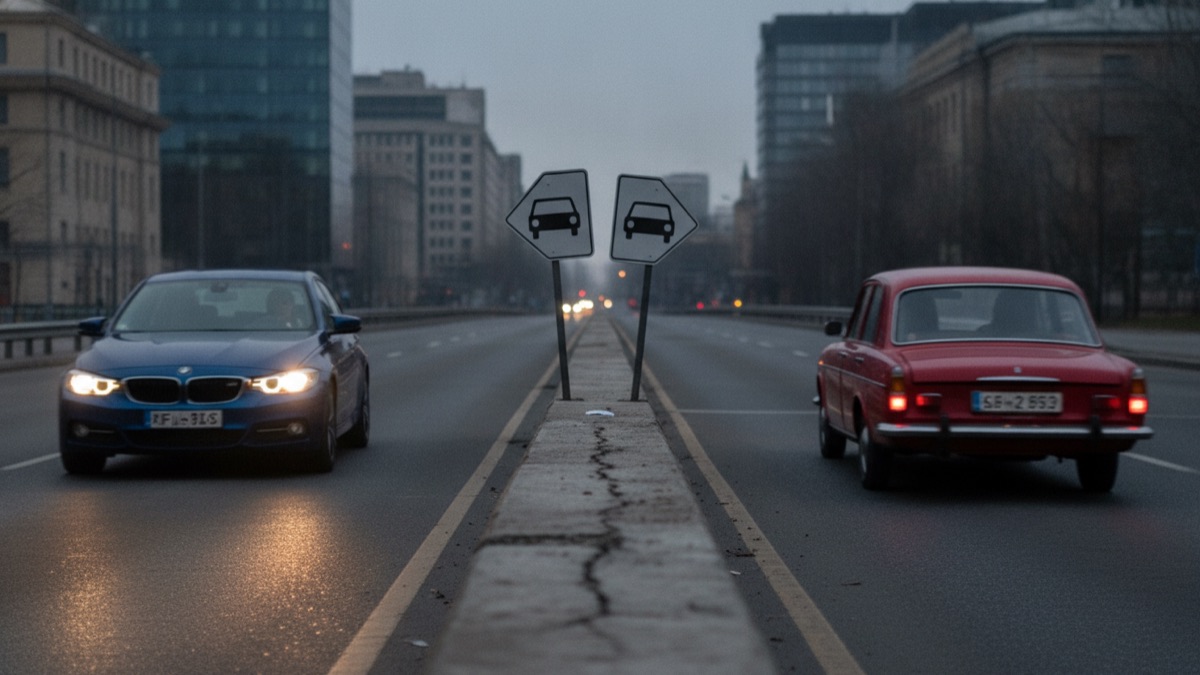
Introduction
About a third of the world's countries drive on the left side of the road, while the rest drive on the right. This split is not random. It traces back centuries, long before the automobile existed, to practical decisions about horses, swords, and later, deliberate political choices made by empires and revolutionaries.
Today the divide roughly follows old colonial and trade patterns: most former British territories drive on the left, while most of continental Europe, the Americas, and countries influenced by France or the United States drive on the right.
The Horseback and Swordsmanship Origins
Long before cars, most people traveled by horse or horse-drawn cart, and most people are right-handed. Historians widely believe early travelers in medieval Europe kept to the left so their right hand — the sword hand — remained free to greet passersby peacefully or defend against oncoming threats, since most roads had no clear lanes and travelers passed each other closely.
Mounting a horse also favored the left side of the road: a rider typically mounts from the horse's left using their dominant right hand and leg, which is easier and safer to do from the left-hand side of a road rather than stepping into oncoming traffic.
Why Many Countries Switched to the Right
The shift toward right-hand driving is often linked to large freight wagons pulled by multiple horses, common in France and North America during the 18th century. Drivers typically sat on the rear-left horse to free their right arm for the whip, which meant they could see oncoming traffic better by keeping their wagon to the right side of the road.
Napoleon Bonaparte is widely credited with formalizing right-hand traffic across much of continental Europe, either because he was left-handed and preferred his sword arm positioned differently, or, more likely according to historians, because he wanted to standardize traffic rules across the territories he conquered, imposing right-hand driving in the lands under French control.
Britain and the Spread of Left-Hand Driving
Britain never adopted Napoleon's right-hand rule and continued to formalize left-hand traffic through its own legislation, including the Highway Act of 1835. As the British Empire expanded, it exported this convention to its colonies and territories, which is why countries including Australia, India, South Africa, Japan, and much of Southern and Eastern Africa still drive on the left today, regardless of whether they remain part of the Commonwealth.
Japan is a notable case: it was never a British colony, but it adopted left-hand driving during the 19th century, partly influenced by British railway engineers who helped build its early rail network, and the convention carried over into road traffic.
The Modern Map and Occasional Switches
Roughly 165 countries and territories drive on the right today, while around 75 drive on the left, representing about a third of the world's countries and a similar share of the world's population. A handful of countries have switched sides entirely in the modern era for practical reasons, most notably Sweden, which switched from left to right-hand driving in 1967 in a coordinated nationwide event, largely to align with its neighbors Norway and Finland and reduce cross-border accidents.
Switching a country's driving side is enormously expensive and disruptive, requiring changes to road signage, vehicle design, and driver habits virtually overnight, which is why very few countries have done it since Sweden's switch, and most experts consider the current global divide effectively permanent.
Sources
- Encyclopaedia Britannica — Traffic regulation and history of road-side conventions
- UK Government publications — Historical UK road traffic legislation, including the Highway Act
- Smithsonian Magazine — Historical coverage of driving-side conventions and Sweden's 1967 switch
- US Department of Transportation — General reference on road traffic standards and conventions
FAQ
Which side of the road do most countries drive on?
About two-thirds of the world's countries, roughly 165, drive on the right side of the road, while around 75 countries and territories drive on the left.
Why do former British colonies drive on the left?
As the British Empire expanded, it exported its left-hand driving convention, formalized in Britain through legislation like the Highway Act of 1835, to its colonies and territories, many of which still drive on the left today.
Did Napoleon really decide that Europe should drive on the right?
Napoleon Bonaparte is widely credited with formalizing right-hand traffic across much of continental Europe during his conquests, likely to standardize traffic rules across the territories under French control.
Has any country switched driving sides recently?
Sweden switched from left-hand to right-hand driving in a coordinated nationwide event in 1967, mainly to align with neighboring Norway and Finland and reduce cross-border traffic accidents.
Why did horseback riders originally keep to the left?
Most people are right-handed, and historians believe early travelers on horseback kept to the left so their right hand, often their sword hand, remained free to greet others or respond to threats from oncoming traffic.
About the Author
doyouknow.app Editorial Team — We combine established historical and transportation references to explain the surprising, centuries-old origins of everyday conventions like driving-side rules.
Loved This Article?
Share it on WhatsApp → Share on WhatsApp
Get more guides in your inbox — Subscribe to our newsletter for weekly surprising stories from Egypt, Saudi Arabia, Dubai, and beyond.