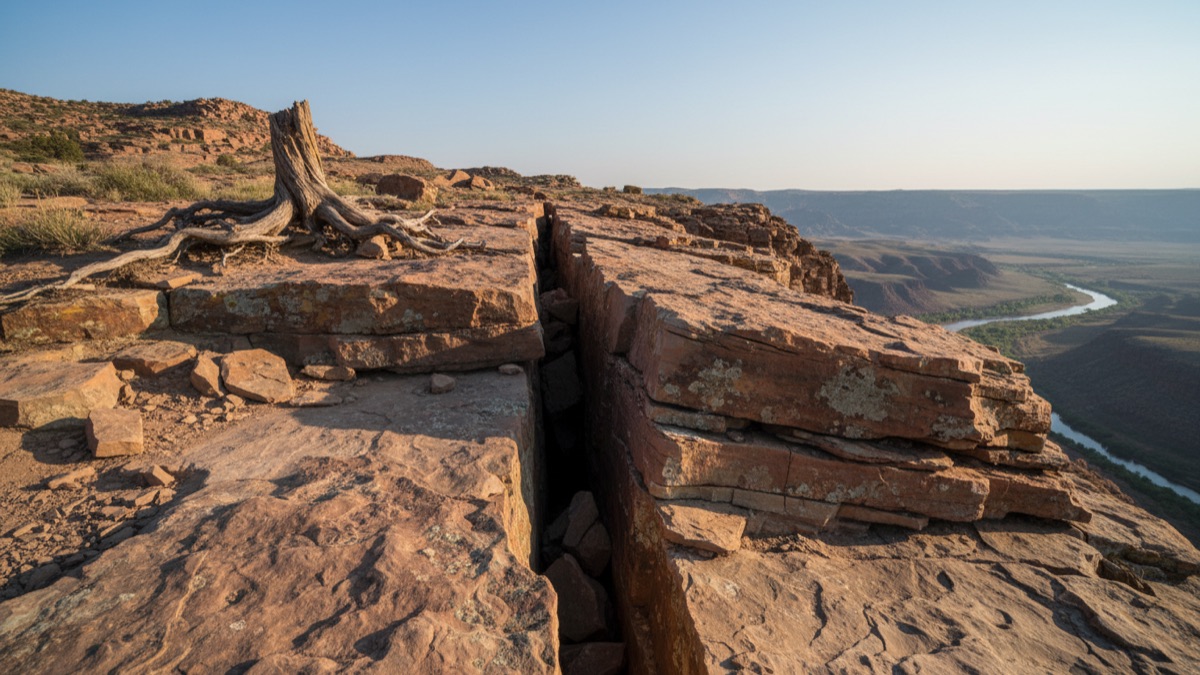
Earthquakes are caused by the sudden release of stress that builds up along fault lines, cracks in the Earth's crust where large sections of tectonic plates grind against, pull away from, or push into one another over long periods of time.
The Earth's outer shell is broken into several large tectonic plates that move extremely slowly, but friction along their edges causes stress to accumulate rather than release smoothly, similar to bending a stick until it suddenly snaps.
Stress Building Along Fault Lines
How the Energy Travels as Seismic Waves
When accumulated stress finally exceeds the friction holding a fault in place, the rock slips suddenly, releasing stored energy as seismic waves that radiate outward from the point of rupture and cause the ground shaking people feel.
Most earthquakes occur along well-mapped plate boundaries, like the Pacific Ring of Fire, though smaller earthquakes can also happen away from major boundaries due to more localized fault activity or, in some cases, human activities like large-scale fluid injection underground.
Sources
- Wikipedia — overview of earthquake mechanisms and causes
- United States Geological Survey — scientific background on earthquake formation and monitoring
- National Oceanic and Atmospheric Administration — background on plate tectonics and geological hazards
FAQ
What is a fault line?
A fault line is a crack in the Earth's crust where sections of tectonic plates grind against, pull away from, or push into each other, building up stress over time.
Why do earthquakes happen suddenly rather than gradually?
Stress builds up gradually along a fault due to friction, but once it exceeds the friction holding the rock in place, it releases suddenly, similar to a bent stick snapping.
Can earthquakes happen away from major plate boundaries?
Yes — smaller earthquakes can occur due to localized fault activity or, in some cases, human activities like large-scale underground fluid injection.
About the Author
We reference Wikipedia, United States Geological Survey, and National Oceanic and Atmospheric Administration to explain the background and current understanding of this topic.
Loved This Article?
Share it on WhatsApp → Share it on WhatsApp
Get more guides in your inbox — Subscribe to our newsletter for weekly surprising stories from Egypt, Saudi Arabia, Dubai, and beyond.