Introduction
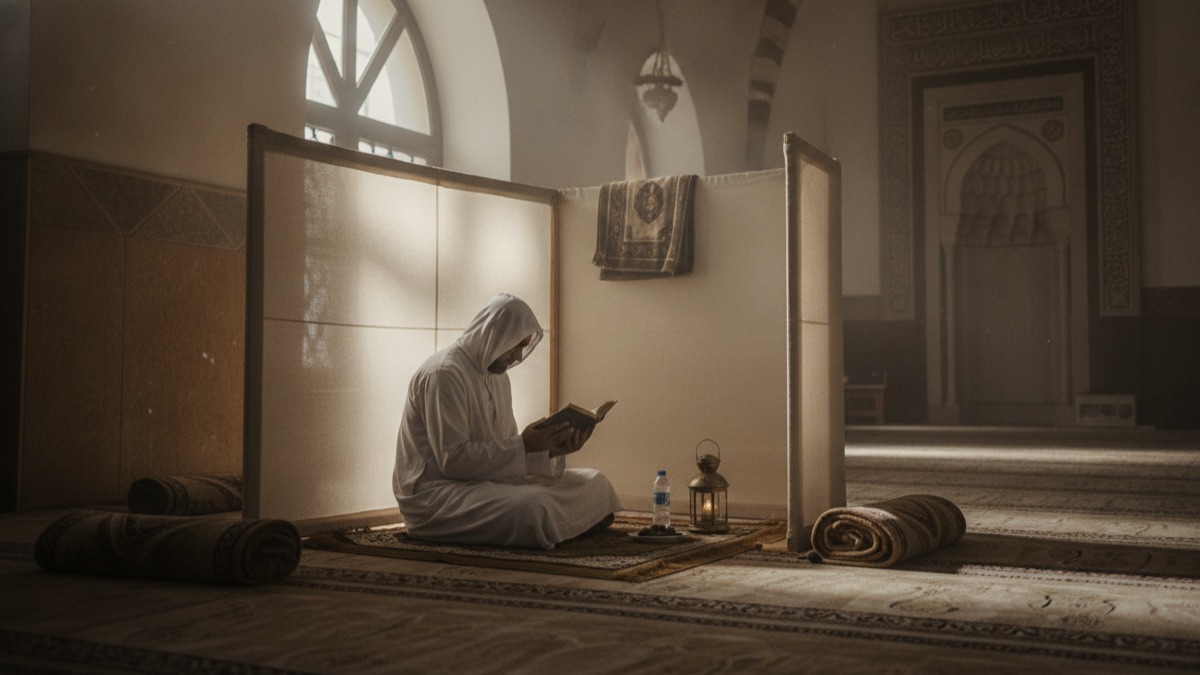
Itikaf is a period of voluntary spiritual seclusion in a mosque, during which a person dedicates themselves to worship, reflection, and remembrance of God while withdrawing from ordinary daily life and distractions.
It is most commonly observed during the last ten days of Ramadan, following the practice of Prophet Muhammad, who is reported to have regularly performed itikaf during this period.
What Itikaf Actually Involves
A person in itikaf typically remains inside the mosque for the full duration, leaving only for essential needs, and spends the time in prayer, reading Quran, dhikr (remembrance of God), and quiet reflection rather than socializing or conducting worldly business.
While itikaf can technically be observed for any length of time, a full ten-day itikaf during Ramadan's final third is the most widely practiced form, chosen partly because it increases the chance of catching Laylat al-Qadr, the Night of Decree.
Who Observes Itikaf
Itikaf is not obligatory for most Muslims — it is considered a highly recommended (sunnah) practice rather than a required pillar of worship, though it becomes obligatory if a person vows to perform it.
Many mosques set aside dedicated space and support for worshippers observing itikaf during Ramadan's final days, and the practice is generally open to men and women, with logistics varying by mosque and local custom.
Sources
- IslamQA — religious rulings and guidance on itikaf
- Sunnah.com — hadith collections referencing the Prophet's practice of itikaf
- Encyclopaedia Britannica — background on the practice within Islamic tradition
FAQ
When is itikaf usually performed?
Most commonly during the last ten days of Ramadan, following the practice attributed to Prophet Muhammad, though it can technically be observed at other times as a voluntary act of worship.
Is itikaf obligatory?
No, it is a highly recommended (sunnah) practice rather than obligatory, unless a person specifically vows to perform it, at which point it becomes binding for them.
Can women observe itikaf?
Yes, itikaf is open to both men and women, though the specific space and arrangements within a mosque typically vary depending on the mosque and local custom.
About the Author
We reference IslamQA and Sunnah.com and Encyclopaedia Britannica to explain the background and current understanding of this topic.
Loved This Article?
Share it on WhatsApp → Share on WhatsApp
Get more guides in your inbox — Subscribe to our newsletter for weekly surprising stories from Egypt, Saudi Arabia, Dubai, and beyond.