Introduction
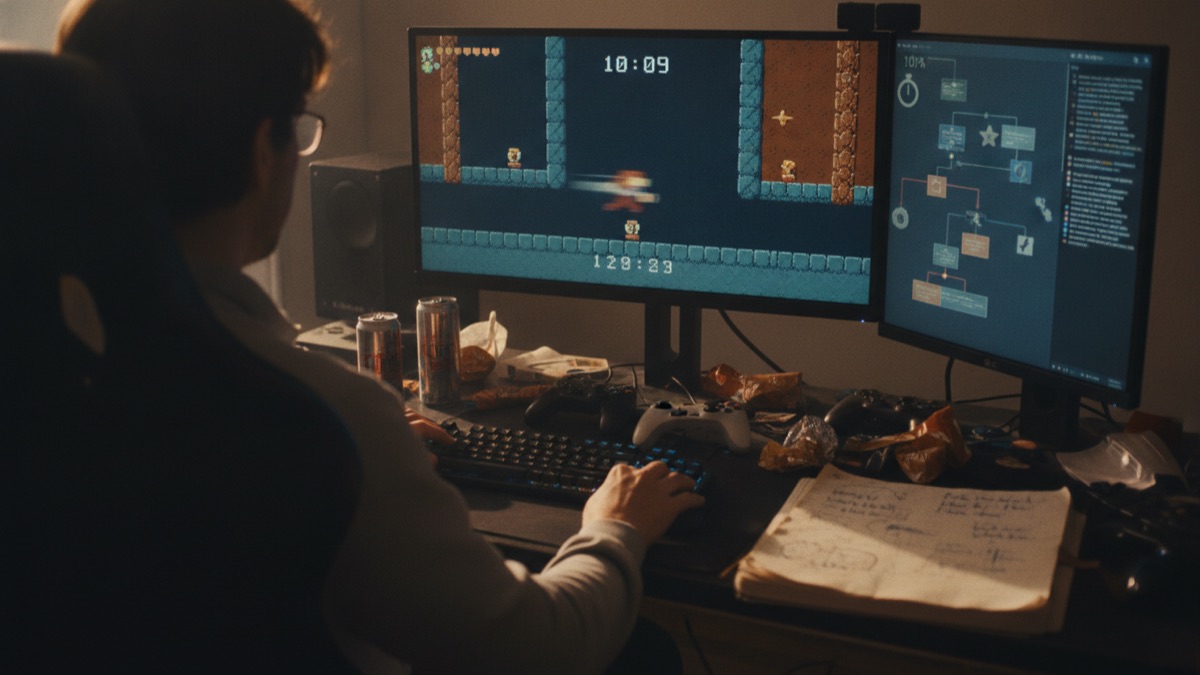
A speedrun is an attempt to complete a video game — or a defined part of one — as fast as possible, under rules agreed on by the game's community. What began as players competing over Quake demos in the 1990s has become a global hobby with leaderboards for tens of thousands of games, world records measured in milliseconds, and charity events watched by millions.
Speedrunning is not just playing quickly. It is closer to a sport built on a game: runners develop optimized routes, practice frame-perfect tricks, study the game's code for exploitable glitches, and submit runs for public verification. A single world record attempt can represent hundreds of hours of practice.
Categories and Rules
Every game defines its own competitive categories. The two classics are any%, where the only goal is reaching the end by any means the game allows — glitches, skipped levels, sequence breaks included — and 100%, which requires collecting every item, completing every objective, or finishing whatever the community defines as full completion.
Between and beyond those poles sit dozens of variants: glitchless runs that ban exploits, low% runs that finish with the minimum possible items, and game-specific categories like beating a Zelda game without the sword. Each category on speedrun.com, the hobby's central leaderboard site since 2014, carries its own written ruleset, so a record means the same thing to everyone competing for it.
Timing, Tools, and Verification
Runs are timed with split software like LiveSplit, which tracks segment times against the runner's personal best. Timing conventions vary by game: real time, in-game time, or load-removed time that pauses the clock during loading screens to keep competition fair across different hardware.
Verification is community-run. Top-level runs on speedrun.com typically require complete video proof, and moderators familiar with the game review submissions frame by frame when records are disputed. Because cheating scandals have hit even famous runners, modern verification can include input displays, audio analysis, and inspection of the original recording files.
The Community and Its Events
The hobby's showcase is Games Done Quick, a marathon series that since 2010 has gathered top runners to perform live for charity. Its flagship events, Awesome Games Done Quick and Summer Games Done Quick, have raised tens of millions of dollars for organizations like the Prevent Cancer Foundation and Doctors Without Borders.
Beyond the marathons, the community lives on Discord servers, per-game forums, and YouTube channels where world record progressions are analyzed like sports history. Rivalries and record chases — the decades-long war over Super Mario Bros. times is the most famous — give the hobby a narrative drama that draws in people who never speedrun themselves.
Why People Speedrun
Runners describe the appeal as mastery: after hundreds of attempts, a run where every trick lands feels like a perfect athletic performance. The hobby also preserves games in an unexpected way — speedrunners document glitches and engine quirks that even the original developers never knew existed.
And it democratizes competition. Anyone with a copy of the game and a timer can post a time, climb the leaderboard of a niche category, or chase a world record. That open ladder, plus the shared culture of celebrating personal bests as warmly as records, is why a hobby about playing alone has become so deeply communal.
Sources
- Wikipedia — history, categories, and culture of speedrunning
- speedrun.com — the central leaderboard hosting rules and records for tens of thousands of games
- Games Done Quick — the charity marathon series and its fundraising history
FAQ
What is speedrunning?
Speedrunning is completing a video game, or a defined part of it, as fast as possible under community-agreed rules. Runners optimize routes, practice difficult tricks, and submit video-verified times to leaderboards such as speedrun.com.
What does any% mean in speedrunning?
Any% is the most common speedrunning category: the runner must reach the end of the game as fast as possible using anything the game allows, including glitches and skipped content. The percentage refers to completion — any amount of the game is acceptable as long as the ending is reached.
What is the difference between any% and 100%?
Any% requires only reaching the end by any permitted means, while 100% requires full completion — collecting every item, finishing every objective, or meeting whatever definition of completion the game's community has written into the category rules. A 100% run is usually far longer and demands different routing.
How are speedruns verified?
Runs submitted to major leaderboards require full video proof, and volunteer moderators who know the game review them. High-profile records may also require visible controller inputs, original recording files, and frame-by-frame analysis to rule out splicing or tool assistance.
What is Games Done Quick?
Games Done Quick is a series of live speedrunning marathons held since 2010, where top runners perform in front of an audience to raise money for charity. Its events have raised tens of millions of dollars for organizations such as the Prevent Cancer Foundation and Doctors Without Borders.
About the Author
doyouknow.app Editorial Team — We reference speedrunning community documentation, including speedrun.com rules and Games Done Quick event records, to explain how the hobby works.
Loved This Article?
Share it on WhatsApp → Share on WhatsApp
Get more guides in your inbox — Subscribe to our newsletter for weekly surprising stories from Egypt, Saudi Arabia, Dubai, and beyond.