Introduction
Surrealism was an artistic and literary movement founded in Paris in 1924, when poet André Breton published the first Surrealist Manifesto, explicitly aiming to unlock the creative power of the unconscious mind.
It grew out of the earlier Dada movement's rejection of rational, bourgeois values after World War I, but channeled that rebellion into a more structured exploration of dreams, chance, and irrational imagery rather than pure anti-art provocation.
Techniques and Key Artists
Surrealists borrowed heavily from Sigmund Freud's theories of the unconscious, using techniques like automatic drawing — creating art without conscious control — to try to access imagery from beneath rational thought.
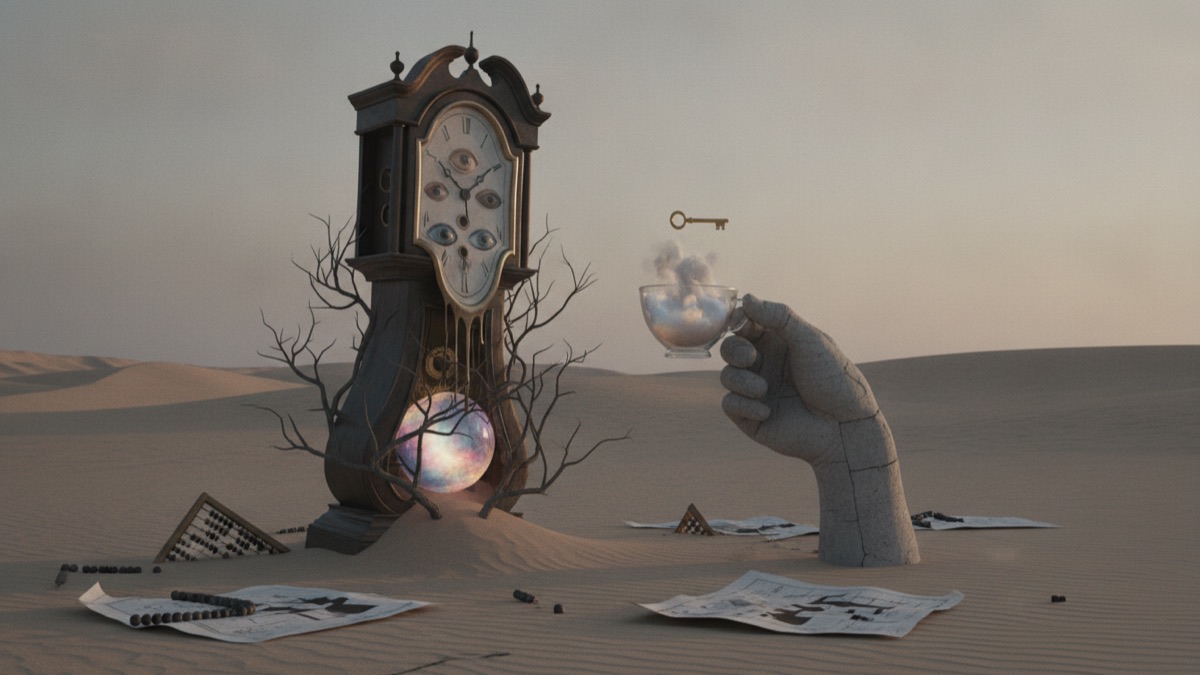
Painters including Salvador Dalí, known for melting clocks and dreamlike distortion, and René Magritte, known for placing ordinary objects in impossible or unsettling contexts, became the movement's most recognizable figures.
Why It Mattered
Surrealism extended beyond painting into literature, film, and photography, and directly influenced later movements including abstract expressionism through its emphasis on spontaneous, unconscious creation.
Its central idea — that logical, conscious thought is not the only or even the best path to meaningful art — remains influential in contemporary art and continues to shape how dreamlike or illogical imagery is read and valued.
Sources
- Museum of Modern Art (MoMA) — museum overview of surrealism and key works
- Tate — art history overview of the movement
- Encyclopaedia Britannica — origins and key figures of surrealism
FAQ
Who founded Surrealism?
Poet André Breton founded the movement in Paris in 1924 with the publication of the first Surrealist Manifesto, which framed art as a way to access the unconscious mind.
Is Surrealism the same as Dadaism?
No, though Surrealism grew out of Dada's rejection of rational, conventional values after World War I. Surrealism channeled that rebellion into structured exploration of dreams and the unconscious rather than pure anti-art provocation.
Who are the most famous Surrealist painters?
Salvador Dalí and René Magritte are among the most recognizable, known respectively for dreamlike distortions like melting clocks and for placing ordinary objects in impossible, unsettling settings.
About the Author
We reference the Museum of Modern Art and Tate and Encyclopaedia Britannica to explain the background and current understanding of this topic.
Loved This Article?
Share it on WhatsApp → Share on WhatsApp
Get more guides in your inbox — Subscribe to our newsletter for weekly surprising stories from Egypt, Saudi Arabia, Dubai, and beyond.