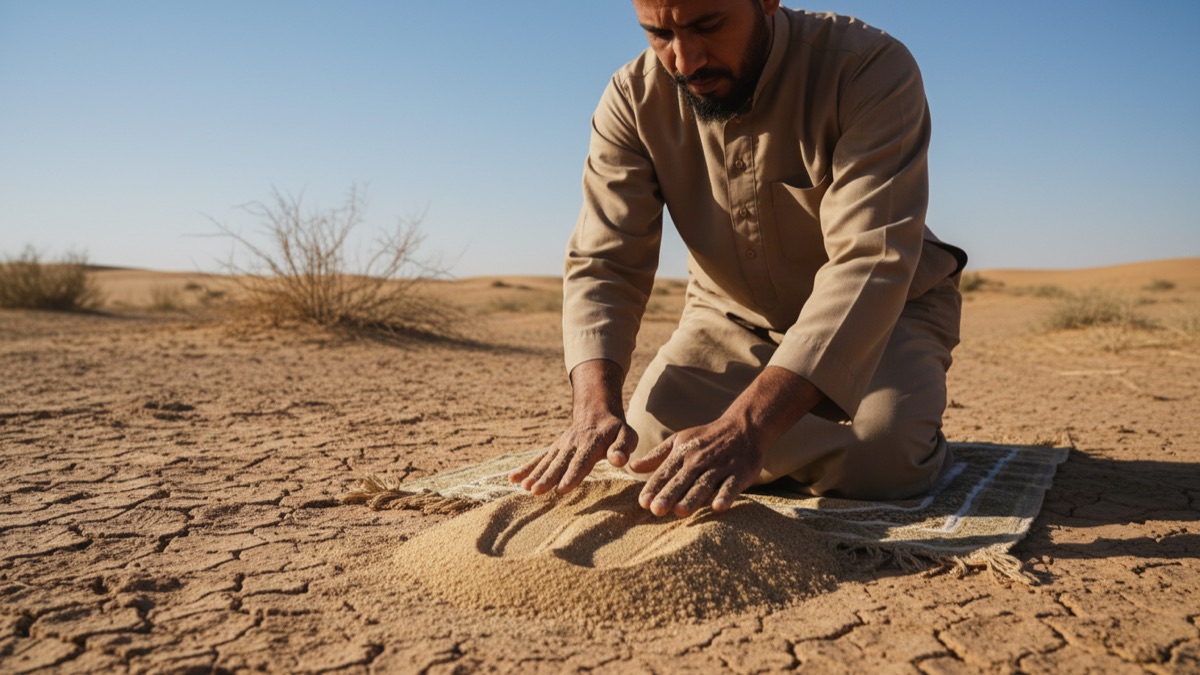
Tayammum is a form of ritual purification in Islam performed with clean earth, sand, or dust instead of water. Most schools of Islamic jurisprudence permit it as a substitute for wudu (ablution) or ghusl (full ritual washing) under specific circumstances described in the Quran and hadith.
The practice exists so that ritual purity, required before prayer and some other acts of worship, remains achievable even when water is unavailable, insufficient, or would worsen illness or injury.
When Tayammum Replaces Wudu or Ghusl
How the Practice Is Performed
Common situations where tayammum is generally permitted include traveling through areas without accessible water, a medical condition where water contact would cause harm, and extreme cold where using water poses genuine risk. The specific conditions and their details differ somewhat between schools of jurisprudence, so those seeking a religious ruling for a personal situation typically consult a qualified scholar.
The basic method, again with some variation by school, involves striking the palms on clean earth or a similar surface, then wiping the face once and the hands (up to the wrists or, in some views, the forearms) once each. It is generally treated as a temporary substitute rather than a permanent replacement for water-based purification once water becomes available again.
Sources
FAQ
Can tayammum be performed with sand from any location?
Generally, clean earth, sand, or dust free of impurities is required; the precise acceptable surfaces are described somewhat differently across schools of jurisprudence.
Does tayammum expire the same way wudu does?
Yes, it is generally considered valid until the same things that would break wudu occur, or until water becomes available, at which point most scholars hold that wudu with water should be used instead.
Is tayammum mentioned in the Quran?
Yes, tayammum is referenced in the Quran, including passages discussing purification when water cannot be found or used, though the exact wording and its interpretation are best explored through a trusted translation and tafsir.
About the Author
We reference Encyclopaedia Britannica, Oxford Islamic Studies Online to explain the background and current understanding of this topic.
Loved This Article?
Share it on WhatsApp → Share it on WhatsApp
Get more guides in your inbox — Subscribe to our newsletter for weekly surprising stories from Egypt, Saudi Arabia, Dubai, and beyond.