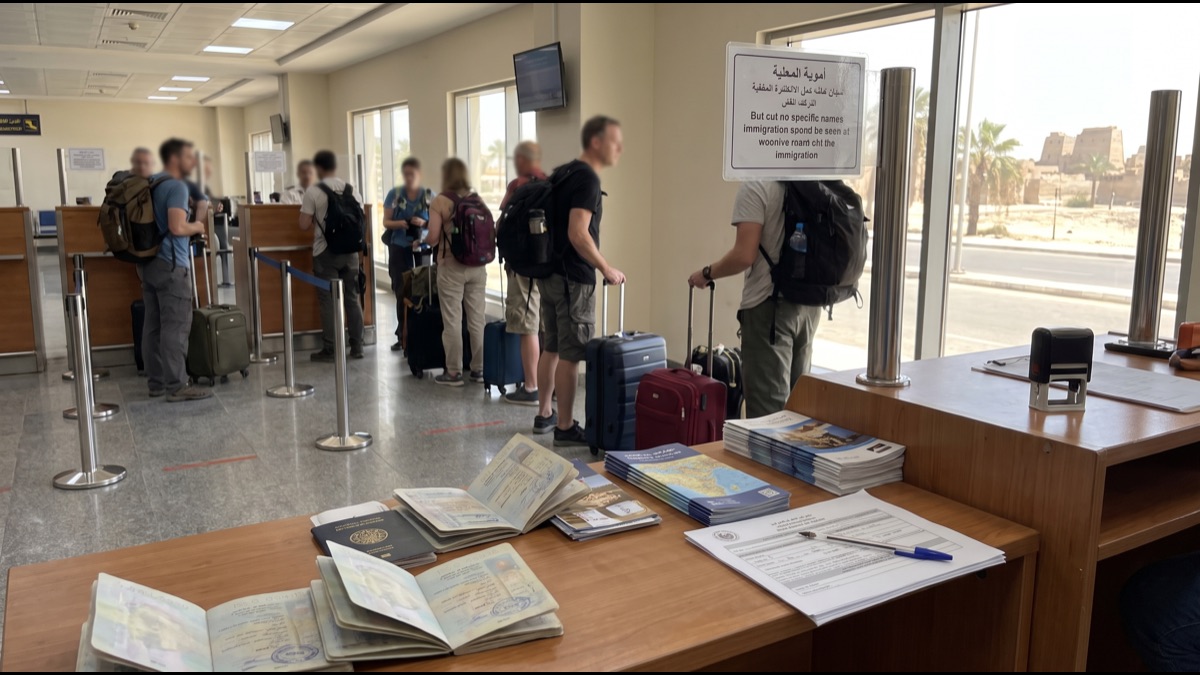
Introduction
Most travelers visiting Egypt for tourism have three possible entry routes: applying for an e-Visa online before travel, purchasing a visa on arrival at the airport, or applying in person through an Egyptian embassy or consulate. Which routes are available to you depends entirely on your nationality, and the right choice affects both convenience and how much time you spend in immigration queues on arrival.
This guide compares the three options directly so you can choose the most efficient route for your specific passport, rather than defaulting to whichever option is most commonly discussed online.
Option 1: The e-Visa
The e-Visa, applied for online through the official portal, visa2egypt.gov.eg, is the most predictable option for eligible nationalities, since approval is confirmed before you travel and you skip the visa-purchase line on arrival entirely. It is available as a single-entry or multiple-entry tourist visa, generally valid for a 30-day stay, with fees typically in the range of $25 to $60 depending on entry type, though exact amounts should always be confirmed on the official portal.
Processing usually takes a few business days, so applying at least a week before travel is recommended rather than relying on the fastest possible turnaround.
Option 2: Visa on Arrival
Many of the same nationalities eligible for the e-Visa can alternatively purchase a visa on arrival at Cairo International Airport and several other major airports, generally paid in cash in US dollars or euros at a bank kiosk before passport control. This remains a valid fallback for travelers who did not arrange an e-Visa in advance, but it involves standing in a queue on arrival and is not available at every entry point, particularly land border crossings from Israel or Jordan.
Visa on arrival is generally not available in advance for review, meaning there is no way to confirm approval before your flight, which is the main practical disadvantage compared to the e-Visa.
Option 3: Embassy or Consulate Visa
Nationalities not eligible for the e-Visa or visa on arrival must apply in person, or through a visa agent, at an Egyptian embassy or consulate before travel. This route generally takes longer and requires more documentation, including proof of accommodation, return flights, and sometimes a formal invitation or itinerary, and processing times vary significantly by embassy location and current caseload.
Travelers uncertain which category applies to them should check the current eligible-nationality list on the official e-Visa portal first, since this is the fastest way to confirm which of the three routes is actually available before making any other travel arrangements.
Which Option Should You Choose?
If your nationality is eligible for the e-Visa, it is almost always the better choice: it is confirmed before departure, avoids arrival queues, and can be completed entirely online without visiting an embassy. Visa on arrival remains a reasonable backup for last-minute trips when there was no time to apply online, but it carries more uncertainty and queue time.
Regardless of route, your passport must generally be valid for at least six months beyond your planned entry date, and having both a digital and printed copy of any visa approval is a sensible precaution given occasional connectivity issues at airport immigration counters.
Extending Your Stay
Travelers who wish to stay longer than their initial visa allows can generally apply for an extension through the Egyptian Passports and Immigration Authority (Mogamma) in Cairo or regional immigration offices, ideally well before the original visa expires rather than waiting until the final days. Requirements and processing times for extensions can change, so confirming current procedures directly with the immigration authority close to your travel dates is worthwhile.
Sources
- Egypt e-Visa Official Portal — The only official government site for e-Visa applications and eligible-nationality lists
- Egyptian Ministry of Tourism and Antiquities — General travel and entry information for Egypt
- IATA Travel Centre — Independent visa and entry requirement lookup by nationality
- EgyptAir — National carrier entry and travel document requirements
FAQ
What is the difference between an e-Visa and visa on arrival for Egypt?
The e-Visa is applied for and approved online before travel, so you arrive already cleared, while visa on arrival is purchased in cash at the airport after landing, involving a queue and no advance confirmation of approval.
Which nationalities need an embassy visa for Egypt?
Nationalities not eligible for the e-Visa or visa on arrival must apply in person, or through an agent, at an Egyptian embassy or consulate before travel. The current eligible-nationality list on the official e-Visa portal is the fastest way to check your specific category.
Can I extend my tourist visa in Egypt?
Yes, generally through the Egyptian Passports and Immigration Authority (Mogamma) in Cairo or regional immigration offices. It is best to start the extension process well before your original visa expires rather than waiting until the final days.
Is visa on arrival available at Egyptian land borders?
Not always. Visa on arrival is generally available at major airports but is not guaranteed at every entry point, particularly land border crossings from Israel or Jordan, making the e-Visa the more predictable option for travelers using those routes.
How long is an Egypt tourist visa valid for?
Standard tourist e-Visas and visas on arrival generally permit a stay of up to 30 days from the date of entry, though exact validity should be confirmed on the official portal at the time of application since terms can change.
About the Author
doyouknow.app Editorial Team — We track official government visa portals directly to keep our entry-requirement guides current, flagging fees and requirements that change frequently as approximate rather than fixed.
Loved This Article?
Share it on WhatsApp → Share on WhatsApp
Get more guides in your inbox — Subscribe to our newsletter for weekly surprising stories from Egypt, Saudi Arabia, Dubai, and beyond.