Introduction
The Grand Ethiopian Renaissance Dam (GERD) is Africa's largest hydroelectric dam, built by Ethiopia on the Blue Nile close to the Sudanese border. Construction began in 2011, the reservoir was filled in stages through 2024, and the project was officially inaugurated in September 2025 — without the binding operating agreement that downstream Egypt and Sudan have sought for more than a decade.
This explainer covers what the dam is, how its filling and power generation have progressed, why it is so sensitive for Egypt's water security, and how a long series of negotiations brought the three countries to their current standstill. Because the situation evolves, figures here are given as ranges and the political status is described as of mid-2026.
What Is the GERD?
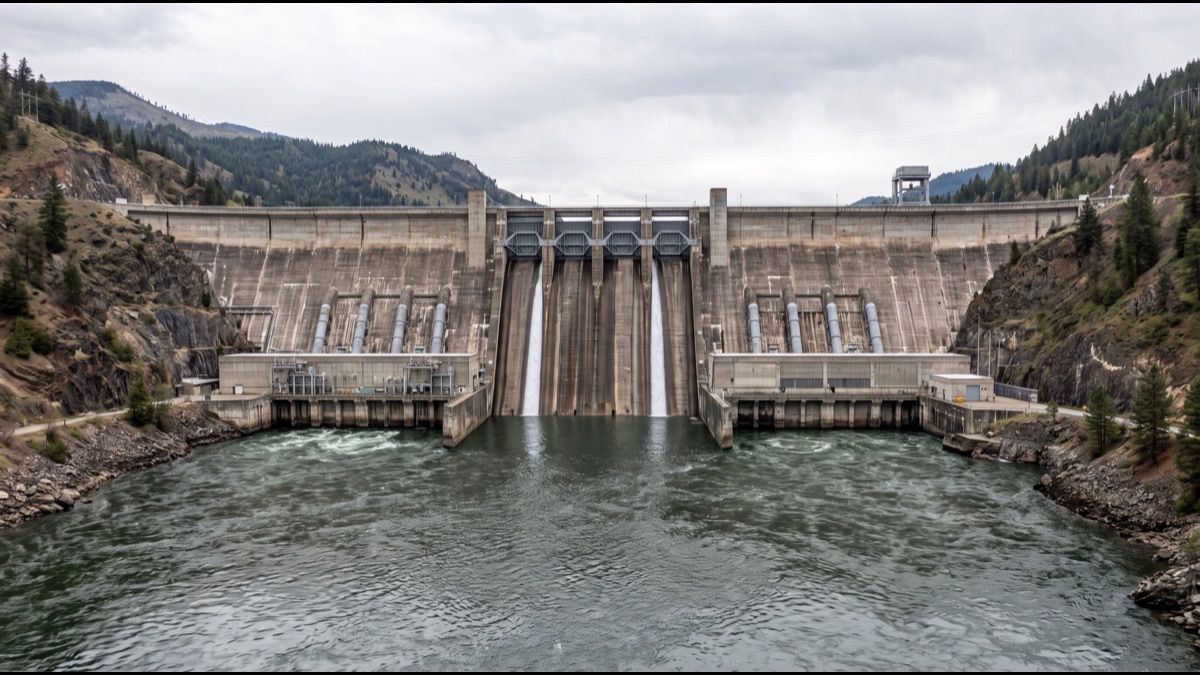
The GERD is a massive roller-compacted concrete dam on the Blue Nile (known in Ethiopia as the Abay) in the Benishangul-Gumuz region, roughly 15 to 30 kilometres from the Sudanese border. The structure stretches about 1.8 kilometres across the valley and stands roughly 145 to 170 metres high depending on the measurement reference used, and its reservoir — named Nigat, meaning "dawn" — is designed to hold about 74 billion cubic metres of water, more than Egypt's entire annual Nile allocation.
The project's planned generating capacity is about 5,150 megawatts from 13 turbines, which would more than double Ethiopia's previous national electricity output and allow power exports to neighbours such as Kenya, Djibouti, and Sudan. Cost estimates generally fall in the range of $4–5 billion, financed mostly inside Ethiopia through government funding, public bonds, and citizen donations, with the turbine package financed externally, including by China Exim Bank. The dam was built by the Italian firm Webuild, formerly Salini Impregilo.
Filling and Operation Status
Ethiopia began filling the reservoir in July 2020 and proceeded in annual rainy-season phases, completing the process in September 2024. The first turbines started generating electricity in February 2022, and by the September 2025 inauguration the full set of 13 turbines was reported operational, with expected annual output in the region of 15,700 gigawatt-hours at full capacity.
The Blue Nile matters because it contributes around 60% of the Nile's total annual flow on average, and a much larger share during the flood season. Hydropower dams do not consume water the way irrigation does — water passes through turbines and continues downstream — so many technical studies expect long-term average flows to Egypt to change little in normal-rainfall years. The real risks concentrate in two places: the filling years, when part of the flow is held back, and any future drought sequence managed without coordination.
Why It Matters to Egypt
Egypt's population, now well above 100 million, depends on the Nile for roughly 90% or more of its freshwater. Under the 1959 Nile Waters Agreement between Egypt and Sudan, Egypt's annual share is 55.5 billion cubic metres and Sudan's 18.5 billion; Ethiopia was never a party to that agreement or to the earlier 1929 Anglo-Egyptian treaty, and it rejects them as colonial-era arrangements. Egypt's own estimates place its total water needs around 114 billion cubic metres a year against resources of under 60 billion, leaving per-capita availability below the common water-scarcity threshold of 500 cubic metres.
Cairo therefore treats the dam as an existential issue: its central demand is a legally binding agreement on how the GERD is filled and, above all, how it would be operated during drought years. Egypt has also invested in adaptation — desalination plants, wastewater treatment and reuse, irrigation upgrades, and reduced planting of water-intensive crops such as rice. Sudan holds a middle position: it could gain from flood regulation and cheaper electricity, but it worries about the safety of its own dams, such as Roseires, and insists on real-time data sharing.
The Negotiation History
Ethiopia launched the project in 2011, a moment when Egypt was absorbed by its revolution. An International Panel of Experts reviewed the design in 2012–2013, and in March 2015 the three countries signed the Declaration of Principles in Khartoum — the only framework document all three have signed — committing them to cooperation, equitable use, no significant harm, and agreement on filling and operation rules. Ethiopia then began filling unilaterally in 2020, arguing the declaration permitted it.
Talks mediated by the United States and the World Bank in 2019–2020 collapsed when Ethiopia rejected a draft it saw as infringing its sovereignty. African Union-led rounds through 2020 and 2021 made little progress, and a UN Security Council session in July 2021 urged the parties to reach a binding deal under AU auspices. Trilateral talks resumed in 2023 but stalled again by the end of that year. Egypt returned to the Security Council in 2024 and again on the day of the September 2025 inauguration, and later that year it accused Ethiopia of uncoordinated releases that worsened downstream flooding — which Ethiopia attributed to record monsoon rains. As of mid-2026, no binding trilateral agreement governs the dam's filling or operation.
Sources
- Al Jazeera — Report on the GERD inauguration and downstream tensions with Egypt and Sudan
- Associated Press — Egypt's position that the completed dam lacks a legally binding operating agreement
- BBC — Background on the GERD's financing and status
- Fanack Water — Specialist analysis of the GERD dispute and the 2025 Nile floods
FAQ
Where exactly is the GERD located?
On the Blue Nile (Abay) in Ethiopia's Benishangul-Gumuz region, roughly 15 to 30 kilometres from the Sudanese border. Water released from it flows into Sudan and then Egypt, which is why its operation affects both downstream countries directly.
How much water can the GERD hold?
Its reservoir is designed for about 74 billion cubic metres, which exceeds Egypt's entire annual Nile share of 55.5 billion cubic metres under the 1959 agreement. Filling that volume was spread over several rainy seasons to limit the immediate impact downstream.
Does the GERD reduce Egypt's water supply?
It depends on rainfall and coordination. Because the dam generates power rather than consuming water, many studies expect little change in average annual flows in normal years once filling is complete. Egypt's concern is about drought sequences and uncoordinated operation, which is why it demands binding operating rules.
What was agreed in the 2015 Declaration of Principles?
Egypt, Sudan, and Ethiopia committed to cooperation, equitable and reasonable use of the Nile, and causing no significant harm, and they agreed that filling and operation rules should be settled among them. The declaration created no enforcement mechanism, which is why the dispute continued after Ethiopia began filling in 2020.
Is there a final agreement on operating the dam?
As of mid-2026, no. Successive negotiation tracks — US- and World Bank-mediated talks, African Union rounds, and renewed trilateral meetings — failed to produce a binding treaty. Egypt wants enforceable drought-operation rules; Ethiopia prefers non-binding coordination.
About the Author
doyouknow.app Editorial Team — We follow wire-agency and specialist water reporting on the Nile file and present evolving political claims with dates and hedges rather than as settled outcomes.
Loved This Article?
Share it on WhatsApp → Share on WhatsApp
Get more guides in your inbox — Subscribe to our newsletter for weekly surprising stories from Egypt, Saudi Arabia, Dubai, and beyond.