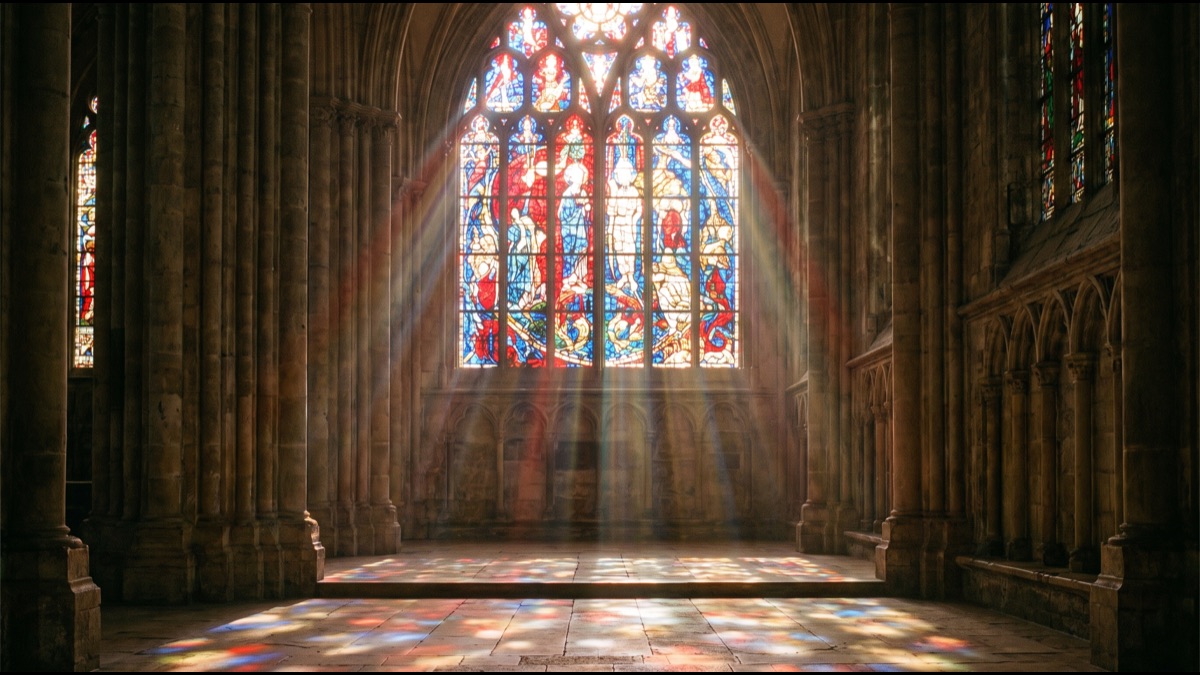
Color in stained glass comes from metal oxide compounds mixed into molten glass, cobalt for blue, copper for red or green, and genuine gold chloride for the deep ruby red that made certain windows especially expensive to produce. One of the earliest substantial surviving examples still in its original setting is found at Augsburg Cathedral in Germany, dating to around 1065 CE.
Individual pieces of colored glass were cut to shape and joined together with strips of lead called cames, a technique flexible enough to render detailed human figures and scenes rather than simple geometric patterns alone.
Coloring Glass With Metal Oxides
From Illiterate Congregations to Gothic Cathedrals
Medieval windows served a genuinely practical purpose beyond decoration: they visually narrated Bible stories for congregations who mostly could not read, functioning as a kind of illuminated visual scripture built into the architecture itself. The technique reached its peak during the Gothic period of the 12th and 13th centuries, when flying buttresses allowed architects to replace thick load-bearing walls with far larger window openings.
Chartres Cathedral and Sainte-Chapelle in Paris remain two of the most celebrated results of that shift. The craft declined significantly after the Reformation and the Enlightenment reduced demand for elaborate religious imagery, before a 19th-century Gothic Revival, driven by figures like William Morris and Louis Comfort Tiffany, renewed interest and introduced new techniques like Tiffany's opalescent glass.
Sources
- Corning Museum of Glass — the history of stained glass techniques
- The Metropolitan Museum of Art — medieval stained glass and Gothic architecture
- Britannica — stained glass through history
FAQ
What actually gives stained glass its color?
Metal oxide compounds mixed into the molten glass during production, cobalt for blue and copper for red or green among them, with genuine gold chloride historically used for deep ruby red.
Why did medieval churches invest so heavily in stained glass?
Beyond decoration, the windows visually told Bible stories for congregations who mostly couldn't read, functioning as a form of religious instruction built directly into the architecture.
What allowed Gothic cathedrals to have such large windows?
The invention of flying buttresses let architects shift structural weight away from the walls themselves, allowing far larger window openings than earlier Romanesque buildings could support.
About the Author
We reference Corning Museum of Glass, The Metropolitan Museum of Art, Britannica to explain the background and current understanding of this topic.
Loved This Article?
Share it on WhatsApp → Share it on WhatsApp
Get more guides in your inbox — Subscribe to our newsletter for weekly surprising stories from Egypt, Saudi Arabia, Dubai, and beyond.