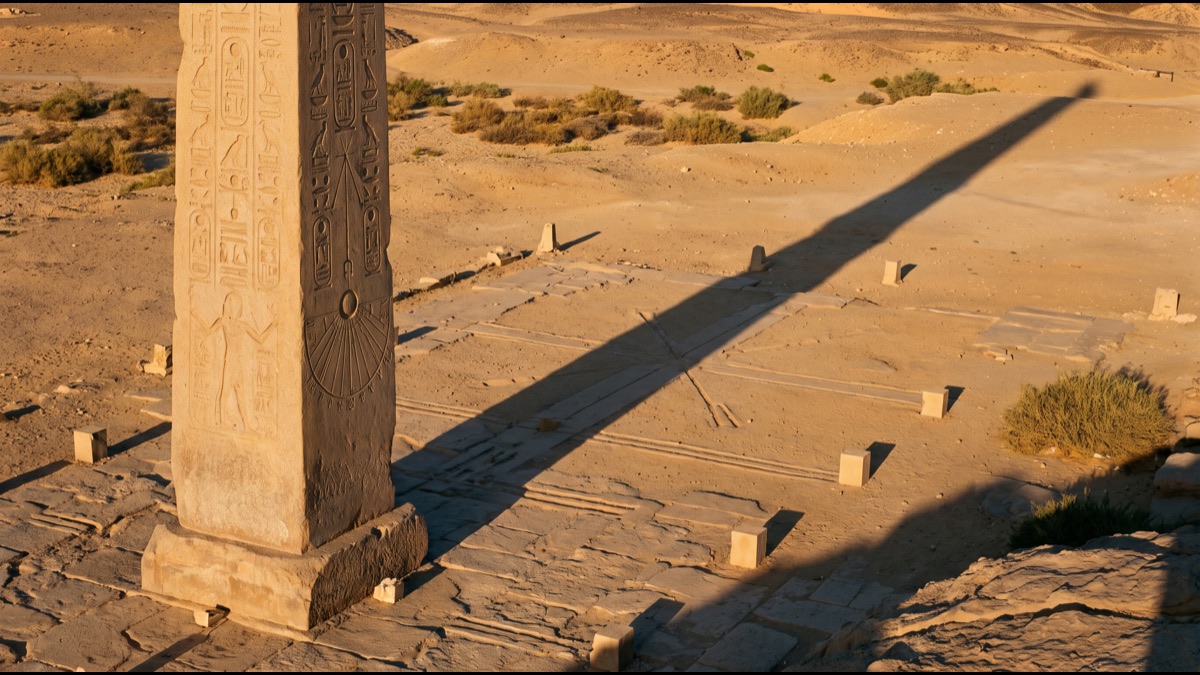
Ancient Egyptians pioneered some of the earliest systematic timekeeping in human history, dividing the day into 24 hours roughly 3,000 years before mechanical clocks existed.
This system was passed down through Greek and Roman civilizations and still structures how the modern world measures a day.
Sundials and the 24-Hour Day
Egyptians used shadow clocks and obelisks as early as around 1500 BCE, dividing daylight into 12 equal parts using the sun's shadow position, and separately dividing nighttime into 12 parts based on the rising of specific groups of stars called decans.
This combined 12 daytime and 12 nighttime division is the direct ancestor of today's 24-hour day, later refined and standardized by Greek astronomers.
Water Clocks for Cloudy Days and Night
Because sundials were useless after dark or on overcast days, Egyptians also developed the water clock (clepsydra) by around 1400 BCE — a container with a small hole that let water drain at a steady rate, marked with lines to indicate elapsed hours regardless of sunlight.
A well-preserved example from the reign of Amenhotep III is among the oldest surviving water clocks and shows markings that already account for how day length varies with the seasons.
Sources
- Wikipedia — overview of ancient timekeeping devices
- Encyclopaedia Britannica — background on ancient Egyptian timekeeping
- Grand Egyptian Museum / Egyptology overviews — artifacts and background on ancient Egyptian science
FAQ
Did ancient Egyptians invent the 24-hour day?
They developed the foundational system of dividing day and night into 12 parts each, which later Greek and Roman astronomers refined into the standardized 24-hour day used worldwide today.
What was a water clock used for?
Telling time at night or on cloudy days when sundials couldn't work, using a steady drip of water marked against hour lines.
How accurate were ancient Egyptian clocks?
Reasonably functional for daily religious and administrative schedules, though hour lengths varied seasonally since they divided the visible day into 12 parts regardless of how long daylight actually lasted.
About the Author
We reference Wikipedia and Encyclopaedia Britannica and Grand Egyptian Museum Egyptology overviews to explain the background and current understanding of this topic.
Loved This Article?
Share it on WhatsApp → Share it on WhatsApp
Get more guides in your inbox — Subscribe to our newsletter for weekly surprising stories from Egypt, Saudi Arabia, Dubai, and beyond.