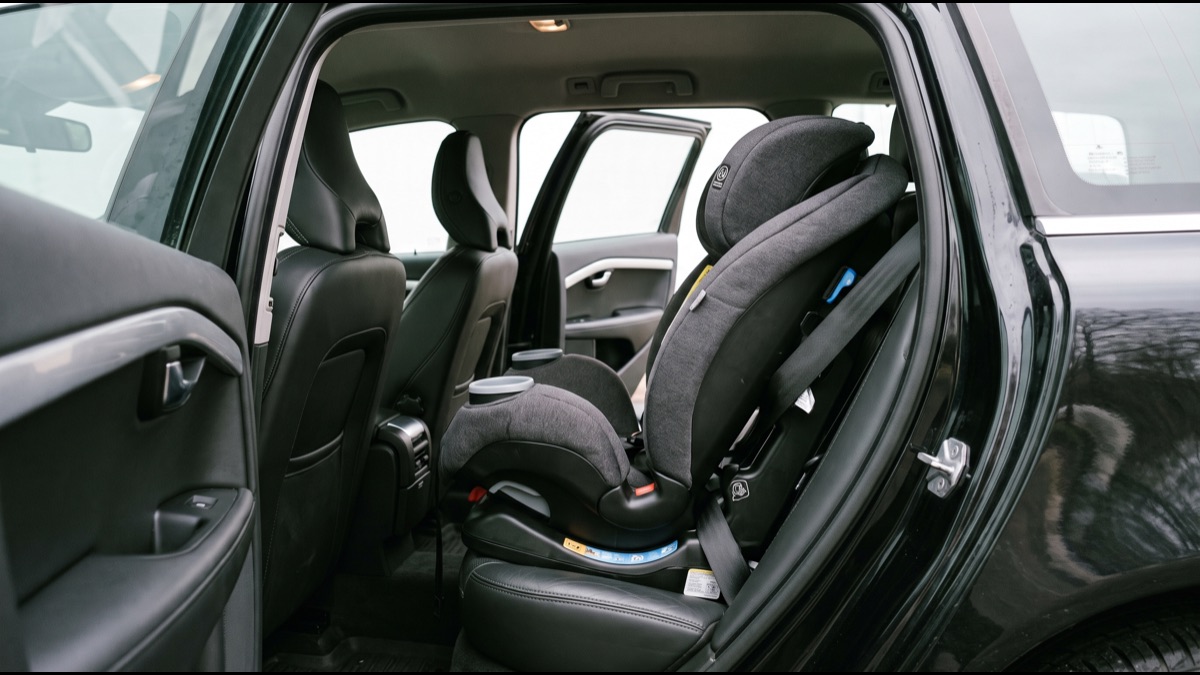
A car seat that has passed every regulatory crash test can still fail to protect a specific child in a specific vehicle. The gap between a certified product sitting on a shelf and a genuinely safe installation in a real car, with a real child, on a real journey, is one of the least understood parts of child passenger safety, and understanding how the certification actually works explains both why it matters and where its limits genuinely are.
Why a Certified Seat Is Only Half the Safety Equation
Every car seat legally sold in a regulated market has passed a minimum government or regional safety standard, but that certification tests the seat itself under controlled laboratory conditions, not how a specific caregiver installs it in a specific vehicle on a given morning. Field studies checking real-world installations have repeatedly found that a majority of seats have at least one meaningful installation error, ranging from harness slack to incorrect recline angle.
This is the central tension in child passenger safety: the product-level engineering is genuinely rigorous and has measurably reduced child fatalities since mandatory standards were introduced, but the system depends on a final human step, correct installation and correct use on every single trip, that no laboratory test can certify in advance.
Manufacturers, regulators, and independent testing organisations each play a distinct role in this system, and understanding who does what clarifies why some claims on a box are legally required while others are pure marketing. A regulator sets the minimum bar a seat must clear to be sold legally; a manufacturer must meet that bar but can also choose to exceed it; and independent testers, where they exist, often apply harsher criteria than the legal minimum specifically to differentiate seats that only just pass from seats with genuine safety margin to spare.
How Regulatory Crash Testing Actually Works
Certification testing mounts the seat on a standardised test bench or sled, not inside an actual vehicle body, and subjects it to a simulated frontal impact at a specified speed using an instrumented crash test dummy scaled to represent a child of a given age and weight. Sensors inside the dummy measure forces on the head, neck, and chest against defined injury thresholds the seat must stay under to pass.
Because the test bench is deliberately generic rather than modelled on any specific car, a seat's certification says nothing directly about how it interacts with the particular seat belt geometry, seat cushion firmness, or anchor point placement of an individual vehicle, which is why manufacturers publish vehicle compatibility lists and why a seat that fits one car can genuinely fit differently in another.
Why Rear-Facing Protects Small Children Better
A rear-facing seat spreads crash forces across the entire back, shoulders, and head of a young child during a frontal collision, the most common serious crash type, rather than concentrating force on the neck the way a forward-facing harness can for a child whose neck muscles and spine are still developing. This is a matter of basic biomechanics rather than manufacturer preference.
Regulatory guidance in most regions now recommends keeping children rear-facing considerably longer than older generations of parents were advised, reflecting crash-data analysis showing meaningfully lower injury rates for rear-facing children even at ages where forward-facing was once considered standard, a recommendation that has shifted noticeably over the past two decades as data accumulated.
How Weight and Height Limits Are Actually Set
The weight and height limits printed on a car seat are not arbitrary manufacturer marketing figures; they represent the range within which the seat was actually crash-tested and certified to perform, and using a seat outside that range, in either direction, means the child is being protected by a system that was never validated for their size.
Limits are set conservatively based on the test dummy sizes available in the applicable standard, and manufacturers who want to certify a seat for a wider range must run additional testing with the corresponding dummy sizes, which is part of why seats explicitly rated for a broader weight range are often more expensive to develop and bring to market.
Airbag interaction adds a further layer to the rear-facing rule that surprises many caregivers: placing a rear-facing seat in a front passenger position with an active airbag is specifically dangerous, since a deploying airbag striking the back of a rear-facing seat can transmit dangerous force directly toward the child's head, which is why regulations and manufacturer instructions are near-universal in prohibiting that specific combination regardless of the vehicle model.
How ISOFIX and LATCH Systems Changed Installation
Rigid anchor systems, known as ISOFIX in most of the world and LATCH in North America, were introduced specifically to reduce the installation errors common with seat-belt-only installation, connecting the seat directly to standardised metal anchor points built into the vehicle body rather than relying on a caregiver correctly threading and tensioning a seat belt.
These systems measurably reduced certain categories of installation error, but they did not eliminate misinstallation entirely, since incorrect recline angle, unused top tether straps, and seats rocking side to side due to inadequate tightening remain common even with a rigid anchor connection, showing that the anchor system solves one specific failure mode rather than the entire installation problem.
Why Correct Harness Fit Matters More Than People Assume
A harness that is even moderately loose defeats much of the seat's protective design, since the child can move forward significantly during a sudden stop before the harness engages, a phenomenon sometimes called excursion that crash-test engineers specifically measure and limit during certification.
The commonly cited pinch test, being unable to pinch excess webbing at the shoulder once the harness is tightened, exists precisely because caregivers consistently underestimate how tight a harness needs to be relative to how tight feels comfortable for the child, a gap between subjective comfort and tested safety margin that shows up repeatedly in field studies.
Base stations that stay installed in a vehicle while the infant carrier itself detaches for carrying add a further layer of convenience but also a further point of potential error, since a base that is not itself tightly secured undermines even a well-fitted carrier snapped into it, which is why manufacturers specify a separate check for base tightness distinct from checking the carrier's attachment to the base.
Why Car Seats Have Expiry Dates
Plastic shell components degrade gradually from UV exposure, temperature cycling inside a parked car, and simple polymer ageing, which can reduce the structural integrity the seat relies on during a crash even if no visible damage is apparent to a caregiver inspecting it by eye.
Manufacturers set an expiry date, typically six to ten years from manufacture, based on internal testing of how their specific materials perform over time, which is why expiry periods genuinely differ between manufacturers and models rather than following one universal industry-wide number.
Angle indicators, whether a simple built-in bubble level or a more sophisticated sensor in premium models, exist because recline angle materially affects both harness performance and, for very young infants, airway position, since an overly upright rear-facing seat can allow a young infant's head to slump forward in a way that compromises breathing, a risk specific enough to have shaped angle-indicator requirements in several regulatory standards.
How Recalls Actually Get Triggered and Enforced
Recalls are generally triggered either by a manufacturer's own post-market testing uncovering a defect, or by a pattern of consumer complaints and incident reports reaching a regulatory threshold that prompts a formal investigation, after which the manufacturer and regulator agree on a corrective action, ranging from a replacement part to a full seat replacement.
Registration cards included with new seats exist specifically to make recall notification possible, since a manufacturer generally cannot contact an owner directly about a safety issue without that registration, which is why safety agencies consistently recommend registering a seat immediately after purchase rather than treating the card as optional paperwork.
Why Misinstallation Remains So Common
Installation instructions vary meaningfully between seat models and vehicles, and many caregivers install a seat only once or twice, meaning there is little opportunity to build the kind of hands-on familiarity that catches subtle errors, unlike a task performed repeatedly where mistakes tend to surface and get corrected over time.
Many regions address this specifically through free certified technician inspection programmes at fire stations, hospitals, or dedicated safety events, staffed by people trained to check installations against manufacturer specifications, a resource safety advocates consistently note is underused relative to how common installation errors actually are.
How Side-Impact Testing Changed Seat Design
Frontal-impact testing was the original regulatory baseline in most markets, but side-impact testing was added later as crash data showed side collisions produce a disproportionate share of serious head and chest injuries relative to how frequently they occur, prompting seat designs with deeper side wings and additional energy-absorbing padding around the head area.
This is a clear example of how safety standards evolve based on accumulating real-world crash data rather than being fixed permanently at introduction, and seats certified only to older frontal-only standards generally offer measurably less protection in a side-impact scenario than seats designed against newer combined standards.
Third-row and aftermarket back seat conversions raise a separate concern, since vehicles vary considerably in seat cushion angle, seatbelt geometry, and available anchor placement, and a seat that installs perfectly in one row of one vehicle model can be genuinely difficult to secure correctly in another, which is one reason manufacturers publish detailed vehicle-fit lists rather than assuming universal compatibility.
Why Booster Seats Exist as a Separate Category
A booster seat has no harness of its own; its entire function is positioning a child so the vehicle's adult seat belt sits correctly across the strong bony points of the hips and shoulder rather than across the soft abdomen and neck, which is where an ill-fitting adult belt can cause serious internal injury during a crash.
Moving a child to a booster too early, before they are tall enough for the adult belt to fit correctly even with the booster's help, reintroduces exactly the poor belt geometry the booster exists to correct, which is why height rather than age alone is the more reliable graduation criterion most safety guidance actually recommends.
Why Standards Differ Between Regions
Different regulatory bodies run their own independent testing regimes with different dummy specifications, impact speeds, and pass thresholds, which means a seat certified for one region's standard is not automatically legal or validated for sale in another, even if the physical design looks similar.
This is why travelling families are consistently advised to check a seat's specific regional certification rather than assuming a seat purchased in one country meets another country's legal requirement, and why some manufacturers produce region-specific variants of an otherwise similar seat design.
Airline travel adds its own wrinkle, since a seat certified for a family car is not automatically certified for aircraft use, and only seats specifically labelled as approved for use on an aircraft, generally identified by a sticker referencing the relevant aviation safety authority, should be brought aboard and secured with the aircraft's own lap belt rather than relying on vehicle-style lower anchors that aircraft seating does not provide.
Why Used Car Seats Carry Real Risk
A car seat involved in a moderate or severe prior collision can sustain structural damage to the plastic shell or energy-absorbing foam that is genuinely invisible on external inspection, which is why most manufacturers and safety agencies recommend against reusing a seat after any collision beyond a very minor one as defined by the manufacturer.
A used seat with an unknown history, missing labels, or missing instruction manual carries compounding risk, since the buyer cannot verify collision history, confirm it has not been recalled, or confirm it is within its expiry window, which is why safety advocates generally recommend buying only from a source that can document the seat's full history.
What Actually Makes a Seat Genuinely Safer in Practice
The single most reliable safety improvement available to most families is not a more expensive seat but a professionally checked installation, since certification testing already establishes a solid baseline of protection across virtually any compliant seat sold legally, while installation quality varies enormously and is the single largest controllable factor left in the caregiver's hands.
Understanding the standard, what it tests, what it assumes, and where its generic laboratory conditions stop and a specific vehicle and a specific child begin, is what actually turns a certified product into genuine real-world protection, and that understanding is squarely a caregiver's responsibility rather than something a purchase alone can guarantee.
Sources
- Wikipedia — overview of child car seat design, regulation, and history
- U.S. National Highway Traffic Safety Administration — regulatory standards and crash-test data for child restraints
- World Health Organization — global guidance on child road traffic injury prevention
- UNECE — international vehicle safety regulations including child restraint standards
- International Organization for Standardization — technical standards referenced in child restraint certification
FAQ
Does a passed crash test mean a car seat is safe in every vehicle?
No, standards testing uses a generic seat bench, not every vehicle model, so compatibility and correct installation in the specific car still matter enormously.
Why do car seats expire?
Plastic components degrade with age and heat exposure, and manufacturers set an expiry date based on when the material can no longer be guaranteed to perform as tested.
Is a more expensive car seat automatically safer?
Not necessarily; all seats sold legally must pass the same minimum regulatory standard, so higher price often buys convenience features rather than additional core crash protection.
How common is car seat misinstallation?
Studies checking installations in the field have repeatedly found a large share of seats installed with at least one significant error, which is why many regions offer free professional installation checks.
Should a used car seat be avoided?
A used seat with unknown crash history or missing labels carries real risk, since internal damage from a prior collision is often invisible, so provenance and documentation matter more than price.
About the Author
We reference Wikipedia, U.S. National Highway Traffic Safety Administration, World Health Organization, UNECE, and the International Organization for Standardization to explain the background and current understanding of this topic.
Loved This Article?
Share it on WhatsApp → Share it on WhatsApp
Get more guides in your inbox — Subscribe to our newsletter for weekly surprising stories from Egypt, Saudi Arabia, Dubai, and beyond.