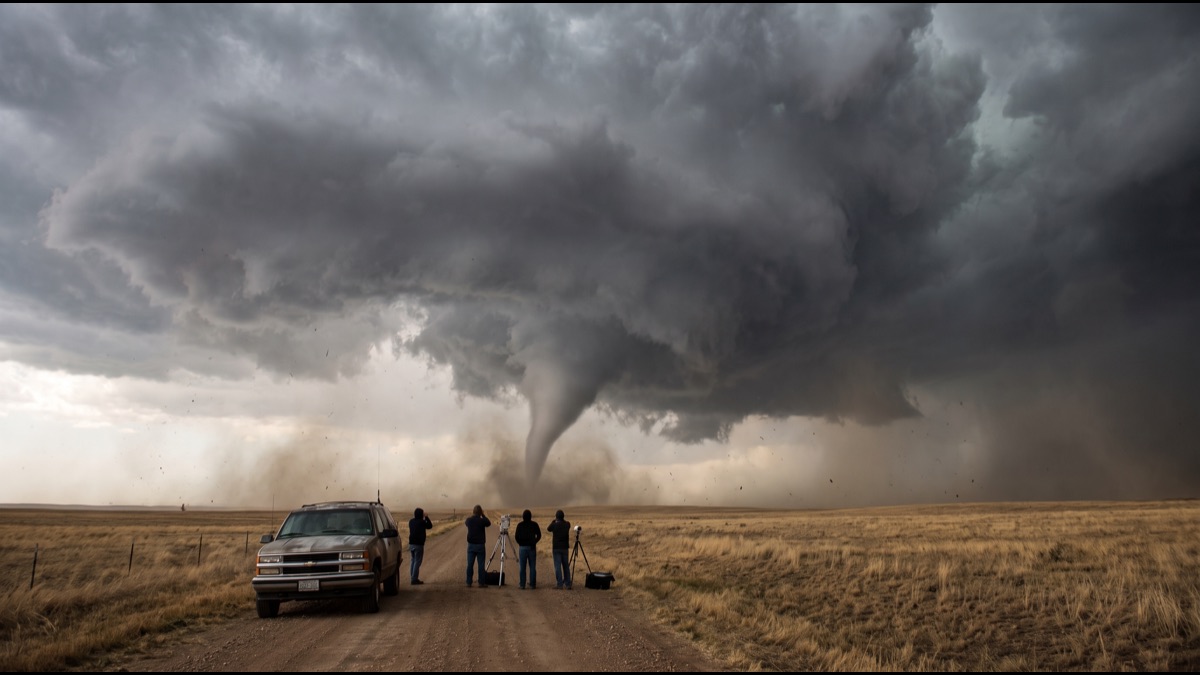
Tornadoes form when specific atmospheric conditions combine, most importantly wind shear, meaning wind speed or direction changing significantly with altitude, which can create a horizontal, invisible, spinning tube of air near the ground.
When a powerful thunderstorm's updraft, the rising column of warm air that fuels the storm, encounters this horizontally spinning air, it can tilt the spinning tube into a vertical position, creating a rotating column within the storm itself.
Wind Shear Creates a Spinning Tube of Air
Why Only Some Thunderstorms Produce Them
As this rotating column tightens and intensifies, similar to how a spinning ice skater speeds up by pulling their arms in, wind speeds within it can increase dramatically, and if the rotation extends down and touches the ground, it becomes an official tornado.
Not every thunderstorm with rotation produces a tornado, and meteorologists still can't perfectly predict which rotating storms will actually produce one, which is why tornado warnings are issued for storms showing dangerous rotation even before a tornado is confirmed to have formed.
Sources
- Wikipedia — overview of tornado formation and characteristics
- National Oceanic and Atmospheric Administration — scientific background on tornado formation and forecasting
- National Weather Service — official tornado warning and safety information
FAQ
What atmospheric condition is most important for tornado formation?
Wind shear, meaning wind speed or direction changing significantly with altitude, which can create a horizontal spinning tube of air.
How does a horizontal spinning tube become a vertical tornado?
A thunderstorm's updraft can tilt the horizontally spinning air into a vertical position, creating a rotating column within the storm.
Does every rotating thunderstorm produce a tornado?
No — meteorologists still can't perfectly predict which rotating storms will actually produce a tornado, which is why warnings are issued based on dangerous rotation alone.
About the Author
We reference Wikipedia, National Oceanic and Atmospheric Administration, and National Weather Service to explain the background and current understanding of this topic.
Loved This Article?
Share it on WhatsApp → Share it on WhatsApp
Get more guides in your inbox — Subscribe to our newsletter for weekly surprising stories from Egypt, Saudi Arabia, Dubai, and beyond.