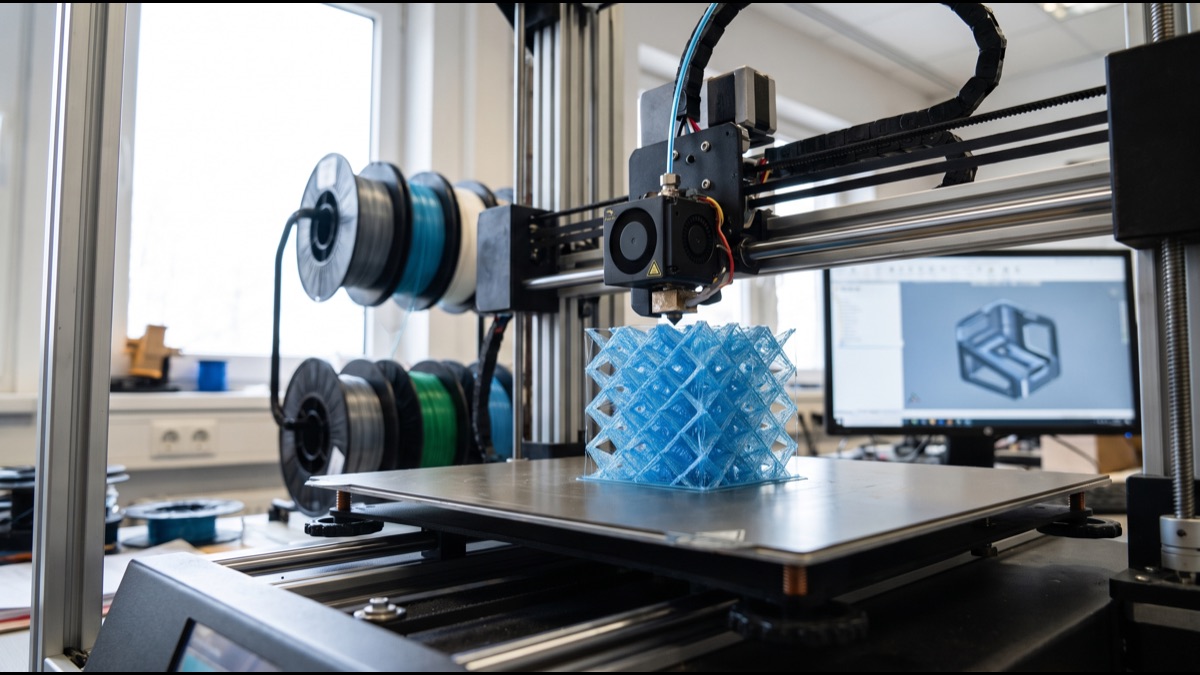
3D printing, also called additive manufacturing, builds a physical object by depositing material layer by layer based on a digital 3D model, contrasting with traditional manufacturing methods that typically cut or carve material away from a larger block.
The process starts with a digital 3D model, either designed from scratch or scanned from an existing object, which specialized software then slices into hundreds or thousands of thin horizontal layers that the printer builds up one at a time.
Building Objects Layer by Layer
Different Techniques for Different Materials
The most common consumer technique, called fused deposition modeling, works by melting plastic filament and precisely extruding it through a heated nozzle, building the object from the bottom up as each layer cools and solidifies before the next is added.
Other techniques include resin-based printing, which uses light to cure liquid resin into hardened layers with finer detail, and industrial metal printing, which fuses metal powder using a laser or electron beam, each suited to different materials, precision needs, and applications from prototyping to medical implants.
Sources
- Wikipedia — overview of 3D printing techniques and applications
- American Society of Mechanical Engineers — technical background on additive manufacturing processes
- National Institute of Standards and Technology — standards and technical background on 3D printing technologies
FAQ
What is another name for 3D printing?
Additive manufacturing, since it builds objects by adding material layer by layer rather than cutting material away.
What is the most common consumer 3D printing technique?
Fused deposition modeling, which melts plastic filament and extrudes it through a heated nozzle to build objects from the bottom up.
Are there 3D printing techniques for materials other than plastic?
Yes — including resin-based printing cured by light and industrial metal printing that fuses metal powder using a laser or electron beam.
About the Author
We reference Wikipedia, American Society of Mechanical Engineers, and National Institute of Standards and Technology to explain the background and current understanding of this topic.
Loved This Article?
Share it on WhatsApp → Share it on WhatsApp
Get more guides in your inbox — Subscribe to our newsletter for weekly surprising stories from Egypt, Saudi Arabia, Dubai, and beyond.