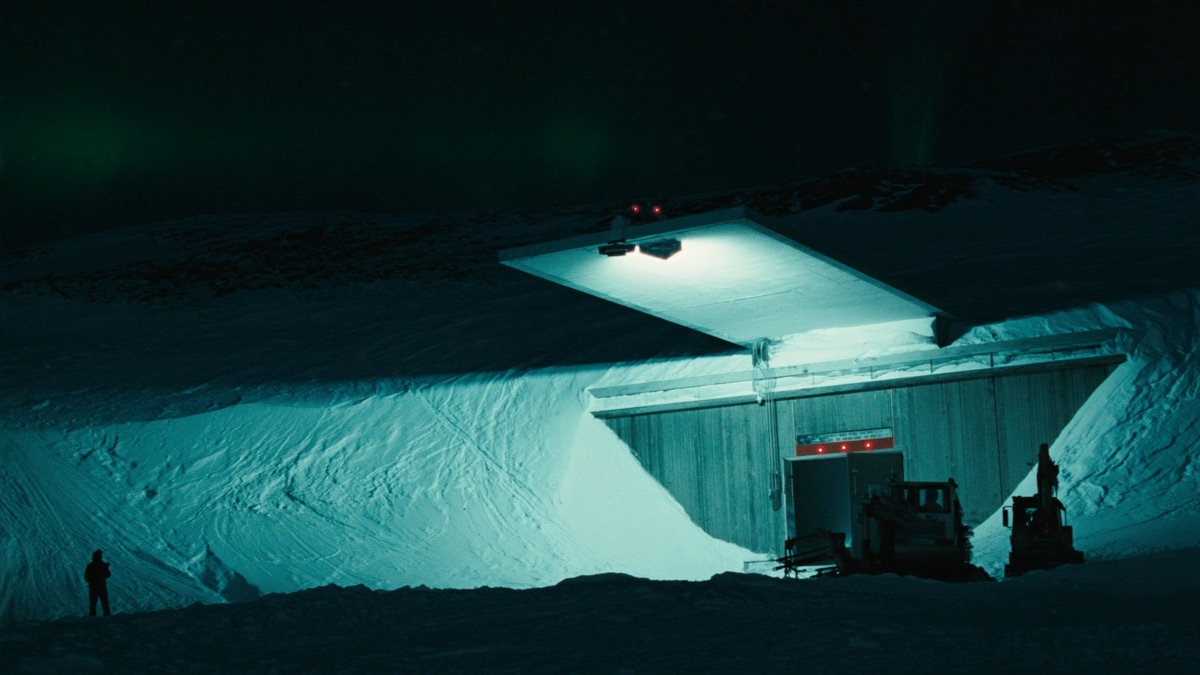
Eight hundred miles from the North Pole, cut into the side of a sandstone mountain on a Norwegian archipelago most people could not locate on a map, sits one of the strangest and most consequential buildings on Earth. The Svalbard Global Seed Vault holds more than 1.3 million distinct seed samples from almost every country, a genetic backup for the crops that feed humanity, built to survive war, funding collapse, natural disaster, and the slow accumulated failures of ordinary genebanks around the world.
It looks, from the outside, almost deliberately unremarkable: a low concrete wedge protruding from a snow-covered hillside near the town of Longyearbyen, with a single door and a shaft of light-reflecting steel above the entrance. Nearly everything that makes the facility remarkable is invisible, buried more than a hundred metres into the mountain, where temperature, humidity, and geology have been enlisted as passive allies in an active insurance policy against the collapse of global agriculture.
Why the World Needed a Backup for Its Seeds
Long before Svalbard existed, agricultural scientists had already built thousands of genebanks around the world, national and regional collections holding the seeds of local crop varieties so that plant breeders could draw on genetic diversity when developing new varieties resistant to disease, drought, or changing climate conditions.
These genebanks, it turned out, were far more fragile than anyone wanted to admit. Facilities have been destroyed by war, lost to fire, shut down by lack of funding, or simply allowed to decay through poor maintenance, and because a genebank typically holds the only copies of many of its varieties, each loss is frequently permanent and irreversible.
A genebank in the Philippines was destroyed by flooding and later by fire. Collections in Iraq and Afghanistan were lost amid decades of conflict. Even well-funded institutions in wealthy countries have suffered outright losses due to equipment failure or simple human error, and the cumulative pattern made clear that no single facility, however well run, could be considered permanently safe.
Why Svalbard Was Chosen as the Location
The Norwegian government and international partners settled on the Svalbard archipelago for a specific combination of properties that no other candidate site could match nearly as well. Its location deep in the Arctic keeps the surrounding rock permanently frozen, providing natural cooling that would preserve the seeds even during an extended power failure.
The site sits roughly 130 metres above current sea level, comfortably above any realistic projection of long-term sea-level rise, and Svalbard itself has extremely low seismic activity, meaning earthquakes pose essentially no meaningful threat to the structure or its contents over the timescales the vault is designed for.
Norway's political stability and its status under an international treaty granting it sovereignty over Svalbard while guaranteeing other signatory nations certain rights of access made it an unusually neutral and durable jurisdiction, one unlikely to become embroiled in the kind of conflict that has repeatedly destroyed genebanks elsewhere.
How the Vault Was Actually Built
Construction began in 2006 and the facility opened in February 2008, financed largely by the Norwegian government with significant additional support from the Global Crop Diversity Trust, an international organisation dedicated to safeguarding crop diversity that continues to help fund the vault's ongoing operation.
The structure itself consists of a roughly 120-metre tunnel bored directly into the mountainside, leading to three separate storage chambers, each capable of holding hundreds of thousands of seed samples, built with reinforced concrete designed to withstand explosions, flooding, and other conceivable physical threats.
Airlock doors, blast-proof construction, and motion sensors monitored around the clock provide additional physical security, though the facility's real defence has always been more about geographic and geological isolation than about any single dramatic security measure, since almost nothing threatens a mountain that few people can easily reach.
What Actually Gets Stored Inside
The vault holds duplicate samples of seeds already held in genebanks elsewhere around the world, functioning explicitly as a backup rather than a primary collection, a distinction the facility's operators are careful to emphasise whenever the vault is described in public materials.
Samples arrive from national genebanks, international agricultural research centres, and regional seed collections, packed into specially designed sealed foil packets, then boxed and shelved inside the mountain according to a detailed inventory system that allows any individual sample to be located and identified precisely.
The collection spans staple food crops including varieties of wheat, rice, maize, barley, and sorghum, alongside thousands of varieties of beans, potatoes, and vegetables, plus their wild relatives, which frequently carry genetic traits useful for breeding resilience that has been lost from modern commercial varieties through generations of selective breeding for yield alone.
How the Cold Storage System Actually Works
Mechanical refrigeration keeps the storage chambers at approximately minus eighteen degrees Celsius, the internationally recommended temperature for long-term seed storage, chosen because it slows the biochemical processes that gradually degrade a seed's ability to germinate.
Crucially, the surrounding permafrost provides a passive backup layer beneath the mechanical system. Even if the refrigeration units failed entirely and were never repaired, the naturally frozen rock would keep the chambers below freezing for an extended period, buying substantial time before any real risk to the stored samples would develop.
Humidity control matters almost as much as temperature, since seeds packaged and sealed with excess moisture degrade far more quickly regardless of how cold their surroundings are kept, so incoming samples are dried to a specific moisture threshold before being sealed into their storage packets.
Who Is Allowed to Deposit Seeds
Any genebank, whether national, regional, or international, that meets the vault's basic quality standards can deposit seed samples free of charge, and the facility has deliberately kept the barrier to participation low specifically to maximise how much of the world's crop diversity ends up backed up somewhere.
Depositing institutions retain full legal ownership of their samples at all times. The vault operates purely as a storage service, comparable in concept to a bank's safe deposit box, and has no authority to open, inspect, distribute, or otherwise use a depositor's seeds without that depositor's explicit request or consent.
This ownership structure was deliberately designed to reassure genebanks in developing countries in particular, some of which had historically expressed concern about handing valuable genetic material to a facility in a wealthy northern country, that participating would not amount to surrendering control over their national agricultural heritage.
How the Black-Box System Protects Ownership
The vault operates on what is often described informally as a black-box principle. Seed boxes arrive sealed by the depositing institution and remain sealed throughout their time in storage, with vault staff never opening a box to inspect, test, or catalogue its actual contents beyond what the depositor itself declares.
This arrangement means the facility functions purely as secure physical storage rather than as a research institution or active seed bank in the conventional sense, with no scientific staff conducting germination testing, breeding work, or genetic analysis on the deposited material at any point.
The approach also simplifies the vault's legal position considerably, since it never takes possession of genetic material in any meaningful sense beyond physical custody, sidestepping many of the complicated intellectual property and biodiversity treaty questions that might otherwise complicate an international seed repository of this scale.
The Aleppo Withdrawal: The Vault's First Real Test
For its first several years, the vault operated purely as a theoretical insurance policy, receiving steady deposits but never facing an actual withdrawal request. That changed in 2015, when the International Center for Agricultural Research in the Dry Areas, headquartered in Aleppo, Syria, found its own genebank facility cut off by the country's ongoing civil war.
The organisation requested and received back boxes of seed samples it had previously deposited in Svalbard, using them to help re-establish its collection at new facilities in Lebanon and Morocco, marking the first time the vault fulfilled the exact purpose for which it had been built rather than functioning purely as a contingency.
The withdrawal drew considerable international attention specifically because it demonstrated the system working exactly as intended under genuinely difficult real-world conditions, providing a concrete case study that Svalbard's planners could point to when explaining the facility's practical value beyond an abstract insurance concept.
How Permafrost Provides a Natural Safety Net
The layer of permanently frozen ground surrounding the vault's storage chambers functions as a passive thermal buffer that does not depend on electricity, mechanical equipment, or any active human intervention to continue operating, which is precisely why the site was chosen over locations that would have required purely mechanical cooling.
Climate change has introduced some genuine complications to this picture, since Arctic permafrost is warming considerably faster than the global average, and in 2016 meltwater from unusually warm temperatures and heavy rainfall entered the vault's access tunnel, though it did not reach the storage chambers or damage any samples.
The incident prompted Norway to invest in additional waterproofing, improved drainage, and upgraded refrigeration equipment specifically to reduce reliance on the permafrost alone, an acknowledgment that a facility designed around Arctic conditions must now account for an Arctic that is itself changing more quickly than originally anticipated.
What the Vault Cannot Actually Protect Against
Despite its formidable physical security, the vault does not solve every threat facing global crop diversity. It provides no protection against loss of genetic diversity that occurs before a sample is ever deposited, meaning varieties that go extinct in farmers' fields without ever being collected and catalogued are lost regardless of the vault's existence.
The facility also depends entirely on the ongoing viability of the underlying genebank system worldwide, since the vault only stores duplicates of samples that participating institutions have already collected, catalogued, and chosen to submit, meaning gaps and biases in the global genebank network are simply replicated inside the mountain.
Long-term seed viability itself is not indefinite even under ideal storage conditions, and periodically regenerating stored samples, growing them out and collecting fresh seed to replace ageing stock, remains a responsibility that falls on the original depositing genebank rather than on Svalbard itself.
How the Vault Differs From a Botanical Garden
A common misconception treats Svalbard as something like a botanical garden or a living seed bank where visitors might see growing plants, but the facility contains no growing crops whatsoever, storing only dormant seeds in sealed containers inside chambers that the public cannot access.
Unlike a botanical garden's living collection, which requires continuous active cultivation and is vulnerable to disease, pests, and changing growing conditions, dormant seed storage in cold, dry conditions requires comparatively little ongoing intervention once a sample has been properly prepared and sealed.
The vault also differs fundamentally in purpose from research-oriented genebanks, which actively distribute samples to plant breeders for ongoing crop improvement work; Svalbard exists purely as a dormant backup layer sitting behind that active global network rather than participating directly in it.
Why Crop Diversity Matters for Food Security
Modern industrial agriculture has increasingly concentrated around a comparatively narrow set of high-yield commercial crop varieties, a shift that has dramatically boosted food production but has simultaneously reduced the genetic diversity actively grown in farmers' fields around the world.
This narrowing creates real vulnerability, since a genetically uniform crop is far more susceptible to being devastated by a single disease, pest, or climate shock that a more diverse population of varieties would likely have withstood, a pattern documented repeatedly across agricultural history.
Preserved genetic diversity, including traits like drought tolerance, disease resistance, and heat tolerance found in older or wild varieties, gives plant breeders raw material to develop new varieties suited to future conditions, which is precisely the resource Svalbard exists to guarantee remains available no matter what happens to any individual genebank.
How Long Seeds Can Actually Survive Inside
Seed longevity varies enormously by species even under ideal cold, dry storage conditions, with some crop seeds estimated to remain viable for many decades and others considerably less, meaning the vault's protective value is not uniform across every sample it holds.
Researchers periodically conduct germination testing on selected samples from participating genebanks to monitor how viability is holding up over time, informing decisions about when a particular collection needs to be regenerated by growing out fresh plants and collecting new seed to replace ageing stock.
The vault's stated design horizon is measured in centuries for many crop types under its cold, dry conditions, an extraordinary claim by ordinary storage standards, but one grounded in decades of seed physiology research into how dormancy and low temperature interact to dramatically slow the biochemical decay that eventually ends a seed's ability to germinate.
The Svalbard Global Seed Vault ultimately represents a strikingly simple idea executed with considerable seriousness: that the genetic diversity underlying humanity's food supply is valuable enough, and fragile enough, to justify carving a mountain open and burying a backup of it in the Arctic. It has already been called upon once, exactly as its designers hoped it never would be, and stands ready for whatever future crisis makes the next withdrawal necessary.
Sources
- Wikipedia — overview of the vault's history, construction, and operation
- Global Crop Diversity Trust — official partner organisation funding and supporting the vault
- Food and Agriculture Organization of the United Nations — data on global crop diversity and food security
- Government of Norway — official information on the vault's ownership and operation
FAQ
Who actually owns the seeds stored in Svalbard?
The depositing genebank or institution retains full ownership; Svalbard functions purely as a secure backup and cannot release samples to anyone else without the depositor's permission.
Has anyone ever had to withdraw seeds from the vault?
Yes — a genebank in Aleppo, Syria withdrew boxes in 2015 after its own facility became inaccessible during the civil war, the vault's first real-world withdrawal.
Why was Svalbard chosen as the location?
Its permafrost provides natural sub-zero cooling even if mechanical refrigeration fails, it sits above projected sea-level rise, and it has low tectonic and geopolitical risk.
Does the vault store genetically modified seeds?
No — it stores conventional crop varieties and their wild relatives, not GMO material, and the facility does not conduct any research or breeding on-site.
How long can seeds actually survive inside the vault?
Under the vault's cold, dry conditions, some crop seeds are estimated to remain viable for decades to centuries, though viability varies considerably by species.
About the Author
We reference Wikipedia, the Global Crop Diversity Trust, the Food and Agriculture Organization of the United Nations, and the Government of Norway to explain the background and current understanding of this topic.
Loved This Article?
Share it on WhatsApp → Share it on WhatsApp
Get more guides in your inbox — Subscribe to our newsletter for weekly surprising stories from Egypt, Saudi Arabia, Dubai, and beyond.