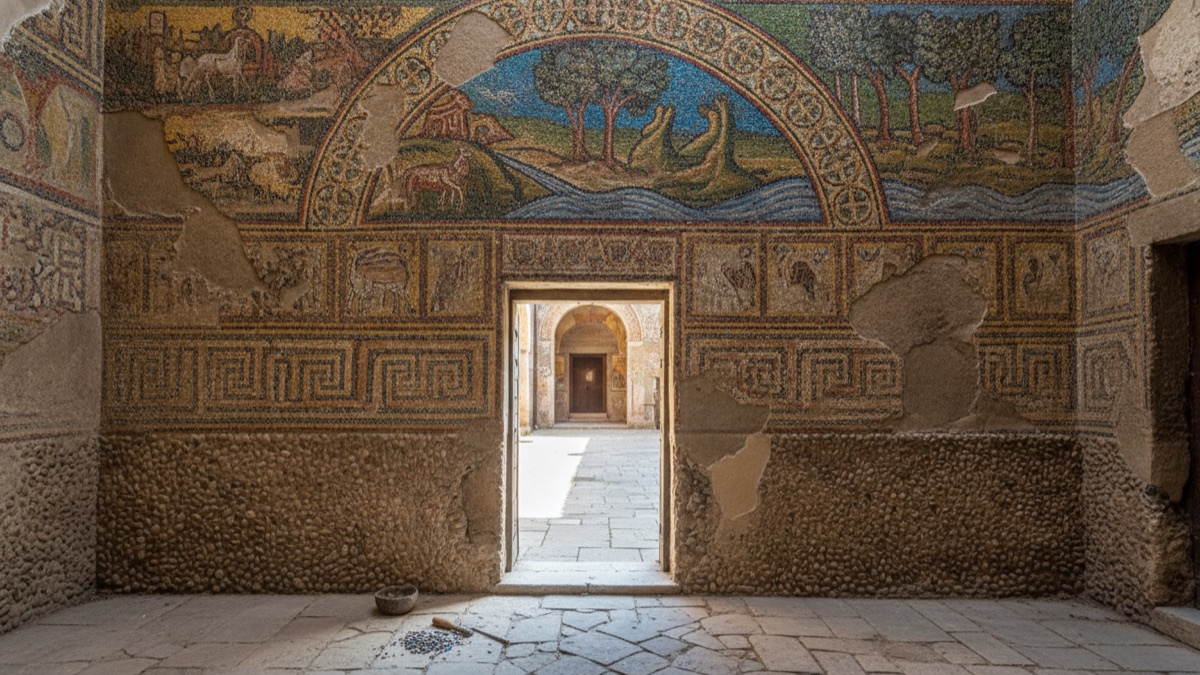
Mosaic art is made by arranging small pieces of stone, glass, ceramic, or other hard material, called tesserae, into a larger image or pattern, and it's one of the oldest decorative art forms still practiced today.
Some of the earliest known mosaics date back over 4,000 years to ancient Mesopotamia, where cone-shaped clay pieces were pressed into walls to create geometric patterns, long before glass tesserae became common.
Ancient Origins in Stone and Clay
From Roman Floors to Byzantine Ceilings
The technique reached a peak of technical skill in ancient Rome, where elaborate floor mosaics decorated wealthy homes and public buildings, often depicting mythological scenes, animals, and intricate geometric borders.
Byzantine artists later took mosaic art in a different direction, covering church ceilings and walls with gold-backed glass tesserae to create shimmering religious imagery, a style that influenced art across the Mediterranean for centuries.
Sources
- Wikipedia — overview of mosaic art history and techniques
- The Metropolitan Museum of Art — collection background on ancient and Byzantine mosaics
- Encyclopaedia Britannica — history and classification of mosaic art
FAQ
What are the small pieces used in mosaic art called?
They're called tesserae, and they can be made of stone, glass, ceramic, or other hard, durable materials.
Which ancient civilization is most associated with elaborate mosaic floors?
Ancient Rome is especially known for detailed mosaic floors in homes and public buildings, though Greek and Mesopotamian cultures used mosaics much earlier.
Why did Byzantine mosaics often use gold backgrounds?
Gold-backed glass tesserae reflected candlelight inside churches, creating a luminous effect meant to evoke a divine, otherworldly atmosphere.
About the Author
We reference Wikipedia, The Metropolitan Museum of Art, and Encyclopaedia Britannica to explain the background and current understanding of this topic.
Loved This Article?
Share it on WhatsApp → Share it on WhatsApp
Get more guides in your inbox — Subscribe to our newsletter for weekly surprising stories from Egypt, Saudi Arabia, Dubai, and beyond.