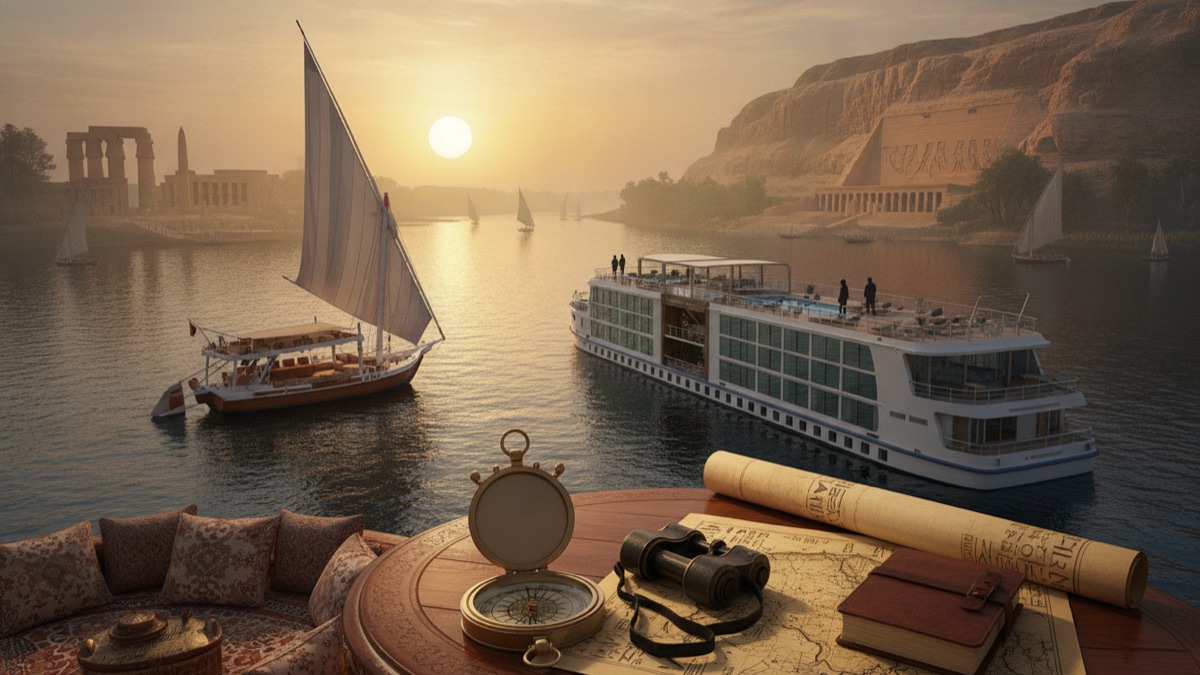
Introduction
A Nile cruise between Luxor and Aswan is one of the most efficient ways to see several major temple sites along the river without the logistics of arranging separate transport and hotels for each stop. Most cruises run in either direction between the two cities, with the ship itself functioning as a floating hotel that also handles most of the daily transport and site-visit logistics.
This format particularly suits travelers who want a relaxed pace with the temples handled as guided included excursions, rather than those preferring to explore independently on their own schedule.
Choosing a Cruise Length
Standard Nile cruises typically run three to four nights, covering the core route between Luxor and Aswan with stops at major temples along the way, and this length suits most first-time visitors well. Longer cruises of a week or more sometimes extend further north toward Dendera or south past Aswan, offering a more leisurely pace and additional, less-visited sites for travelers with extra time.
Shorter one- or two-night cruise segments are also available on some routes, though the standard three- to four-night itinerary generally offers the best balance of covering major sites without excessive time on the water for most visitors.
What's Typically Included
Most Nile cruise packages include accommodation aboard the ship, meals, and guided shore excursions to major temple sites along the route, generally led by an Egyptologist guide included in the package price. Entry tickets to sites like Edfu and Kom Ombo temples are typically included, though tickets to certain premium sites or optional add-on excursions may cost extra.
Onboard amenities vary by ship class, ranging from simple, functional cabins on budget vessels to considerably more elaborate five-star ships with pools, spas, and multiple dining options, so comparing specific ship amenities rather than relying on marketing descriptions alone is worthwhile when booking.
Key Temple Stops Along the Route
Edfu Temple, dedicated to the falcon god Horus, is one of the best-preserved temples in Egypt due to its later burial under desert sand, which protected it from centuries of weathering. Kom Ombo Temple, an unusual double temple dedicated to both the crocodile god Sobek and the falcon god Horus, sits directly on the riverbank, making it a particularly convenient and scenic stop.
Depending on the specific itinerary and cruise length, some routes also include stops at Dendera's Temple of Hathor or Esna's Temple of Khnum, both offering distinct architectural and decorative styles compared to the more frequently visited Edfu and Kom Ombo.
Practical Booking Tips
Booking through an established tour operator or directly through a well-reviewed cruise line generally offers more reliable service standards than the cheapest available option, and checking recent reviews for the specific ship, not just the operator generally, is worthwhile given quality variation even within the same company's fleet. Cruises typically depart on set days of the week rather than daily, so building your Luxor–Aswan timing around the cruise schedule, rather than the reverse, generally simplifies overall trip planning.
Peak season (December through February) sees the highest demand and prices for Nile cruises, so booking several weeks or months in advance is advisable during this period, while shoulder-season travelers often find more flexibility and better rates on shorter notice. Confirming whether your cruise price includes gratuities for the crew, or whether this is expected separately at the end of the trip, is worth clarifying before departure to avoid surprises at checkout.
Sources
- Egyptian Ministry of Tourism and Antiquities — Official information on Nile Valley temple sites and visiting hours
- UNESCO World Heritage Centre — Ancient Thebes with its Necropolis World Heritage listing, relevant to Luxor-area stops
- Encyclopaedia Britannica — Nile River reference entry, including navigation and cruise history
- EgyptAir — Flight connections for combining a Nile cruise with domestic travel
FAQ
How long is a typical Nile cruise?
Standard Nile cruises typically run three to four nights, covering the core route between Luxor and Aswan with stops at major temples along the way, though longer week-plus itineraries are available for travelers with more time.
What temples do you visit on a Nile cruise?
Most itineraries include Edfu Temple, dedicated to the falcon god Horus, and Kom Ombo Temple, an unusual double temple dedicated to both Sobek and Horus. Some longer routes also include Dendera or Esna.
Is food included on a Nile cruise?
Yes, typically. Most Nile cruise packages include accommodation aboard the ship, meals, and guided shore excursions to major temple sites, generally led by an Egyptologist guide included in the package price.
Do Nile cruises depart every day?
No, typically. Cruises usually depart on set days of the week rather than daily, so building your Luxor–Aswan timing around the cruise schedule generally simplifies overall trip planning.
Should I book a Nile cruise directly or through a tour operator?
Booking through an established tour operator or a well-reviewed cruise line generally offers more reliable service standards than choosing the cheapest available option, and checking reviews for the specific ship is worthwhile given quality variation within fleets.
About the Author
doyouknow.app Editorial Team — We combine official site information with practical cruise-booking comparisons to help travelers plan a Nile cruise that matches their time and interests.
Loved This Article?
Share it on WhatsApp → Share on WhatsApp
Get more guides in your inbox — Subscribe to our newsletter for weekly surprising stories from Egypt, Saudi Arabia, Dubai, and beyond.