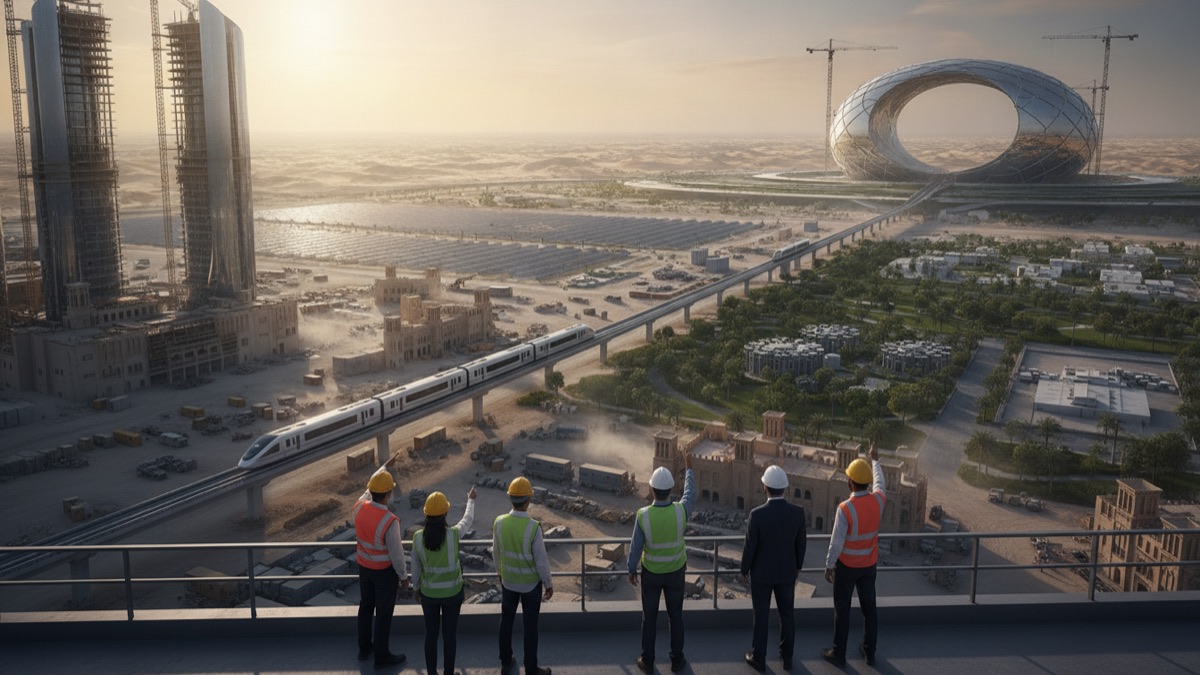
Saudi Vision 2030: Guide to the Kingdom's Transformation
In 2016, Crown Prince Mohammed bin Salman unveiled Saudi Vision 2030, a sweeping blueprint designed to transform the Kingdom of Saudi Arabia from an oil-dependent economy into a diversified global powerhouse. The vision represents the most ambitious restructuring of Saudi society and economy since the nation's founding, touching every aspect of life from entertainment and tourism to women's rights and technological innovation.
Over the past decade, Vision 2030 has moved from concept to concrete reality. NEOM's linear city is rising from the desert, the Red Sea coastline is being transformed into a luxury tourism destination, and Saudi women now drive, work, and lead in ways that were unimaginable just a few years ago. This guide explains what Vision 2030 entails, where it stands today, and what it means for the future of Saudi Arabia and the world.
What is Saudi Vision 2030?
Saudi Vision 2030 is a strategic framework launched in April 2016 to reduce Saudi Arabia's dependence on oil, diversify its economy, and develop public service sectors such as health, education, infrastructure, recreation, and tourism. The vision was personally championed by Crown Prince Mohammed bin Salman and is overseen by the Council of Economic and Development Affairs.
The plan targets three primary objectives by the year 2030: transforming Saudi Arabia into an investment powerhouse, connecting three continents through its strategic geographic position, and preparing future generations for the global economy through education and training. The initiative has been described as the most significant social and economic reform program in Saudi history since the unification of the Kingdom.
Vision 2030 is structured around three pillars that guide all initiatives, programs, and megaprojects. Each pillar addresses a different dimension of Saudi society and economy, creating a comprehensive transformation agenda that reaches from the boardrooms of Riyadh to the remote villages of Asir.
The Three Pillars of Vision 2030
A Vibrant Society
The first pillar of Vision 2030 focuses on building a vibrant society with strong roots and a healthy lifestyle, while also providing the means for citizens and residents to enjoy a fulfilling life. This pillar encompasses cultural development, entertainment, sports, and the preservation of Saudi heritage alongside modern lifestyle aspirations.
Key initiatives under this pillar include the creation of a domestic entertainment industry, the expansion of recreational options, and the promotion of Saudi cultural heritage globally. The Kingdom has invested billions in developing cinemas, music venues, sports stadiums, and cultural festivals. Events like Riyadh Season, Jeddah Season, and the MDL Beast music festival have drawn millions of visitors and introduced international entertainment to Saudi audiences for the first time.
The vibrant society pillar also emphasizes health and wellness, with targets to increase average life expectancy, reduce obesity rates, and promote physical activity. The Quality of Life Program, a key delivery mechanism, has already launched hundreds of parks, walking trails, and sports facilities across the Kingdom.
A Thriving Economy
The second pillar aims to create a thriving economy by leveraging Saudi Arabia's unique strategic position and investment capabilities. This pillar directly addresses the Kingdom's long-term vulnerability to oil price volatility and aims to build sustainable economic engines across multiple sectors.
The economic transformation strategy includes privatizing state assets, developing the Public Investment Fund into the world's largest sovereign wealth vehicle, and creating new industries in tourism, mining, technology, and manufacturing. The Kingdom has set ambitious targets to increase non-oil exports, attract foreign direct investment, and create millions of new jobs for Saudi citizens.
Key programs under this pillar include the National Industrial Development and Logistics Program, the Saudi Tourism Authority's expansion, and the development of special economic zones. The Kingdom is also investing heavily in renewable energy, aiming to generate 50% of its electricity from renewable sources by 2030.
An Ambitious Nation
The third pillar focuses on building an ambitious nation with effective governance, empowered citizens, and a transparent and accountable government. This pillar addresses the institutional and human capital foundations needed to sustain long-term transformation.
Reforms under this pillar include modernizing the government apparatus, improving transparency, and leveraging data and digital technologies to enhance decision-making. The Kingdom has established specialized ministries and authorities to oversee major programs, implemented e-government services, and launched transparency initiatives to improve public sector performance.
The ambitious nation pillar also emphasizes education reform, vocational training, and the development of Saudi human capital. The Kingdom is reforming its education curriculum, expanding vocational training programs, and partnering with leading international universities to bring world-class education to Saudi Arabia.
Megaprojects and Key Initiatives
NEOM
NEOM is the crown jewel of Saudi Vision 2030, a $500 billion megacity project located in the Tabuk Province along the Red Sea coast. The project spans 26,500 square kilometers and is designed as a living laboratory for future technologies, urban planning, and sustainable living. NEOM is being built from scratch, incorporating innovations that existing cities cannot retrofit.
The most talked-about component of NEOM is The Line, a 170-kilometer linear city designed to house nine million residents in a car-free, zero-carbon environment. The Line promises to be the most sustainable city ever built, powered entirely by renewable energy and connected by a high-speed rail system running its entire length. Other NEOM regions include Oxagon, an industrial city; Sindalah, a luxury island resort; and Trojena, a mountain tourism destination.
The Red Sea Project
The Red Sea Project is a luxury tourism development along the pristine western coastline of Saudi Arabia. Spanning 28,000 square kilometers across an archipelago of over 90 islands, the project aims to establish a new global destination for sustainable tourism. The development includes luxury hotels, eco-resorts, and marine conservation areas.
The project is being developed by Red Sea Global, a wholly-owned Public Investment Fund company. When complete, it will feature over 50 resorts, 1,000 residential properties, and an international airport. The Red Sea Project has already begun welcoming guests to select resorts, marking a milestone in Saudi Arabia's emergence as a tourism destination.
Qiddiya
Qiddiya is an entertainment, sports, and arts destination being built 40 kilometers southwest of Riyadh. At 367 square kilometers, it will be the largest entertainment city in the world, featuring theme parks, sports facilities, cultural venues, and outdoor attractions. The project is designed to become the leading destination for entertainment and leisure in the Middle East.
Key attractions include the world's largest Six Flags theme park, a motorsport circuit designed to host Formula 1 races, a water park, and outdoor adventure zones. Qiddiya is expected to attract millions of visitors annually and create thousands of jobs in the entertainment and tourism sectors.
Diriyah Gate
Diriyah Gate is a cultural and heritage destination being developed around the historic site of At-Turaif, the original home of the Saudi royal family and a UNESCO World Heritage site. Located on the outskirts of Riyadh, Diriyah Gate is being transformed into a world-class cultural destination celebrating Saudi history and heritage.
The development includes museums, cultural centers, restaurants, hotels, and retail spaces designed in traditional Najdi architectural style. When complete, Diriyah Gate will be one of the largest cultural destinations in the world, welcoming millions of visitors and serving as a gateway to Saudi heritage for international tourists.
Kingdom Tower (Jeddah Tower)
The Jeddah Tower, formerly known as Kingdom Tower, is a skyscraper under construction in Jeddah that is planned to reach 1,000 meters, making it the tallest building in the world upon completion. The tower is part of the Jeddah Economic City development and represents Saudi Arabia's ambition to build iconic landmarks that signal its transformation to the world.
The tower will include a luxury hotel, residential apartments, office spaces, and an observation deck. The project has faced delays but remains a symbol of Saudi ambition and engineering capability. Its completion will add another landmark to the global skyline and serve as a hub for commerce and tourism in Jeddah.
Economic Diversification
The core economic challenge of Vision 2030 is reducing Saudi Arabia's dependence on oil revenues, which historically accounted for approximately 70% of government income. The Kingdom has made significant progress in this direction, with non-oil revenues growing substantially since 2016.
Public Investment Fund (PIF): The PIF has been transformed from a passive sovereign wealth fund into an active investment engine. With assets under management exceeding $900 billion, the PIF is one of the world's largest sovereign wealth funds. It has invested in technology companies, entertainment ventures, and domestic development projects, including NEOM and the Red Sea Project.
Tourism Sector: Saudi Arabia aims to attract 100 million visitors annually by 2030, up from just 15 million in 2016. The introduction of the e-visa system, the development of luxury resorts, and the promotion of cultural tourism have already begun to transform the Kingdom into a tourism destination. The tourism sector is projected to contribute 10% of GDP by 2030.
Mining and Manufacturing: The Kingdom is leveraging its mineral resources, estimated at over $1.3 trillion, to develop a domestic mining industry. Saudi Arabia is also investing in automotive manufacturing, renewable energy production, and technology sectors to build a diversified industrial base.
Technology and Innovation: Saudi Arabia is investing heavily in technology infrastructure, including data centers, cloud computing, and artificial intelligence. The Kingdom has established partnerships with major technology companies and is developing its own digital infrastructure to support a knowledge-based economy.
Social Reforms and Cultural Transformation
Perhaps the most visible changes under Vision 2030 have been the social reforms that have transformed daily life for Saudi citizens, particularly women and young people. These reforms have been both symbolic and practical, removing barriers that had long limited Saudi participation in global society.
Women's Empowerment: In 2018, Saudi women gained the right to drive, ending the last global ban on female drivers. Since then, female participation in the workforce has more than doubled, rising from 19% to over 37%. Women now serve as judges, ambassadors, military officers, and CEOs. The guardianship system has been substantially reformed, giving women greater autonomy in travel, healthcare, and employment decisions.
Entertainment and Culture: The General Entertainment Authority was established in 2016, and since then Saudi Arabia has opened cinemas, hosted international concerts, and launched festivals that attract millions. The first cinema in Riyadh opened in 2018, ending a 35-year ban. International artists now regularly perform in Saudi cities, and the Kingdom has launched its own film industry.
Tourism Openness: The introduction of tourist visas in 2019 marked a historic shift from Saudi Arabia's traditionally closed borders. Visitors from 49 countries can now obtain e-visas online, and the Kingdom is actively marketing itself as a destination for cultural, religious, and leisure tourism. The holy cities of Mecca and Medina remain restricted to Muslims, but the rest of the country is increasingly open to international visitors.
Religious Moderation: The Kingdom has promoted a more moderate interpretation of Islam, cracking down on extremist rhetoric and promoting tolerance. The religious police have been stripped of arrest powers, and the government has emphasized the tolerant and inclusive nature of Saudi Islam. These changes have been accompanied by cultural reforms that allow greater social mixing and public entertainment.
Progress Metrics and Achievements
Vision 2030 has delivered measurable results across multiple indicators. The Public Investment Fund's assets have grown from approximately $150 billion in 2016 to over $900 billion today. Non-oil revenues have increased from 9% to over 30% of total government revenue. The unemployment rate among Saudi citizens has fallen to historic lows, and the economy has grown consistently despite oil price volatility.
Female Workforce Participation: Perhaps the most dramatic metric is the increase in female workforce participation. From 19% in 2016, Saudi women now represent over 37% of the workforce, surpassing the Vision 2030 target of 30% ahead of schedule. This transformation has been driven by education reforms, social liberalization, and government policies mandating female employment in certain sectors.
Foreign Direct Investment: Foreign direct investment has increased substantially, with major international companies establishing regional headquarters in Riyadh. The Kingdom has introduced incentives for multinational companies to relocate their Middle East headquarters to Saudi Arabia, with hundreds of companies already making the move.
Tourism Growth: Saudi Arabia welcomed over 100 million visitors in 2024, achieving the 2030 target six years ahead of schedule. The Hajj and Umrah pilgrimage programs have been expanded, and the e-visa system has processed millions of applications. Tourism revenue has grown to become a significant contributor to the non-oil economy.
Challenges and Future Outlook
Despite remarkable progress, Vision 2030 faces significant challenges. The global energy transition poses a long-term threat to oil revenues, the Kingdom's primary source of funding for ambitious projects. Geopolitical tensions in the Middle East create uncertainty for investors and tourists. The execution of megaprojects on the scale of NEOM and the Red Sea Project requires sustained capital investment and technical capability that few nations have attempted.
Economic Sustainability: The transition from an oil-dependent economy requires time and continued investment. While non-oil revenue has grown, oil still accounts for the majority of government income and export earnings. The success of Vision 2030 ultimately depends on building sustainable non-oil revenue streams before oil demand declines significantly.
Social Balance: The rapid pace of social reform has created tension between conservative and liberal segments of Saudi society. The government has navigated this carefully, balancing modernization with respect for religious and cultural traditions. Maintaining social cohesion while continuing reform is an ongoing challenge.
Global Perception: International human rights concerns and geopolitical issues have complicated Saudi Arabia's global image. While the Kingdom has made strides in opening to tourism and investment, negative media coverage and diplomatic tensions can undermine these efforts. The future of Vision 2030 depends partly on improving international relations and perception.
Looking ahead, the next five years will be critical. By 2030, the world will see whether Saudi Arabia has successfully transformed itself into a diversified, modern economy or whether the vision remains an unfinished ambition. What is clear is that the Kingdom has already changed more in the past decade than in the previous five, and the trajectory points toward continued transformation.
Sources
- Saudi Vision 2030 Official Portal — Official strategy documents, program details, and progress reports.
- Public Investment Fund — Official information on PIF investments, assets, and strategy.
- NEOM Official Website — Details on The Line, Oxagon, Sindalah, and Trojena.
- Red Sea Global — Official information on the Red Sea Project development.
- Qiddiya Investment Company — Details on the entertainment city and attractions.
- Diriyah Gate Development Authority — Official information on the heritage destination.
- Visit Saudi Official Tourism Portal — Tourism statistics, visa information, and destination guides.
- International Monetary Fund — Economic analysis and reports on Saudi Arabia's diversification.
FAQ
What is Saudi Vision 2030?
Saudi Vision 2030 is a strategic framework launched in 2016 by Crown Prince Mohammed bin Salman to reduce Saudi Arabia's dependence on oil, diversify its economy, and develop public service sectors. It is built on three pillars: a vibrant society, a thriving economy, and an ambitious nation.
When will Vision 2030 be complete?
Vision 2030 targets completion by the year 2030. Many programs and projects have already been implemented or launched, with some targets achieved ahead of schedule. The megaprojects like NEOM and the Red Sea Project have phased completion timelines extending beyond 2030.
What are the main megaprojects under Vision 2030?
The main megaprojects include NEOM (a $500 billion smart city), the Red Sea Project (luxury tourism development), Qiddiya (entertainment city), Diriyah Gate (cultural heritage destination), and the Jeddah Tower (world's tallest building). Each represents a different sector of the economic diversification strategy.
How has Vision 2030 affected women's rights in Saudi Arabia?
Vision 2030 has dramatically expanded women's rights. Women gained the right to drive in 2018, workforce participation doubled from 19% to over 37%, and the guardianship system was substantially reformed. Women now serve as judges, ambassadors, and business leaders.
Can tourists now visit Saudi Arabia?
Yes. Saudi Arabia introduced tourist e-visas in 2019 for citizens of 49 countries. Visitors can explore cultural sites, attend festivals, and experience Saudi heritage. The Kingdom welcomed over 100 million visitors in 2024, achieving its 2030 tourism target six years early.
What is NEOM and The Line?
NEOM is a $500 billion megacity project in northwest Saudi Arabia. The Line is its most famous component, a 170-kilometer linear city designed for nine million residents in a car-free, zero-carbon environment. Other NEOM regions include Oxagon, Sindalah, and Trojena.
How much has the Public Investment Fund grown?
The Public Investment Fund has grown from approximately $150 billion in 2016 to over $900 billion in assets under management today. It is one of the world's largest sovereign wealth funds and invests in technology, entertainment, and domestic development projects.
What economic changes has Vision 2030 brought?
Non-oil government revenue has increased from 9% to over 30% of total revenue. Tourism, mining, manufacturing, and technology sectors have expanded. Female workforce participation has more than doubled. Foreign direct investment has increased substantially.
Is Saudi Arabia still dependent on oil?
While progress has been made, oil remains the primary source of government revenue and export earnings. However, the economy is diversifying rapidly. The long-term goal is to build sustainable non-oil revenue streams before global oil demand declines significantly.
What challenges does Vision 2030 face?
Key challenges include the global energy transition, geopolitical tensions, the massive capital requirements of megaprojects, maintaining social cohesion during rapid reform, and improving international perception. The next five years will be critical for long-term success.
About the Author
doyouknow.app AI-assisted Editorial Workflow — This article was prepared with AI-assisted research and editing, using the sources listed on the page. It is not based on firsthand testing, on-the-ground reporting, or a claim of personal experience or professional credentials. Please check official sources for current details.
Loved This Article?
Share it on WhatsApp → Share on WhatsApp
Get more Saudi facts in your inbox — Subscribe to our newsletter for weekly surprising stories from Saudi Arabia, the UAE, and beyond.