Introduction
Alexandria, founded by Alexander the Great in 331 BCE, feels distinctly different from the rest of Egypt: a Mediterranean port city built around a long seafront corniche, with an atmosphere shaped as much by Greek, Roman, and later European influence as by pharaonic Egypt. For centuries it was one of the ancient world's great intellectual centers, home to the legendary Library of Alexandria and the Lighthouse of Alexandria, one of the Seven Wonders of the Ancient World.
Almost nothing physically remains of ancient Alexandria above ground — the city's ancient core has largely been lost to earthquakes, subsidence, and centuries of rebuilding — which shapes how visitors should approach the city: as a place to imagine as much as to see directly, alongside a handful of genuinely excellent modern and underwater sites.
The Bibliotheca Alexandrina
The Bibliotheca Alexandrina, opened in 2002, is a modern library and cultural complex built near the presumed site of the ancient Library of Alexandria, though it is a deliberate contemporary reinterpretation rather than a reconstruction of the original, which was lost in antiquity. Its striking discus-shaped building, tilted toward the sea, houses millions of books, a planetarium, and several specialized museums covering antiquities, manuscripts, and the history of science.
The complex is widely regarded as one of the most architecturally significant modern buildings in Egypt and functions as a genuine research and cultural institution rather than a tourist attraction alone.
Qaitbay Citadel and the Catacombs of Kom el-Shoqafa
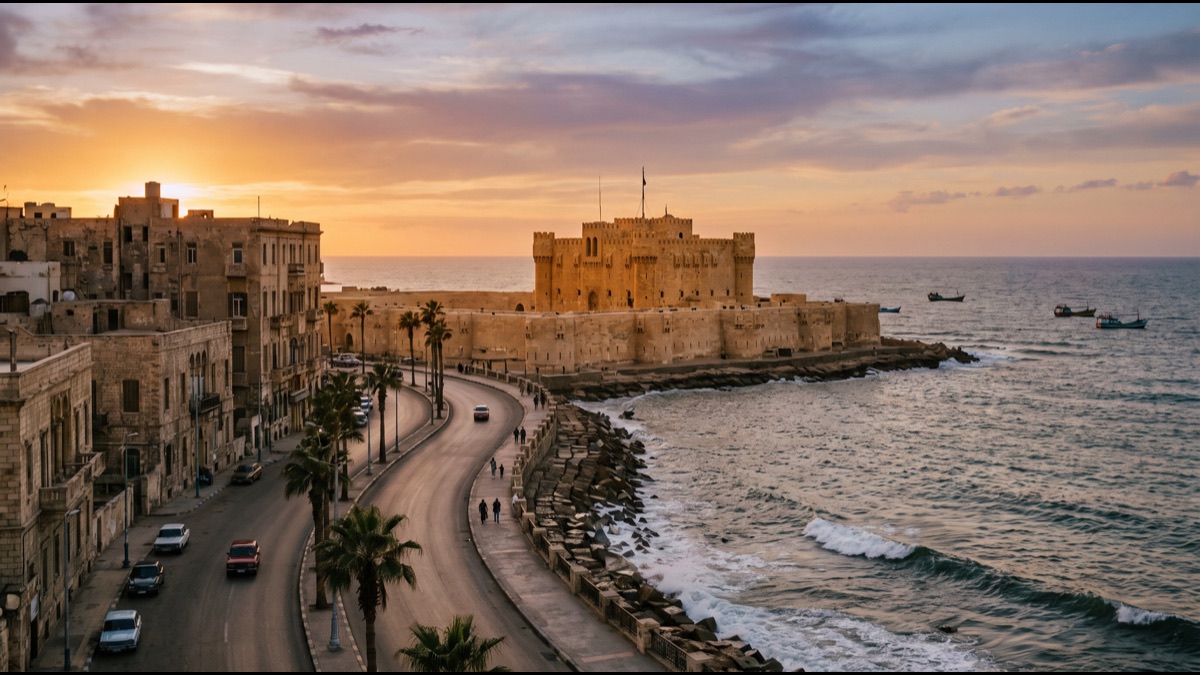
The Citadel of Qaitbay, a 15th-century fortress built directly on the site of the ancient Lighthouse of Alexandria, sits at the tip of the harbor and reuses some of the lighthouse's original stone blocks in its foundations. While the lighthouse itself was destroyed by earthquakes over several centuries, the citadel remains one of Alexandria's most photographed landmarks, particularly at sunset.
The Catacombs of Kom el-Shoqafa, a multi-level underground necropolis dating to the 2nd century CE, are among the most unusual sites in Egypt, blending Egyptian, Greek, and Roman funerary styles in a single complex — a distinctly Alexandrian fusion found nowhere else in the country.
Underwater Archaeology
Parts of the ancient royal quarter, including sections believed to be linked to Cleopatra's palace, sank into Alexandria's harbor following earthquakes and gradual subsidence roughly 1,600 years ago and remain underwater today. Ongoing underwater archaeological work by teams including Egypt's Ministry of Tourism and Antiquities and international partners has recovered sphinxes, columns, and statues, some of which are displayed on land, while glass-bottom boat tours offer visitors a limited view of submerged ruins.
This underwater dimension is genuinely unique to Alexandria among Egyptian cities and reflects the site's long, layered history of Mediterranean earthquakes reshaping the coastline.
Practical Visiting Tips
Alexandria is roughly a two-and-a-half to three-hour drive or train ride from Cairo, making it feasible as a long day trip, though an overnight stay allows a more relaxed pace along the corniche and evening seafood dining, for which the city is well known. The train connection between Cairo and Alexandria is generally comfortable and a popular choice over driving given Cairo-area traffic.
Unlike much of Egypt, Alexandria has a genuine Mediterranean climate, with a cooler, sometimes rainy winter and a warm but less extreme summer than the Nile Valley or Red Sea coast, making it a pleasant year-round destination relative to much of the rest of the country.
Sources
- Bibliotheca Alexandrina — Official information on the modern library and museum complex
- Egyptian Ministry of Tourism and Antiquities — Official visiting information for Alexandria's sites
- Encyclopaedia Britannica — Alexandria reference entry, including ancient history
- UNESCO World Heritage Centre — Tentative list documentation referencing Alexandria's ancient sites
FAQ
Is anything left of the ancient Library of Alexandria?
No physical remains of the original ancient Library of Alexandria survive; it was lost in antiquity. The modern Bibliotheca Alexandrina, opened in 2002, is a deliberate contemporary reinterpretation built near its presumed site, not a reconstruction.
How far is Alexandria from Cairo?
Alexandria is roughly a two-and-a-half to three-hour drive or train ride from Cairo, making it a feasible long day trip, though an overnight stay allows a more relaxed pace along the city's Mediterranean corniche.
What happened to the Lighthouse of Alexandria?
The ancient Lighthouse of Alexandria, one of the Seven Wonders of the Ancient World, was destroyed by a series of earthquakes over several centuries. The 15th-century Citadel of Qaitbay was later built directly on its site, reusing some of its original stone blocks.
Can you see underwater ruins in Alexandria?
Yes, to a limited extent. Parts of the ancient royal quarter sank into the harbor after earthquakes roughly 1,600 years ago, and glass-bottom boat tours offer visitors a partial view of these submerged ruins, alongside artifacts recovered and displayed on land.
What is the best time of year to visit Alexandria?
Alexandria has a genuine Mediterranean climate, cooler and sometimes rainy in winter and warm but less extreme than the Nile Valley in summer, making it a pleasant destination for much of the year relative to the rest of Egypt.
About the Author
doyouknow.app Editorial Team — We combine official cultural institution sources with historical scholarship to present Alexandria's ancient legacy and modern Mediterranean character accurately.
Loved This Article?
Share it on WhatsApp → Share on WhatsApp
Get more guides in your inbox — Subscribe to our newsletter for weekly surprising stories from Egypt, Saudi Arabia, Dubai, and beyond.