Introduction
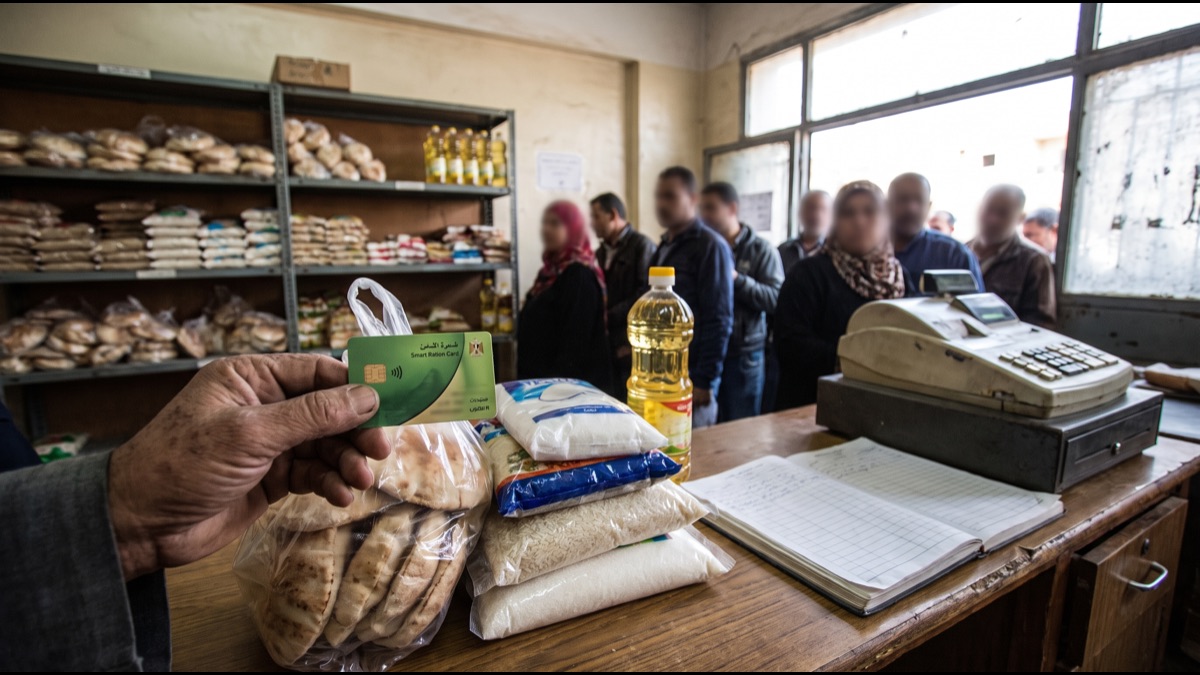
Every month, tens of millions of Egyptians walk into a grocery outlet, hand over a plastic smart card, and walk out with sugar, cooking oil, rice, and pasta at prices the open market has not seen in years. Egypt's ration card, together with the subsidized baladi bread program, forms one of the largest food support systems in the world, a social safety net known in Arabic as tamween that has existed in one form or another since the mid-twentieth century.
The system today is run by the Ministry of Supply and Internal Trade and has two distinct halves: a bread subsidy that caps the price of the flat baladi loaf that anchors the Egyptian diet, and a monthly cash-value allowance loaded onto smart cards for buying essential commodities. This guide explains who is covered, how each half works, what changed in the landmark 2024 bread price increase, and where the reform debate stands. Figures come from the ministry, the US Department of Agriculture's Cairo office, and IFPRI researchers, and are approximate because beneficiary counts are revised regularly.
Who Is Covered and Who Qualifies
Official figures over recent years have put participation at roughly 60 to 63 million people in the ration card commodities program and around 69 to 71 million in the bread subsidy, out of a population of well over 100 million. That means a clear majority of Egyptian households interact with the system every month, collecting a family smart card that links both programs.
Eligibility is means-tested and has been tightened repeatedly. The ministry periodically applies ownership and spending criteria to filter the rolls: households can be removed for owning recent or luxury cars, holding property in upscale compounds, enrolling children in private schools, or being cited for electricity theft, among other triggers. By official and press accounts, roughly 10 million names have been struck from the beneficiary lists since the late 2010s under this targeting drive, even as the population grew. New applications for lower-income households reopen from time to time, and appeals against removal are handled through the ministry's local offices and digital portal.
The Baladi Bread Subsidy
Bread is the system's cornerstone. Each registered beneficiary is entitled to five subsidized baladi loaves per day, up to four beneficiaries per household, purchased from licensed bakeries with the family smart card. For decades, the price was frozen at 5 piasters per loaf, a figure so untouchable that adjusting it was considered politically impossible. In June 2024, the government raised it to 20 piasters, the first increase since 1989, while emphasizing that the new price still covers only a fraction of production cost: the state continues to pay roughly 84 percent of what each loaf costs to make, down from about 96 percent before the change, according to the USDA's Cairo office and IFPRI.
Cost pressure had been building for years. Authorities had already shrunk the standard loaf from 130 grams to about 90 grams and blended maize flour into the recipe to stretch wheat supplies, since Egypt imports much of its wheat. The program's annual budget allocation has hovered around 90 billion Egyptian pounds in recent fiscal years. One design feature softens waste: beneficiaries who take fewer loaves than their daily allowance accumulate points on the smart card, convertible into other subsidized goods, so saving bread translates directly into extra sugar, oil, or rice.
The Ration Card Allowance
The second half of tamween is simpler to describe: a monthly allowance of 50 Egyptian pounds per registered person, credited to the smart card and spendable on a list of roughly 30 essential commodities at discounted prices. The basket covers staples such as sugar, cooking oil, rice, pasta, flour, tea, and legumes, with per-person and per-card quantity caps on the most sensitive items, for example about a kilogram of sugar and a bottle of oil per person per month within family limits.
The allowance value has been fixed at 50 pounds since 2017, when it was raised from 21 pounds, and its purchasing power has eroded with inflation, a point raised frequently in the reform debate. Redemption happens across a wide network: state-run consumer complexes, community outlets, and tens of thousands of affiliated private grocers accept the card, which is why the system reaches deep into villages as well as cities.
Reforms: From In-Kind Toward Cash?
Egypt's subsidy system has been in continuous redesign since 2014, when the old paper ration books and fixed per-item quotas were replaced by the current smart-card, cash-value model, an approach encouraged by international lenders including the IMF as more efficient and less prone to smuggling than pure in-kind distribution. Since then, the direction of travel has been consistent: tighter targeting, digitized delivery, and gradual cost control rather than abrupt abolition.
The next step under discussion, according to Egyptian press reports citing supply ministry officials, is folding the bread subsidy into a broader monthly cash transfer, with per-person amounts in the low hundreds of pounds under study and subsidized bread repriced closer to cost. Officials have stressed that any formula would aim to keep basic quantities affordable for current beneficiaries, while critics worry that cash erodes faster than in-kind support when food inflation outpaces general inflation, a gap the World Bank has flagged as significant in Egypt's case. For now, both halves of tamween continue to operate, and households should treat reported figures for any future cash scheme as proposals, not settled policy.
Sources
- Ministry of Supply and Internal Trade (Egypt) — The government body that runs the ration card and bread subsidy programs
- CAPMAS — Central Agency for Public Mobilization and Statistics — Egypt's official statistics agency for population and price data
- USDA GAIN Report EG2024-0013 — Detailed US government briefing on the 2024 bread price change and program mechanics
- IFPRI — Research analysis of the first baladi bread price increase since 1989 and its food-security implications
FAQ
How many people benefit from Egypt's food subsidies?
Recent official figures put the ration card commodities program at roughly 60 to 63 million beneficiaries and the bread subsidy at around 69 to 71 million, meaning a majority of Egypt's population of over 100 million uses at least one part of the system each month.
How much does subsidized bread cost in Egypt?
A baladi loaf costs 20 piasters on the subsidy card since June 2024, when the price rose from 5 piasters in the first increase since 1989. That remains far below the open-market price of around one to one and a half pounds per loaf.
What can you buy with a ration card in Egypt?
The smart card carries a monthly allowance of 50 pounds per registered person, redeemable on roughly 30 subsidized staples including sugar, cooking oil, rice, pasta, flour, tea, and legumes, subject to per-person and per-family quantity caps on key items.
Who is eligible for a ration card in Egypt?
Eligibility targets lower-income households and is policed through ownership and spending criteria: families can be removed for owning recent cars or upscale property, enrolling children in private schools, or electricity theft citations. Around 10 million names have been removed since the late 2010s under this targeting.
Is Egypt ending its food subsidy system?
No. The system continues to operate, but it is being reshaped: officials are studying a shift from in-kind support toward monthly cash transfers, with amounts and formulas still under review. Any change is expected to be phased rather than abrupt.
About the Author
doyouknow.app Editorial Team — We build our Egypt guides on primary sources, the supply ministry, CAPMAS, the USDA's Cairo office, and IFPRI research, and we present beneficiary counts as approximate because the rolls are revised frequently.
Loved This Article?
Share it on WhatsApp → Share on WhatsApp
Get more guides in your inbox — Subscribe to our newsletter for weekly surprising stories from Egypt, Saudi Arabia, Dubai, and beyond.