Introduction
Few legal systems anywhere in the world produce stranger outcomes than Egypt's rent law. In the same Cairo street, one family may pay the equivalent of a few dollars a month for a large apartment their grandparents leased in the 1960s, while the family next door pays a full market rent forty times higher for an identical flat one floor up. Both arrangements are entirely legal, because Egypt has spent decades running two parallel rental systems at once.
The first is the "old rent" system, a series of twentieth-century laws that froze rents and made leases effectively permanent and inheritable. The second is the "new rent" regime created by Law 4 of 1996, which restored ordinary market contracts for everything leased after that year. In 2025, after years of parliamentary debate and a decisive Constitutional Court ruling, Egypt passed Laws 164 and 165 of 2025, which begin a phased end to the old system. This guide explains how each regime works, what the reform changes, and what it means in practice for tenants and landlords.
The Old Rent System: Frozen in Time
The old rent system grew out of emergencies. Beginning with rent ceilings introduced around 1920 and expanded through laws passed in the 1940s, 1950s, 1960s, and 1970s, the state capped rents, severely restricted eviction, and allowed leases to pass to relatives living with the tenant. The intent was social protection: keeping housing affordable through war, revolution, and rapid urban growth. Laws 49 of 1977 and 136 of 1981 settled into the framework Egyptians came to call the old rent, covering residential and non-residential units alike.
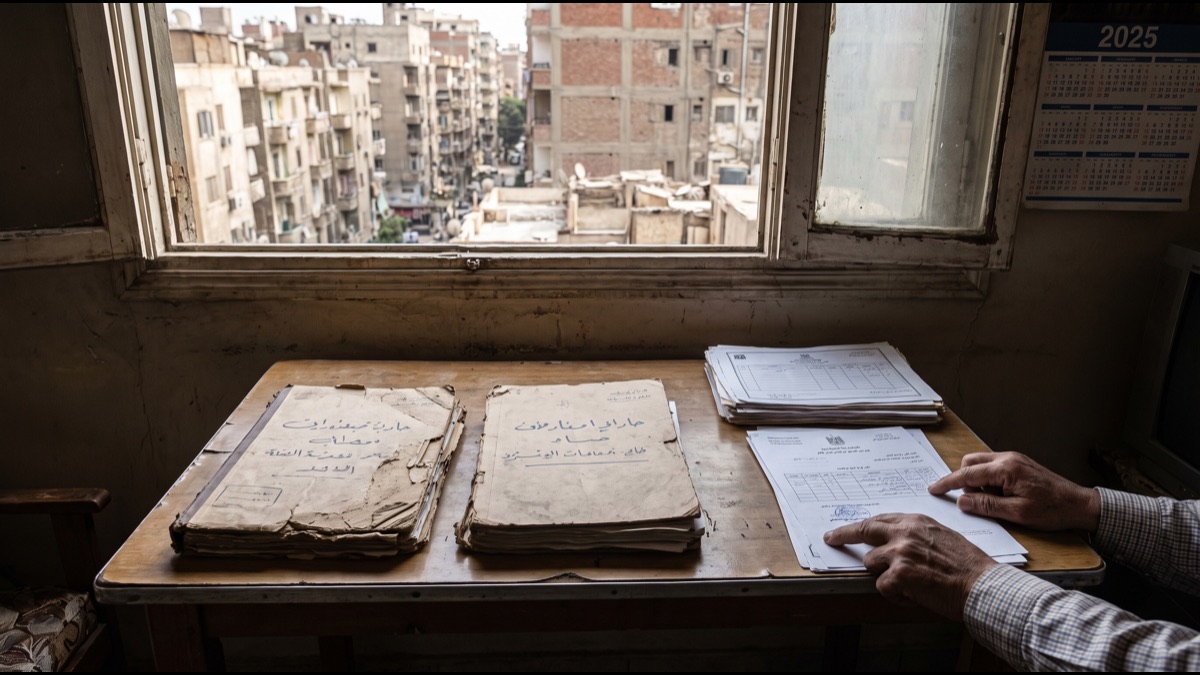
The long-term side effects were profound. Because contracts extended automatically and rents barely moved for decades, monthly rents on prime central Cairo and Alexandria apartments shrank to nominal sums, sometimes literally a handful of pounds, while landlords remained responsible for buildings they could neither repossess nor profit from. Maintenance suffered, owners lost incentive to invest, and millions of units sat closed rather than entering a rental market that offered owners no sensible return; official census figures have long pointed to a vast stock of vacant homes, a distortion frequently cited in the reform debate.
The New Rent System Since 1996
Law 4 of 1996 drew the dividing line. Every lease signed after it took effect became an ordinary civil-code contract: landlord and tenant freely agree the rent and the duration, the contract ends when its term expires, and renewal is by consent, not by force of law. Crucially, the law was not applied retroactively, so pre-1996 contracts kept their old-rent protections, which is why the two systems have coexisted ever since.
Under the new regime, eviction rules follow the contract and the civil code, deposits and annual increases are whatever the parties negotiate, and the tenant's security lasts only as long as the written term. Anyone renting a home in Egypt today almost certainly signs this kind of contract, typically for one to three years, with rent set by the market and increases negotiated at renewal.
The 2025 Reform: Laws 164 and 165
Pressure to resolve the dual system built for years. The Supreme Constitutional Court ruled in November 2024 that the legislature could regulate the old rent relationship, removing the main constitutional obstacle. The government then submitted draft legislation in May 2025, faced unusual pushback in parliament, and returned with a softened version that lengthened the transition for homes. The result, ratified in August 2025 as Laws 164 and 165 of 2025, works like this:
- Old rent contracts now have an expiry date. Residential old-rent leases terminate seven years after the law took effect; non-residential leases to individuals terminate after five years. After the transition, the old laws are repealed and all leases fall under the civil code like any new contract.
- Rents step up immediately and then annually. Governorate committees classify areas as premium, middle, or economic. Residential rents reset to 20 times the old legal rent in premium areas, with a minimum around 1,000 pounds per month, and to 10 times in middle and economic areas, with minimums around 400 and 250 pounds respectively; non-residential rents reset to five times the old rate. A further 15 percent annual increase applies through the transition.
- Eviction grounds expand modestly. Landlords can seek eviction through the urgent-matters judge if a unit stays closed for over a year without justification, or if the tenant owns another suitable property, while tenants keep the right to a substantive lawsuit.
- Vulnerable tenants get a safety valve. Old-rent tenants who commit to vacating receive priority for state-provided housing or commercial units, with allocation procedures set by decree.
What It Means for Tenants and Landlords
The first practical step for anyone renting in Egypt is to know which regime governs their home, and that turns on one question: when was the contract first signed? Post-1996 contracts are governed by their written terms, so read the duration and increase clauses carefully before signing, and keep receipts for every payment.
For old-rent tenants, the reform means certainty about a deadline but also predictability: rents rise by defined multiples with capped minimums rather than jumping to market levels overnight, the phase-out runs for years rather than months, and those who cannot afford the new rents can apply for state housing priority. For landlords, the laws restore a path to regaining possession of long-frozen properties on a published timetable, with court procedures clarified for the narrow eviction cases. Given the sums now involved, both sides should document the unit's condition, the contract chain, and payment history, because classification committee decisions and eviction claims will turn on records.
Sources
- Egypt State Information Service — Official government portal for legislation and state policy
- Daily News Egypt — Report on the ratification of the old rent law amendments in August 2025
- Tahrir Institute for Middle East Policy — Analysis of the old rent overhaul and the parliamentary debate
- CAPMAS — Central Agency for Public Mobilization and Statistics — Official census and housing-unit statistics for Egypt
FAQ
What is the old rent law in Egypt?
Old rent refers to a series of twentieth-century laws that capped rents, made leases automatically renewable and inheritable, and heavily restricted eviction for contracts signed before 1996. Rents under these contracts stayed frozen at nominal levels for decades, often just a few pounds per month.
What is the difference between old rent and new rent in Egypt?
Old rent covers pre-1996 contracts with frozen rents and near-permanent tenure. New rent, under Law 4 of 1996, covers everything leased after: rent and duration are freely negotiated, and the contract ends when its written term expires.
Can a landlord evict an old-rent tenant in Egypt?
Historically almost never, outside narrow cases such as demolition or prolonged abandonment. The 2025 reform adds clearer grounds, including a unit closed for over a year without justification or the tenant owning another suitable property, and sets fixed dates when old contracts themselves expire.
What does the 2025 rent reform change?
Laws 164 and 165 of 2025 phase out old rent: residential contracts end seven years after the law took effect and non-residential after five. Rents reset to multiples of the old rate with minimums by area classification, rise 15 percent annually during the transition, and eligible tenants get priority for state housing.
Do old-rent contracts still exist in Egypt?
Yes, millions of them remain in force during the transition period, but they now carry an expiry date. Once the seven-year residential window closes, the old laws are repealed and every lease becomes an ordinary civil-code contract.
About the Author
doyouknow.app Editorial Team — We track legislation through official channels and reputable Egyptian media, and we flag that legal reforms of this scale often come with implementing decrees, so readers facing real disputes should consult a licensed lawyer.
Loved This Article?
Share it on WhatsApp → Share on WhatsApp
Get more guides in your inbox — Subscribe to our newsletter for weekly surprising stories from Egypt, Saudi Arabia, Dubai, and beyond.