Introduction
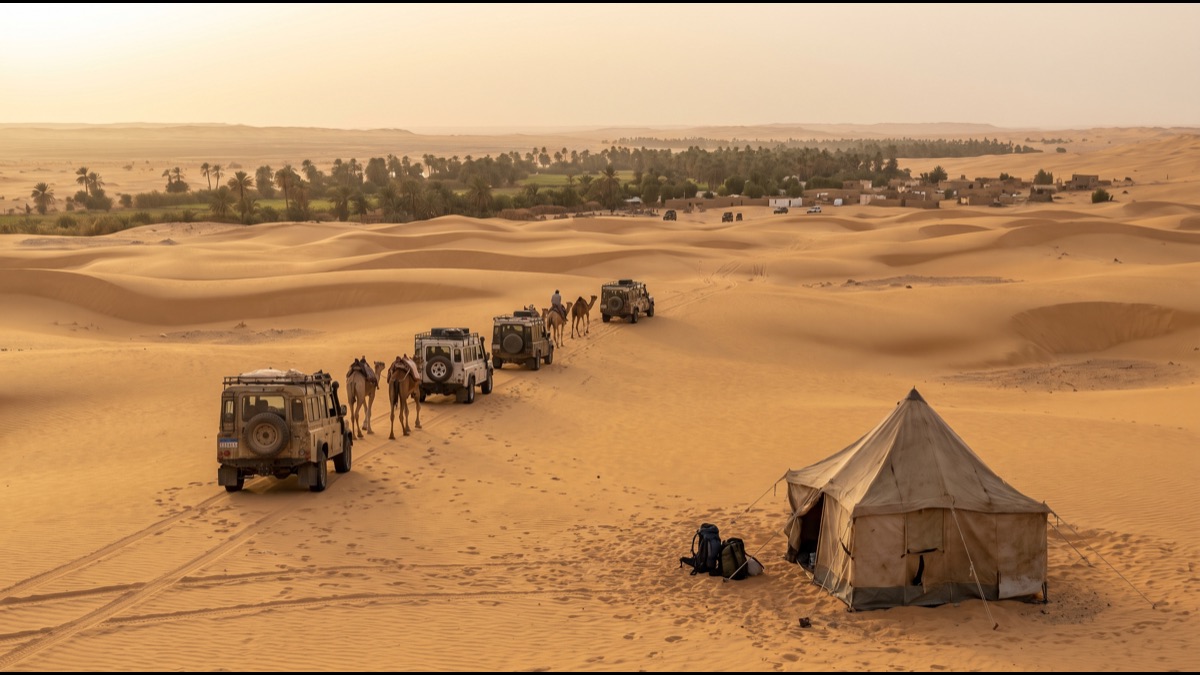
Egypt's Western Desert, part of the wider Sahara, covers roughly two-thirds of the country's total land area west of the Nile Valley, yet holds only a small fraction of its population, concentrated in a handful of oasis towns fed by underground aquifers. For travelers, it represents an entirely different side of Egypt from the Nile Valley temples or Red Sea beaches: vast open desert, dramatic dune fields, and small, historically isolated communities.
Modern paved roads and organized safari operators have made the region considerably more accessible than in past decades, though it remains a place that rewards planning a proper multi-day circuit rather than a single rushed day trip.
The Five Major Oases
The New Valley region contains a chain of oases historically connected by ancient caravan routes: Kharga, the largest and administrative capital of the New Valley Governorate, holds significant Roman and early Christian archaeological remains; Dakhla is known for its well-preserved mudbrick old town, Al-Qasr, and hot springs; Farafra is the smallest and serves as the closest base for the White Desert; and Bahariya, closer to Cairo, is a major hub for desert safaris and access to the Black Desert.
Siwa Oasis, though geographically and culturally distinct with its Berber population, is generally treated as a separate itinerary from the New Valley oases chain due to its remote location near the Libyan border, connected by a different route via the Mediterranean coast rather than directly from the other four.
The Great Sand Sea
The Great Sand Sea, one of the largest sand dune fields on Earth, stretches along Egypt's border with Libya, with some dunes reaching heights of over 100 meters. It was famously the setting for parts of the 1996 film 'The English Patient,' based partly on real desert exploration history, and remains a significant draw for serious dune-driving and sandboarding excursions organized from Siwa or Bahariya.
Given the sensitivity of the international border and the technical difficulty of navigating shifting dunes without fixed landmarks, travel into the deep Great Sand Sea requires an experienced operator with appropriate permits, not independent exploration.
Planning a Multi-Day Desert Circuit
A common itinerary links Bahariya, Farafra, Dakhla, and Kharga in a loop of roughly 5 to 7 days, typically starting and ending in Cairo, using 4x4 vehicles for off-road sections and overnight desert camps for the White Desert portion. These circuits are almost always arranged through an established desert safari or overland tour operator rather than self-driven, given the specialized vehicle and navigation requirements.
Travelers with less time sometimes opt for a shorter two- to three-day trip focused specifically on Bahariya and the White Desert, which is the most accessible combination from Cairo and covers the region's single most photographed landscape.
Practical Visiting Tips
Mobile phone coverage is unreliable or entirely absent across large stretches of the Western Desert, and temperatures swing dramatically between day and night, so packing layers, sufficient water, and informing someone of your itinerary in advance are standard, sensible precautions. October through April offers the most comfortable daytime temperatures for exploring; summer heat in the open desert can be genuinely dangerous without careful planning.
Booking through a licensed, experienced desert tour operator is the standard and strongly recommended approach for any Western Desert trip beyond the paved oasis towns themselves, both for navigation safety and for compliance with permit requirements in border-adjacent areas.
Sources
- Egyptian Ministry of Tourism and Antiquities — Official tourism information for Egypt's Western Desert oases
- Encyclopaedia Britannica — Western Desert reference entry
- Egyptian Environmental Affairs Agency — Protected area information for the Western Desert region
- UNESCO World Heritage Centre — Tentative list documentation referencing Western Desert oasis sites
FAQ
How many oases are in Egypt's Western Desert?
The New Valley region contains four major connected oases — Kharga, Dakhla, Farafra, and Bahariya — while Siwa Oasis, near the Libyan border, is culturally and geographically distinct and typically treated as a separate itinerary.
How long does a Western Desert circuit take?
A common multi-day itinerary linking Bahariya, Farafra, Dakhla, and Kharga takes roughly 5 to 7 days starting and ending in Cairo, though a shorter 2- to 3-day trip focused on Bahariya and the White Desert is a popular option for travelers with less time.
Is it safe to drive into the Great Sand Sea independently?
No. Given the sensitivity of the international border with Libya and the technical difficulty of navigating shifting dunes without fixed landmarks, travel into the deep Great Sand Sea requires an experienced operator with appropriate permits rather than independent exploration.
Which Western Desert oasis is closest to Cairo?
Bahariya Oasis is the closest of the major oases to Cairo, roughly a 4- to 5-hour drive, and serves as a common hub for shorter desert safari trips focused on the nearby Black Desert and White Desert.
Do you need a guide to visit Egypt's Western Desert?
For anything beyond the paved oasis towns themselves, yes. Booking through a licensed, experienced desert tour operator is the standard and strongly recommended approach for navigation safety and permit compliance.
About the Author
doyouknow.app Editorial Team — We rely on official tourism and environmental agency documentation to keep our Western Desert coverage accurate, safety-conscious, and useful for trip planning.
Loved This Article?
Share it on WhatsApp → Share on WhatsApp
Get more guides in your inbox — Subscribe to our newsletter for weekly surprising stories from Egypt, Saudi Arabia, Dubai, and beyond.