Introduction
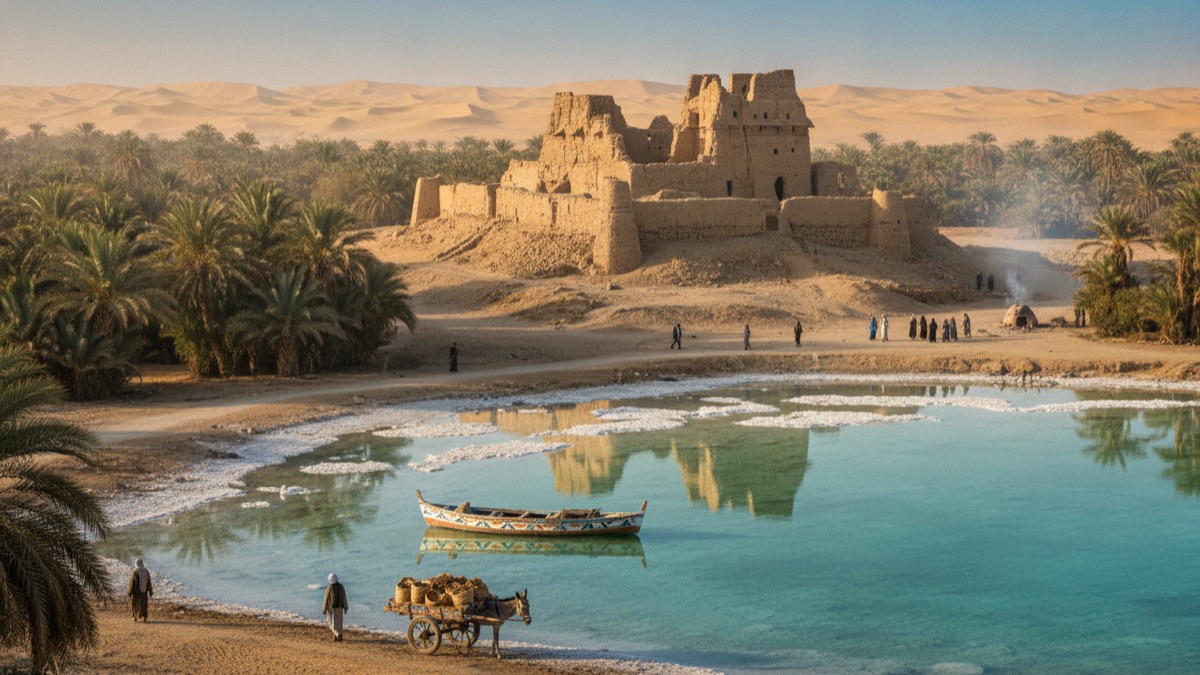
Siwa Oasis, tucked near Egypt's border with Libya in the Western Desert, is one of the country's most isolated and culturally distinct destinations, reachable only by a long overland journey rather than a direct flight. Its population is predominantly Siwan Berber, speaking a distinct Berber language and maintaining customs, architecture, and social structures that differ meaningfully from the rest of Egypt.
The oasis's remoteness has historically limited both development and outside influence, giving Siwa a genuinely different atmosphere from Nile Valley or Red Sea destinations: mudbrick architecture, freshwater springs, extensive date palm and olive groves, and a slower, more traditional pace of life.
The Oracle Temple of Amun
Siwa's most historically significant site is the Oracle Temple of Amun, famous in antiquity as the destination of Alexander the Great's journey across the desert in 331 BCE to consult its oracle, reportedly receiving confirmation of his divine parentage as a son of Amun-Zeus. The temple ruins, perched on a hilltop within the old town of Shali, remain a significant pilgrimage point for visitors interested in this specific episode of ancient history.
The nearby ruins of Shali Fortress, the oasis's original mudbrick old town, largely abandoned after a rare heavy rainstorm damaged its structures in the 1920s, offer an atmospheric example of traditional Siwan vernacular architecture, now partially restored and open to visitors.
Salt Lakes and Cleopatra's Spring
Siwa's high salt content, comparable in concept to the Dead Sea, allows visitors to float effortlessly in several of its salt lakes, a popular and low-effort activity for those visiting the oasis. Cleopatra's Spring, a natural freshwater pool historically associated with the queen despite limited direct evidence she ever visited, remains a popular swimming spot, particularly in the cooler months.
These water features, combined with the oasis's date palm groves, create a striking visual and thermal contrast with the surrounding Great Sand Sea desert.
The Great Sand Sea and Desert Excursions
Siwa serves as a common gateway for excursions into the Great Sand Sea, one of the largest sand dune fields in the world, extending into neighboring Libya. Jeep safaris into the dunes, sandboarding, and overnight desert camping are widely offered by local operators, typically combined with a stop at a natural hot spring for evening bathing under desert skies.
Given the sensitivity of the border region and the technical difficulty of desert navigation, these excursions should always be arranged through an established local operator with appropriate permits rather than attempted independently.
Practical Visiting Tips
Siwa has no airport; the standard route is an approximately 8- to 10-hour bus or private car journey from Cairo or a shorter connection via Marsa Matruh on the Mediterranean coast. Most visitors plan at least two to three days in Siwa given the travel time involved, making it a poor fit for a rushed, single-day visit.
As with the rest of Egypt's desert regions, October through April offers considerably more comfortable temperatures, though Siwa's desert nights can be notably cool even in warmer months, so layered clothing is worth packing regardless of season.
Accommodation in Siwa ranges from simple guesthouses to a handful of eco-lodges built in traditional style using local salt-rock and mudbrick construction, generally offering a quieter, more rustic experience than Egypt's larger resort towns. Mobile signal and internet access remain limited compared to Cairo or the Red Sea coast, which many visitors find adds to the oasis's appeal as a genuine escape from constant connectivity.
Sources
- Egyptian Ministry of Tourism and Antiquities — Official tourism information for Siwa Oasis
- Encyclopaedia Britannica — Siwa Oasis reference entry, including the Oracle of Amun
- UNESCO World Heritage Centre — Tentative list documentation referencing Siwa's cultural landscape
- Encyclopaedia Britannica — Great Sand Sea reference entry
FAQ
How do you get to Siwa Oasis?
Siwa has no airport. The standard route is an approximately 8- to 10-hour bus or private car journey from Cairo, or a shorter connection via the Mediterranean coastal city of Marsa Matruh.
What language do Siwans speak?
Siwa's population is predominantly Siwan Berber, who speak a distinct Berber language alongside Arabic, maintaining customs and traditions that differ meaningfully from the rest of Egypt.
Why did Alexander the Great visit Siwa?
Alexander the Great traveled across the desert to Siwa in 331 BCE to consult the Oracle Temple of Amun, reportedly receiving confirmation of his divine parentage as a son of Amun-Zeus.
Can you swim in Siwa's salt lakes?
Yes. Siwa's salt lakes have high salt content comparable in concept to the Dead Sea, allowing visitors to float effortlessly, making it one of the oasis's popular low-effort activities.
How many days do you need in Siwa?
Most visitors plan at least two to three days in Siwa given the significant travel time from Cairo, making it a poor fit for a rushed single-day visit.
About the Author
doyouknow.app Editorial Team — We rely on official tourism sources and historical scholarship to present Siwa's Berber heritage and desert landscape accurately for travelers planning the journey.
Loved This Article?
Share it on WhatsApp → Share on WhatsApp
Get more guides in your inbox — Subscribe to our newsletter for weekly surprising stories from Egypt, Saudi Arabia, Dubai, and beyond.