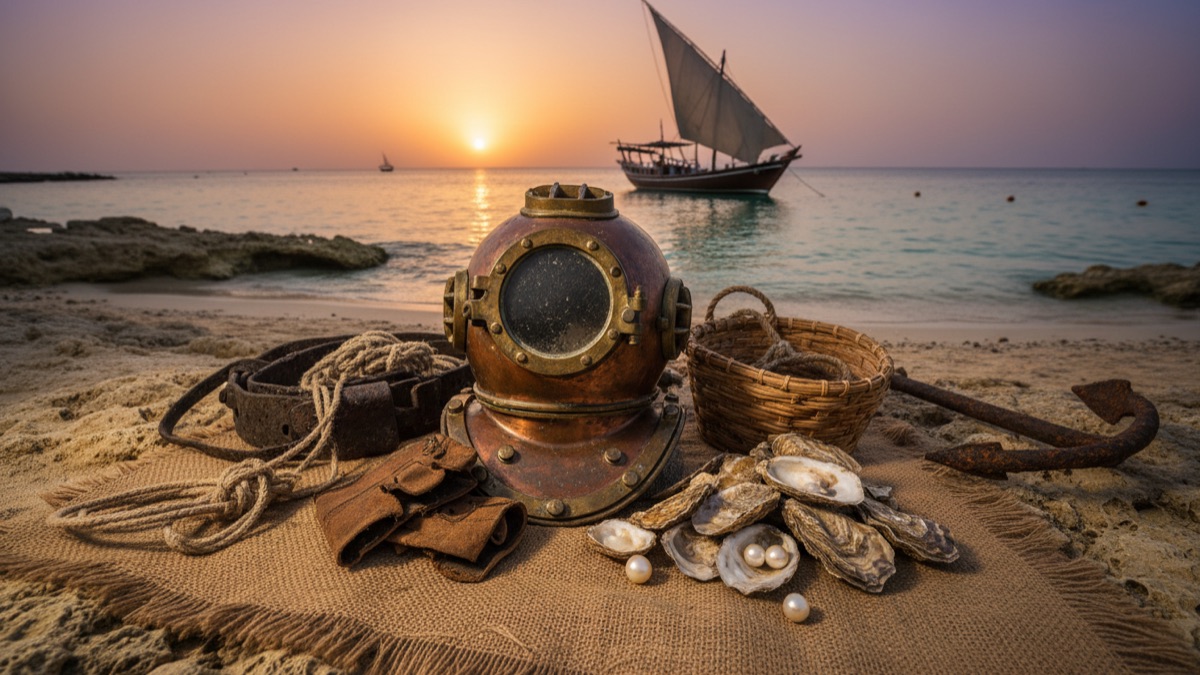
Pearl Diving in Saudi Arabia: A Lost Heritage
In 1928, a single Gulf pearl sold in Paris for enough money to buy a palace in Riyadh. That pearl came from a diver who spent four months at sea, made dozens of dives a day, and risked his hearing, his health, and sometimes his life. Pearl diving was not just an old job on the Saudi coast. It was an industry that shaped an entire civilization.
The Golden Age of Pearls
From the 16th century until the early 20th century, the Gulf was the world's main source of natural pearls. Towns such as Al-Qatif, Dammam, and Al-Ahsa were launch points for fleets of wooden dhows. Pearls were traded as far as India, Europe, and the Americas.
The diving season ran from May to September, when the water was warm and oysters were plentiful. For those months, much of the male population of the coastal towns lived at sea. The rest of the year they fished, farmed, or traded.
A Diver's Day
A diver woke before dawn, ate a light breakfast of rice and fish, and then entered the water repeatedly. Wearing a nose clip called a futam and carrying a small bag for oysters, he dived to depths of 20 to 30 meters and stayed underwater for up to 90 seconds. He might dive 50 to 100 times a day.
The work was dangerous. Repeated pressure damaged ears and sinuses. Sharks, drowning, and disease were constant risks. Divers accepted the danger because the sea offered one of the few paths to income.
Life on the Dhow
Pearl diving was a team effort. A dhow carried 30 to 50 men, each with a role:
- Diver: collected oysters from the seabed.
- Seab: managed the rope and pulled the diver up when he signaled.
- Nahham: cooked and served the crew.
- Jahhal: navigated and chose diving spots.
- Nukhudda: the captain, responsible for the voyage and its profits.
Payment came as a share of the harvest rather than a fixed wage. The nukhudda took the largest share, followed by the diver, with other crew members receiving smaller portions.
The Decline
The industry collapsed in the early 20th century. Japanese researchers developed cultured pearls, which were cheaper and more uniform than natural ones. The Great Depression of 1929 and the Second World War then destroyed demand for Gulf pearls.
In Saudi Arabia, the decline overlapped with the rise of oil. Production began at Dammam Well No. 7 in 1938, opening a new economic era. Pearl diving did not end overnight, but it faded as a way of life.
Heritage Today
Natural pearl diving is no longer practiced as a profession, but it is preserved as heritage. In Saudi Arabia, efforts include:
- National archives that collect photographs, documents, and oral histories of divers.
- Museums displaying nose clips, diving weights, and old dhows.
- Cultural festivals along the Eastern Province that recreate life at sea.
- Literature and poetry that keep the stories of divers alive.
Why It Matters
Pearl diving matters because it reminds Saudis of a time before oil. Coastal communities built a global trade from patience, courage, and teamwork. The industry also shows that Saudi Arabia's connection to the world is older than the modern oil economy.
When you see a pearl today, it may carry a story of months at sea, 50 dives a day, and a man named Abdullah who lost his hearing but built a home.
Frequently Asked Questions
What was pearl diving in Saudi Arabia?
It was a major industry on the Gulf coast from the 16th century until the 1930s. Divers collected natural pearls from oysters and sold them in markets around the world.
When did pearl diving end?
It declined sharply after Japanese cultured pearls entered the market around 1908 to 1928, and after the Great Depression. In Saudi Arabia, oil production from 1938 accelerated the shift away from pearl diving.
What dangers did divers face?
Divers faced ear and sinus damage from pressure, blackouts, shark attacks, drowning, and disease. The death rate among divers was high.
Is the heritage preserved?
Yes. Archives, museums, festivals, and literature keep the memory of pearl diving alive, especially in the Eastern Province.
What is a futam?
The futam is a nose clip worn by divers to keep water out while underwater. It was usually made from horn, wood, or ivory.
Sources
- Saudi National Archives (Dara) — documents and oral histories of pearl diving.
- UNESCO Intangible Cultural Heritage — maritime heritage of the Gulf.
- Saudi Vision 2030 — cultural heritage and tourism context.
- Al Jazeera — historical reporting on Gulf pearl diving.
About the author: The doyouknow.app editorial team writes about Saudi Arabia's history, coast, and culture. Have a topic idea? Get in touch.
📱 Tell a friend: Share on WhatsApp
📬 Get more Saudi facts. Subscribe to our newsletter for surprising stories from Saudi Arabia and beyond.