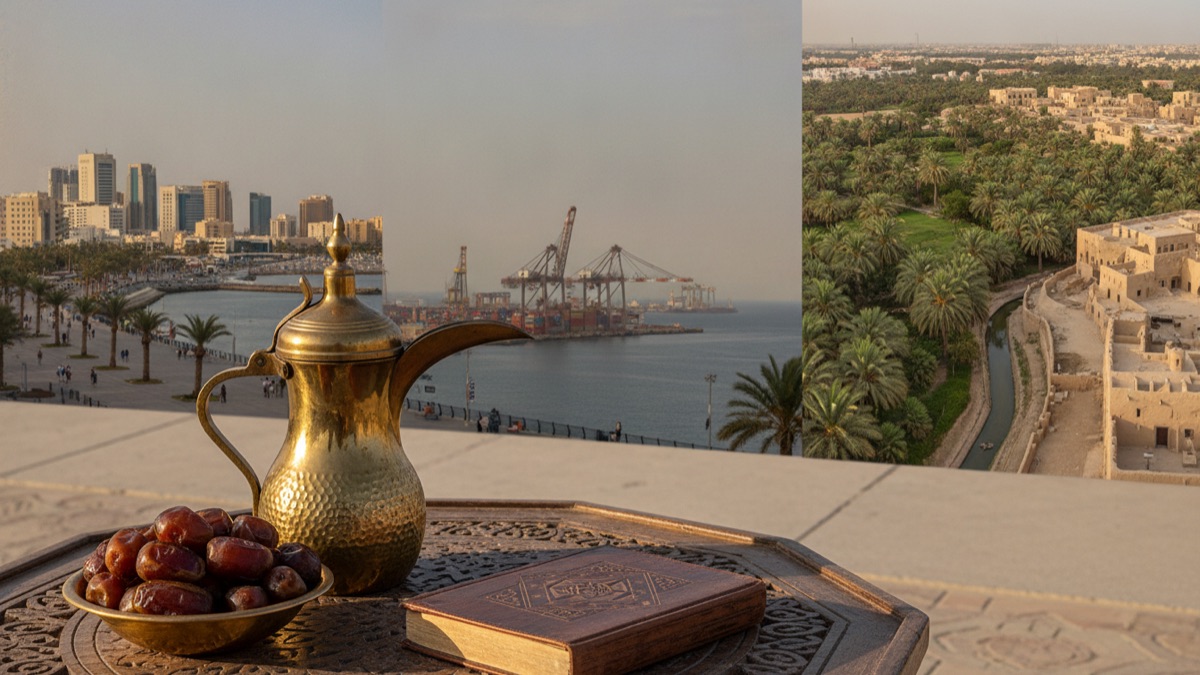
Saudi Arabia's Eastern Coast
The Eastern Province is Saudi Arabia's oil-rich coastal region, but there is far more here than refineries and business hotels. This is where the kingdom meets the Gulf, where date-palm oases contrast with offshore islands, and where city skylines rise above waters that Bahrainis and Qataris have crossed for centuries. For travelers, the province offers three distinct experiences: the modern waterfront of Al Khobar, the urban energy of Dammam, and the ancient greenery of Al-Ahsa.
This guide focuses on the triangle formed by Khobar, Dammam, and Al-Ahsa. You will find practical advice on what to see, where to eat the region's famous seafood, how to get between cities, and which hotels offer the best base. Whether you are visiting for work or a leisurely road trip, the Eastern Province is one of the most underrated parts of the country.
Eastern Province Overview
The Eastern Province, also known as Ash Sharqiyah, stretches from the Kuwaiti border in the north to the Empty Quarter in the south. Its coastline along the Arabian Gulf is dotted with beaches, causeways, and industrial islands. The climate is hot and humid in summer, with sea breezes that make the coast feel different from the dry heat of Riyadh.
The region's economy still revolves around oil and petrochemicals, which has funded modern infrastructure, universities, and hospitals. This prosperity shows in the quality of the roads, the range of hotels, and the diversity of restaurants. At the same time, traditional communities in Al-Ahsa, Qatif, and Tarout maintain crafts, dialects, and cuisines that predate the oil era by generations.
| Destination | Character | Top highlight |
|---|---|---|
| Al Khobar | Upscale coastal city, dining hub | Khobar Corniche and Half Moon Bay |
| Dammam | Provincial capital, transport gateway | Dammam Corniche and King Fahd Park |
| Al-Ahsa | Ancient oasis, UNESCO-listed | Al-Qarah Mountain and old souqs |
The region is home to a significant expatriate community, which gives the cities a more international feel than Riyadh or Jeddah. English is widely spoken in hotels, restaurants, and malls. The pace is generally relaxed, and evenings by the water are a defining part of local life.
Al Khobar
Al Khobar is the most visitor-friendly of the coastal cities. It grew from a small fishing village into a prosperous commercial center after the discovery of oil, and its waterfront remains its greatest asset. The Khobar Corniche runs for several kilometers along the Gulf, lined with cafes, playgrounds, and green spaces. It is the place to walk at sunset, watch families picnic, and see the illuminated fountains after dark.
The Khobar Water Tower is the city's most recognizable landmark. It stands at the northern end of the corniche and offers views from an upper observation deck. Nearby, the Prince Sultan Science and Technology Center is a strong choice for families with children, with interactive exhibits and an aquarium.
North of the city, Half Moon Bay is a sheltered crescent of sandy beach popular for swimming, jet skiing, and camping. The water is calm and shallow, making it ideal for families. Several beach clubs and resorts have opened along the bay in recent years, adding restaurants, sun loungers, and water sports rentals.
Dining: Khobar is widely considered the best city in Saudi Arabia for seafood. Local restaurants serve freshly caught hammour, shrimp, and crab prepared grilled, fried, or in spiced rice dishes. The city's restaurants also reflect its international population, with strong Lebanese, Indian, Filipino, and East Asian options.
Dammam
Dammam is the administrative capital of the Eastern Province and the arrival point for most visitors, thanks to King Fahd International Airport. While it lacks Khobar's polished corniche, it has a rawer, more local energy and several attractions worth a day or two.
The Dammam Corniche runs along the city's northern waterfront, anchored by the striking Flagpole Plaza and a series of modern sculptures. Early mornings and late afternoons are the best times to visit, when joggers and cyclists use the paths and the light is soft. The corniche is also home to several fishing spots where locals gather with long rods.
King Fahd Park is one of the largest urban parks in Saudi Arabia. It combines landscaped gardens, a lake, small amusement rides, and shaded areas for picnics. On weekends, it fills with families and is a good place to observe local life.
For culture, the Dammam Regional Museum covers the archaeology and ethnography of the Eastern Province, including displays on pearl diving, early oil exploration, and traditional Bedouin life. The nearby Heritage Village reconstructs old Saudi architecture and hosts cultural performances and handicraft demonstrations.
Shopping: Al-Shatea Market and Dammam Sea Front are good for evening strolls and street food. The larger Marina Mall and Othaim Mall offer familiar international brands and cinemas.
Al-Ahsa Oasis & Al-Hofuf
Al-Ahsa is the world's largest oasis and a UNESCO World Heritage Site. Located about 150 kilometers inland from the coast, it feels like a different country after the glass towers of Khobar. The region has been inhabited for thousands of years, supported by a vast network of natural springs, irrigation channels, and date-palm gardens.
The main city, Al-Hofuf, is the cultural center of the oasis. Its old neighborhoods, including Al-Koot, contain traditional mud-brick houses, narrow lanes, and small mosques. The Ibrahim Palace is a restored Ottoman-era fort with thick walls, courtyards, and a small museum explaining the region's military history.
Al-Qarah Mountain is the standout natural attraction. This flat-topped limestone mountain rises from the palm groves and is riddled with cool caves and narrow canyons. A paved trail leads to the summit, where the views over the oasis are spectacular. The mountain's microclimate makes it noticeably cooler than the surrounding plain, which is why it has been used as a retreat for centuries.
The Souq Al-Qaisariya is one of the oldest markets in Arabia. It sells dates, spices, textiles, pottery, and traditional crafts. Al-Ahsa is famous for its date production, particularly the Khalas and Barhi varieties. Visit a date shop to sample different types and watch them being packed for export.
Other notable sites include the Jawatha Mosque, one of the oldest surviving mosques in eastern Arabia, and the Yellow Lake, a seasonal desert lake that appears after heavy rains and attracts birdlife and campers.
Beaches & Coastal Life
The Eastern Province coastline is more accessible than many visitors expect. While some stretches are industrial or privately held, there are enough public beaches, islands, and resorts to fill several days.
Half Moon Bay is the easiest beach from Khobar, with wide sand and calm water. Further north, Uqair Beach is quieter and has a historic Ottoman fort at one end. The beach is popular with campers and fishermen, and the lack of large developments gives it a more natural feel.
The King Fahd Causeway connects Saudi Arabia to Bahrain, and many travelers use it for a side trip. Even if you do not cross, the causeway area has viewpoints and cafes overlooking the Gulf. Boat trips from Khobar and Dammam marinas offer fishing, dolphin watching, and visits to small offshore islands.
For a more resort-style experience, several beachfront hotels along the coast offer day passes to non-guests. These usually include pool access, lunch, and water sports equipment. Fridays and public holidays can be busy, so book in advance.
Pearling Past & Coastal Heritage
Before oil transformed the region, the Eastern Province's wealth came from the sea. Pearl diving was the backbone of the local economy for centuries, and coastal towns such as Al-Uqair and Qatif were busy ports. Divers would spend months at sea each season, harvesting oysters and trading pearls as far afield as India and Europe. The industry collapsed in the 1930s after the arrival of cultured pearls from Japan, but its memory remains central to local identity.
Several places keep this history alive. The Tarout Island Castle, built on a mound off the coast of Qatif, is one of the oldest fortifications in eastern Arabia. The island itself has narrow streets, traditional houses, and a relaxed pace that feels far removed from the mainland highways. Nearby, the Darin Corniche and the old pearling harbor of Darin offer quiet walks and views of traditional wooden dhows.
The Heritage Village in Dammam includes displays on pearl diving tools, diving costumes, and the weighing scales used to value catches. Visitors can see how divers used nose clips, leather finger guards, and weighted ropes to descend repeatedly in search of oysters. These exhibits help explain why the discovery of oil was both an economic revolution and the end of a way of life.
Today, the coastal towns have shifted to fishing, trade, and tourism, but the architecture and cuisine still carry traces of the pearling era. Wooden dhows are now more likely to be used for sunset cruises than for harvesting oysters, yet the connection between the people and the Gulf remains unmistakable.
Eastern Province Cuisine
Eastern Saudi cuisine is shaped by the sea and the date harvest. Fish, rice, and dates appear at almost every meal, and the influence of Gulf neighbors is stronger here than in central or western Saudi Arabia.
Sayadieh, the spiced fish-and-rice dish, is prepared with local hammour or zubaidi. Machboos is similar to kabsa but often uses shrimp or fish and a darker blend of spices. Harees, a wheat-and-meat porridge, is popular during Ramadan and special occasions.
Dates are not just a snack; they are an ingredient. Asida is a date-sweetened wheat pudding, and date syrup is used in marinades and desserts. Al-Ahsa's date varieties are considered among the best in the kingdom, and a box of fresh dates is the most authentic souvenir you can take home.
Where to eat: In Khobar, Twina and Shrimp Zone are long-standing seafood favorites. Dammam's Corniche has casual fish grills where you choose your fish by weight. In Al-Hofuf, local restaurants serve hearty rice platters and fresh bread baked in clay ovens.
Where to Stay
The Eastern Province has a hotel for every budget, though the best options cluster in Khobar and Dammam.
Khobar: The Kempinski Al Othman is the city's flagship luxury hotel, with a prime Corniche location and excellent restaurants. The Sheraton Dammam Hotel & Convention Centre is actually closer to Khobar's center and offers reliable business facilities. Mid-range options include the Coral International Al Khobar and several apartment-hotel chains.
Dammam: The InterContinental Dammam and Marriott Dammam are solid choices near the airport and business district. Budget travelers will find good-value hotels around Al-Amamrah and the city center.
Al-Ahsa: Options are more limited but improving. The InterContinental Al Ahsa is set within the palm groves and offers a resort-like atmosphere. Smaller local hotels in Al-Hofuf provide basic comfort at lower prices.
Getting Around
King Fahd International Airport in Dammam is the main gateway, with domestic and international flights. The drive from the airport to Khobar takes 30-40 minutes, and to Al-Ahsa around 90 minutes. Taxis, Uber, and Careem are available at the airport.
Having a car makes the Eastern Province far easier to explore. The highways connecting Dammam, Khobar, and Al-Ahsa are modern and well signposted. Traffic in Khobar and Dammam can be heavy during rush hours, especially on the causeways and coastal roads.
For trips to Bahrain, the King Fahd Causeway has dedicated lanes for passenger cars. Make sure you have the correct visa for Bahrain before arriving at the border. The crossing usually takes 30-60 minutes, depending on queues.
Practical Travel Tips
Best time to visit: November to March is the most pleasant period. Coastal humidity is lower, temperatures are warm rather than scorching, and outdoor dining is comfortable. June to September is hot and humid, with temperatures frequently above 40°C.
Dress code: The Eastern Province is slightly more relaxed than Riyadh but still conservative. Women do not need an abaya by law but should dress modestly. Men should avoid shorts outside beach resorts. Swimwear is acceptable only at private beaches and hotel pools.
Language: Arabic is the official language, but English is commonly spoken in hotels, restaurants, and malls. Road signs are bilingual.
Currency: Saudi Riyal. Credit cards are widely accepted, though carry cash for smaller shops, date markets, and beachside vendors.
Friday closures: Many attractions and restaurants open after the Jumu'ah prayer, around 1:30 PM. Plan Friday mornings for hotel breakfasts or beach time.
Sources
- Visit Saudi Official Tourism Portal — Destination guides for Al-Ahsa, Khobar, and Dammam
- UNESCO World Heritage Centre — Al-Ahsa Oasis World Heritage listing
- Saudi Tourism Authority — Travel updates, visa information, and events
- Lonely Planet — Saudi Arabia — Travel guide content for the Eastern Province
- Rough Guides — Saudi Arabia — Cultural and practical travel background
- Kayak Travel Guide — Hotel and flight information for Dammam and Khobar
FAQ
Is the Eastern Province safe for tourists?
Yes. The Eastern Province is generally safe for visitors, including solo travelers and families. Standard travel precautions apply, and the cities are accustomed to international business and leisure guests.
Do I need a car in the Eastern Province?
A car is recommended if you want to visit Al-Ahsa, Half Moon Bay, and Uqair Beach. For a short stay in Khobar or Dammam, Uber and Careem are sufficient.
How far is Al-Ahsa from Khobar?
Al-Ahsa is about 150 kilometers southwest of Khobar. The drive takes roughly 90 minutes on a modern highway.
Can I visit Bahrain from the Eastern Province?
Yes, the King Fahd Causeway connects Dammam to Bahrain. You need a valid Bahrain visa and should allow extra time for border queues, especially on weekends.
What is the best city to stay in?
Khobar is best for beaches, dining, and a relaxed waterfront atmosphere. Dammam is better for airport access and business. Al-Ahsa is ideal for heritage and oasis scenery.
What food is the Eastern Province known for?
Fresh seafood, particularly hammour and shrimp, prepared as sayadieh or machboos. The region is also famous for Al-Ahsa dates.
When is the best time to visit the Eastern Province?
November to March offers the best weather. Summer is extremely hot and humid, so plan indoor and evening activities if visiting then.
Are there public beaches near Khobar?
Yes, Half Moon Bay and Uqair Beach are accessible to the public. Some resort beaches also sell day passes for non-guests.
About the Author
doyouknow.app AI-assisted Editorial Workflow — This article was prepared with AI-assisted research and editing, using the sources listed on the page. It is not based on firsthand testing, on-the-ground reporting, or a claim of personal experience or professional credentials. Please check official sources for current details.
Loved This Article?
Share it on WhatsApp → Share on WhatsApp
Get more Saudi Arabia travel tips in your inbox — Subscribe to our newsletter for weekly surprising stories from Dubai, Saudi Arabia, and beyond.