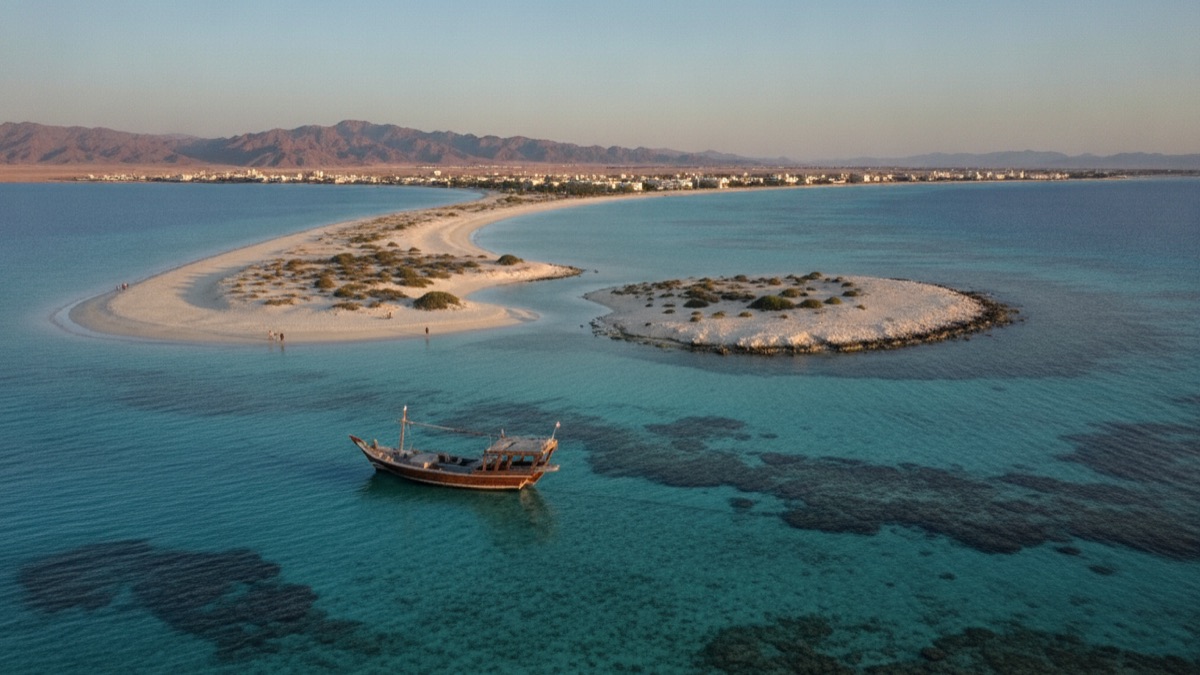
Saudi Arabia's Other Red Sea Coast
When most travelers picture the Saudi Red Sea, they imagine Jeddah's bustling corniche or the headline-grabbing resorts of the Red Sea Project. Yet the Kingdom's northwestern shoreline remains one of the most underexplored tropical coastlines on the planet. Stretching between the historic Hejazi port of Al-Wajh and the island-dotted waters of Umluj, this region offers a quieter, more authentic window onto the Red Sea than anything found farther south.
Here, white-sand beaches meet turquoise water so clear that boat captains navigate by the shadow of the reef. Volcanic islets rise from the sea like broken crowns, while fishing villages preserve a way of life that predates the founding of modern Saudi Arabia. The coral reefs are healthy, the marine life is abundant, and the pace of life is deliberately slow. This guide focuses on the coast north of Yanbu, where Umluj and Al-Wajh serve as the twin gateways to an archipelago that many visitors compare to the Maldives before the crowds arrived.
Whether you are a diver searching for untouched walls, a beach lover looking for solitude, or a cultural traveler curious about Hejazi ports, this stretch of coast rewards anyone willing to make the journey. It is not a luxury enclave, and it is not a party destination. It is a place of warm water, wild islands, and genuine Saudi hospitality.
Where Is the Saudi Red Sea Coast?
The Saudi Red Sea runs along the western edge of the Arabian Peninsula for roughly 1,800 kilometers, from the Gulf of Aqaba in the north to the Farasan Islands in the south. The section covered in this guide lies in the northwest, within Tabuk Province, roughly halfway between Jordan's border and the city of Yanbu. Al-Wajh sits about 200 kilometers north of Yanbu and 140 kilometers south of the Jordanian border, while Umluj lies another 150 kilometers south of Al-Wajh.
Geographically, this coastline sits on the eastern shore of the Red Sea, opposite Egypt's Sinai Peninsula and Sudan. The water is warm year-round, salinity is high, and the coral reefs have evolved in relative isolation. Because the area receives far fewer visitors than Egypt's Red Sea resorts, the reefs show none of the crowding or anchor damage common elsewhere. Marine biologists often describe this northern section as a living laboratory, with species counts that rival any reef system in the Indo-Pacific.
The climate is desert coastal. Summers are hot and dry, with temperatures climbing above 40 degrees Celsius, while winters are mild and pleasant, with daytime temperatures in the mid-twenties. Rain is rare, wind is occasional, and the sea remains inviting for most of the year. The best window for travel is from October through April, when the heat retreats and the water is calmest.
Umluj: The Maldives of Arabia
Umluj is a small city on the Red Sea coast that has quietly become the poster child for Saudi coastal tourism. Locals call it the "Maldives of Arabia," and while that label is used loosely across the region, in Umluj it feels earned. The water shifts from emerald near the mangroves to deep sapphire offshore, and the beaches are composed of fine white sand that stays cool even under the midday sun.
The real magic of Umluj lies offshore. More than 100 small islands sit within a short boat ride of the mainland, most of them uninhabited. Some are little more than sandbars fringed by coral, while others are substantial enough to support low vegetation, lava rock, and nesting seabirds. Boat tours leave from the main harbor each morning, carrying visitors on day trips that include snorkeling, dolphin watching, beach picnics, and photography stops. The most popular route threads through a cluster of islands known locally as the Umluj Islands, where the water is shallow, the coral is healthy, and the visibility often exceeds 20 meters.
Back onshore, Umluj has a relaxed, working-port atmosphere. The fish market opens early, with crews unloading the night's catch of hammour, tuna, squid, and shrimp. The waterfront promenade is a pleasant place to drink Arabic coffee at sunset, and the old town contains a handful of traditional coral-stone houses that hint at the city's Hejazi past. The area around Ras Al-Sheikh Humaid, at the northern edge of Umluj, protects mangroves and tidal flats where herons, flamingos, and migratory waders feed.
Practical tip: Book your island boat tour the day before, and confirm what is included. Some operators provide lunch, snorkeling gear, and drinking water; others offer only transport. Morning departures usually mean calmer seas and better light for photography. Wear reef-safe sunscreen and bring a hat, because shade on the islands is limited.
Al-Wajh: A Living Hejazi Port
If Umluj is the natural headline of the northern coast, Al-Wajh is its cultural anchor. This historic port was once a key stop on the Hejaz trade route and a departure point for pilgrims traveling to Mecca from the Levant. The old town, also called Al-Balad, climbs a low hill above the harbor, its narrow lanes lined with coral-stone houses, wooden balconies, and carved doors that have weathered more than a century of salt air.
Unlike Jeddah's more famous Al-Balad, the old town of Al-Wajh feels almost frozen in time. Many of the houses are empty, their owners having moved to newer neighborhoods, but the architecture remains remarkably intact. Walking through the district early in the morning, with the sea visible at the end of every alley, is one of the most atmospheric experiences on the Saudi coast. The restored Al-Wajh Castle, built in 1875 as an Ottoman administrative headquarters, overlooks the port and offers panoramic views from its upper floor.
The modern town is modest but functional, with a small airport, a hospital, schools, and a seafront where fishermen mend nets and sell their catch. Al-Wajh is also the closest mainland town to several important dive sites and islands. Because it receives fewer leisure visitors than Umluj, prices for accommodation and meals are lower, and the interaction with locals feels less transactional. For travelers who want to understand the human side of the Red Sea, Al-Wajh is essential.
Don't miss: The early-morning fish auction at the port, the view from Al-Wajh Castle at sunset, and a slow walk through the old town's upper lanes. If you have time, ask a local to point you toward the Ottoman-era water cisterns and the old customs house.
Coastal Diving and Snorkeling
The northern Saudi Red Sea is one of the most exciting diving frontiers in the world. PADI and other agencies describe Saudi waters as holding as many reefs as the rest of the Red Sea combined, with the crucial difference that most of them remain almost entirely unexplored by recreational divers. The reefs here are known for healthy coral cover, excellent visibility, and an abundance of pelagic life that is becoming harder to find elsewhere.
Near Umluj, dive operators run trips to offshore reefs and islands where the coral formations include branching acropora, massive boulder corals, and delicate sea fans. Fish life is dense from the surface down. Snorkelers can see butterflyfish, angelfish, parrotfish, and clownfish within meters of the boat, while divers may encounter moray eels, Napoleon wrasse, green sea turtles, and reef sharks. During the spring and autumn months, whale sharks occasionally pass through the deeper channels, drawn by plankton blooms.
Al-Wajh offers a different diving experience. The seabed offshore drops more steeply, and the walls are decorated with gorgonians and soft corals. Currents can be stronger here, so many sites are best suited to advanced divers. Local operators emphasize small group sizes and flexible itineraries, because the infrastructure is still developing. This is diving as adventure rather than resort diving: boats are comfortable, crews are experienced, but you are unlikely to share a site with another group.
For non-divers, the snorkeling is equally impressive. Many of the Umluj islands have shallow reefs that can be explored with a mask and fins. Kayaking and stand-up paddleboarding are also popular ways to experience the coastline without getting wet. The water temperature ranges from about 24 degrees Celsius in winter to 30 degrees in summer, making it comfortable for extended sessions.
Best diving season: October to May offers the calmest seas and clearest water. July and August can be hot and humid above the surface, though the underwater conditions remain good.
Islands to Explore
The archipelago between Al-Wajh and Umluj contains dozens of named islands and countless unnamed islets. Each has its own character, and part of the joy of traveling here is choosing which ones to visit. These are some of the highlights:
Jabal Al-Hasakah: One of the most photographed islands in Umluj, Hasakah is a cone of black lava rock rising from a ring of white sand. The contrast between dark stone and turquoise water makes it a favorite for drone photography and social media posts. A small beach on the sheltered side is ideal for swimming and snorkeling.
Al-Qitan Island: A low, sandy island surrounded by a broad reef flat. At low tide, the lagoon becomes shallow enough to wade across, and the sandbars create patterns that change with the current. It is a classic desert-island experience, with no facilities and no shade, so come prepared.
Ummahat Islands: A cluster of small rocky islands north of Umluj, known for clear water and healthy coral gardens. The name means "small mothers" in Arabic, a reference to their rounded shapes. They are less visited than Hasakah, which makes them a good choice for travelers seeking solitude.
Jabal Al-Tair: Located closer to Al-Wajh, this island takes its name from the seabirds that nest on its cliffs. The underwater terrain drops off quickly, creating walls that attract larger fish and pelagic species. It is a favored site for experienced divers.
Sharmah and the northern islets: Near the border of the Red Sea Project development area, these islands mark the transition between wild coast and managed tourism zone. They remain largely undeveloped and offer excellent snorkeling. Check local access rules before visiting, because some areas may require permits.
Most islands have no toilets, trash collection, or fresh water. Visitors should bring everything they need and carry all waste back to the mainland. Some islands are sensitive seabird or turtle nesting sites, so landing may be restricted during breeding seasons.
Marine Wildlife Encounters
Beyond the coral, the northern Red Sea supports a remarkable range of marine animals. Dugongs, sometimes called sea cows, graze on seagrass beds in sheltered bays. They are shy and increasingly rare, but patient early-morning boat trips occasionally produce sightings. Green sea turtles are more commonly seen, especially around reefs where they come to rest on the coral or feed on sponges.
Dolphins are a regular feature of boat crossings between Umluj and the islands. Spinner dolphins and bottlenose dolphins both occur in these waters, and they sometimes ride the bow wave of tour boats for minutes at a time. Whale sharks appear seasonally, usually between March and May and again in October and November, though sightings are never guaranteed.
Birdlife is also rich. The coastal mangroves and mudflats attract flamingos, herons, ospreys, and migratory shorebirds traveling between Africa and Eurasia. On the islands themselves, terms, gulls, and brown boobies nest on rocky outcrops. Travelers who bring binoculars will find plenty to watch, both above and below the waterline.
Practical Travel Tips
Getting there: Al-Wajh has a small domestic airport with flights from Jeddah, Riyadh, and Tabuk. Umluj is best reached via Prince Mohammad bin Abdulaziz Airport in Medina, about a three-hour drive away, or by flying into Yanbu and driving north for roughly two hours. Many travelers rent a car in Jeddah or Medina and make the coast part of a longer road trip along the Red Sea.
Visas: Most nationalities can apply for a Saudi e-visa online. The visa is typically valid for one year, allows multiple entries, and permits stays of up to 90 days per visit. Citizens of Gulf Cooperation Council countries do not need a visa.
Dress code: The coast is more relaxed than inland Saudi Arabia, but modest dress is still expected in public areas. Women are no longer required to wear an abaya, but loose clothing covering shoulders and knees is respectful. Swimwear is acceptable on private boats and isolated beaches, but cover up when returning to town.
Currency and payments: The Saudi Riyal is the currency. Credit cards are accepted at larger hotels and some restaurants, but cash is essential for boat tours, fish markets, and smaller shops. ATMs are available in Umluj and Al-Wajh, though it is wise to carry enough cash for a day on the islands.
Health and safety: The region is safe for tourists, with low crime rates and welcoming locals. Sun protection is essential, and dehydration is a real risk in summer. Bring a basic first-aid kit, any personal medications, and reef-safe sunscreen. There are hospitals in both Umluj and Al-Wajh for minor emergencies, but serious conditions may require evacuation to Jeddah or Medina.
Language: Arabic is the main language. English is increasingly spoken in hotels, dive centers, and tour operators, but less so in markets and older neighborhoods. Learning a few Arabic greetings goes a long way.
Where to Stay and Eat
Accommodation on this stretch of coast ranges from simple guesthouses to mid-range waterfront hotels. Umluj has the larger selection, including several new hotels near the marina and a growing number of beachfront camps that cater to families and groups. Al-Wajh has fewer options but is generally cheaper and more authentic.
For a unique experience, some operators offer overnight camping on selected islands, usually as part of a private boat charter. These trips include tents, meals cooked over charcoal, and the chance to sleep under some of the darkest skies on the Arabian Peninsula. Camping is not permitted on all islands, so arrangements must be made through a licensed local operator.
Food is dominated by the sea. Fresh grilled fish, sayadieh, shrimp biryani, and fried calamari are staples in local restaurants. In Umluj, the waterfront restaurants serve the day's catch with rice, salad, and hot bread. In Al-Wajh, the port area has small eateries where fishermen gather for breakfast of ful, tamees bread, and sweet tea. Dates, fresh fruit, and Arabic coffee are offered everywhere as signs of hospitality.
Budget tip: Eat where the fishermen eat. The restaurants closest to the harbor usually have the freshest fish and the lowest prices. Avoid hotel restaurants if you want authentic local flavor.
Suggested Itineraries
Three-day escape: Arrive in Umluj, spend a full day on the islands, and dedicate the second day to snorkeling, kayaking, and a sunset walk along the mangroves. On the third day, drive or take a domestic flight to Al-Wajh, explore the old town and castle, and fly out from Al-Wajh Airport.
Five-day coastal road trip: Start in Yanbu and drive north along the coast, stopping at beaches and viewpoints along the way. Spend two nights in Umluj, two nights in Al-Wajh, and use the final morning for a sunrise boat trip before returning to Yanbu or Medina.
Diver's week: Base yourself in Umluj for four or five days of diving and island hopping, then transfer to Al-Wajh for wall dives and the more remote northern sites. This itinerary requires advance booking with a dive center and flexibility, because weather and boat availability can change.
Sources
- Visit Saudi — The Red Sea — Official destination overview, resorts, and coastal experiences.
- Visit Saudi — Saudi Red Sea Coast — Traveler tips and yachting information.
- PADI — Diving in Saudi Arabia — Reef conditions, marine life, and dive travel guidance.
- Lonely Planet — Al-Balad, Al-Wajh — Guide to the historic Hejazi old town.
- Lonely Planet — Al-Wajh Castle — Historical and architectural information.
- Wikipedia — Umluj — General reference on geography and governance.
- Wikipedia — Al Wajh — General reference on the historic port city.
FAQ
Where is Umluj located?
Umluj is a coastal city in Tabuk Province on Saudi Arabia's northwestern Red Sea coast, roughly 150 kilometers south of Al-Wajh and accessible by road from Yanbu, Medina, or Tabuk.
Is Al-Wajh worth visiting?
Yes. Al-Wajh offers one of the best-preserved Hejazi old towns on the Red Sea, a historic Ottoman castle, a working fishing port, and access to uncrowded dive sites and islands.
Can you swim in Umluj?
Yes. The water around Umluj is warm, clear, and calm for much of the year. The best swimming is on the offshore islands or at designated beaches, where the sand is white and the reefs are nearby.
Do you need a visa to visit the Saudi Red Sea coast?
Most nationalities need a Saudi e-visa, which can be applied for online. The visa is usually valid for one year with multiple entries. GCC citizens do not need a visa.
What is the best time to visit Umluj and Al-Wajh?
October through April is ideal. The weather is mild, the sea is calm, and visibility for diving and snorkeling is at its best. Summer is extremely hot.
Are there sharks in the Red Sea near Umluj?
Reef sharks are present but generally shy and not dangerous to swimmers. Whale sharks visit seasonally and are harmless filter feeders. Always follow local guides' safety advice.
Can you camp on the islands near Umluj?
Camping is allowed on some islands through licensed operators, but not all islands permit overnight stays. Visitors must follow environmental rules and carry out all waste.
How do you get to Al-Wajh?
Al-Wajh has a domestic airport with flights from Jeddah, Riyadh, and Tabuk. It can also be reached by car via the coastal highway from Yanbu or Umluj.
What marine life can you see?
Common sightings include green sea turtles, dolphins, reef sharks, Napoleon wrasse, moray eels, dugongs, and a wide variety of reef fish. Whale sharks may appear in spring and autumn.
Is the Red Sea Project the same as Umluj and Al-Wajh?
No. The Red Sea Project is a separate sustainable tourism development farther north. Umluj and Al-Wajh are older coastal towns with their own distinct character and natural attractions.
About the Author
doyouknow.app AI-assisted Editorial Workflow — This article was prepared with AI-assisted research and editing, using the sources listed on the page. It is not based on firsthand testing, on-the-ground reporting, or a claim of personal experience or professional credentials. Please check official sources for current details.
Loved This Article?
Share it on WhatsApp → Share on WhatsApp
Get more Saudi Arabia travel tips in your inbox — Subscribe to our newsletter for weekly surprising stories from Dubai, Saudi Arabia, and beyond.