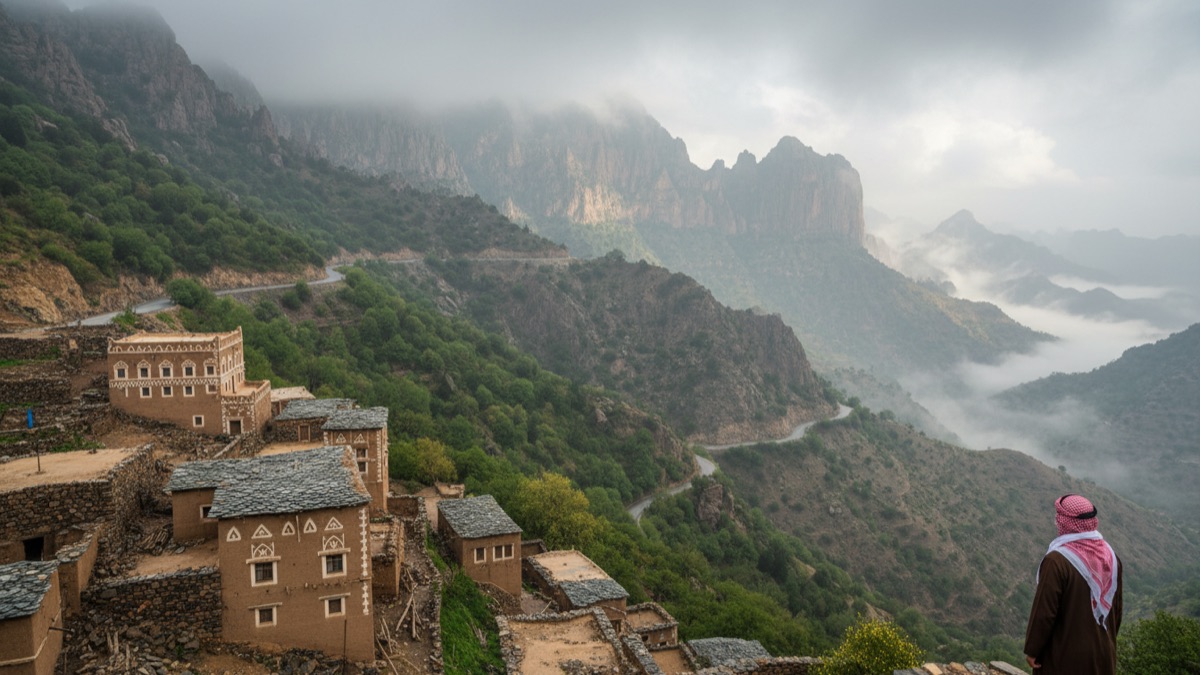
Abha and the Mountains of Asir
While much of Saudi Arabia is associated with desert, the Asir region in the southwest is a world apart. Here, the Sarawat Mountains rise steeply from the Tihamah coastal plain, creating cool plateaus, terraced farms, and mist-covered peaks. The regional capital, Abha, sits at 2,270 meters above sea level and offers a climate so mild that locals wear jackets in summer while Riyadh swelters.
Asir is home to some of the country's richest traditions. The region's stone and timber architecture, colorful tribal patterns, and distinctive music set it apart from the rest of the kingdom. This guide covers the essential experiences: walking the hanging bridge at Soudah Peak, exploring the museum village of Rijal Almaa, understanding the microclimates, and finding the best places to eat Aseedah and Haneeth.
Asir Region Overview
Asir lies in southwestern Saudi Arabia, bordering Yemen to the south and the Red Sea coastal plain to the west. The region is named after the Asir tribe and has historically been a meeting point between the Arabian Peninsula and the Horn of Africa. Its mountains capture moisture from the monsoon, producing the highest rainfall in the kingdom and supporting agriculture that would be impossible elsewhere in Saudi Arabia.
| Topic | Details |
|---|---|
| Regional capital | Abha |
| Highest peak | Jebel Sawda, approximately 3,000 meters |
| Summer temperature | 15-28°C in Abha, cooler at higher elevations |
| Main airport | Abha International Airport (AHB) |
| Known for | Mountains, heritage villages, honey, qat cultivation |
| Best time to visit | September to May, especially during the monsoon |
The region is divided into the highlands around Abha, the fertile foothills of Khamis Mushait, and the hot coastal strip of Jizan. Most visitors spend their time in the highlands, where the air is fresh and the views stretch across terraced valleys to the distant plains.
Abha City & the High City
Abha is the largest city in Asir and the natural base for exploring the region. Unlike Saudi Arabia's oil-era capitals, Abha has grown organically around its mountain setting, with neighborhoods climbing hillsides and roads following ridges. The result is a city that feels green, walkable, and unexpectedly relaxed.
The High City, or Al-Soudah, is the city's most famous modern attraction. Built on a cliff edge, it features a cable car, restaurants, cafes, and viewing platforms that look out over the Sarawat Mountains. The views are spectacular at any time, but the experience is best during the Saudi summer monsoon, when clouds roll through the valley and the temperature drops sharply.
Abha Dam Lake is another favorite spot. The artificial lake is surrounded by walking paths, picnic areas, and small cafes. On weekends, families gather to rent paddle boats and watch the lights reflect on the water. Green Mountain, named for the green lights that illuminate it at night, has a restaurant at the summit and a popular viewpoint.
The city's old quarter, Al-Muftaha Village, has been restored as an arts and culture district. It hosts galleries, craft workshops, and performances of traditional Asiri music and dance. The brightly painted houses and murals make it one of the most photogenic areas in Abha.
Soudah Peak & Jebel Sawda
Soudah Peak is the highest point in Saudi Arabia and the centerpiece of the kingdom's developing mountain tourism strategy. The area around the peak has been designated as a major ecotourism destination, with new trails, viewing platforms, and a luxury camp-style resort. The mountain itself, also known as Jebel Sawda, rises to approximately 3,000 meters.
The most striking feature of Soudah is the hanging bridge, a cantilevered walkway that extends over the edge of the escarpment. Walking out onto it is not for those with a fear of heights, but the views of the clouds and valleys below are unforgettable. Several hiking trails begin near the visitor center, ranging from short paved paths to longer routes through juniper forest.
Wildlife is a bonus. The high mountains are home to Arabian baboons, foxes, eagles, and a variety of migratory birds. Early mornings are the best time to spot animals and to avoid the afternoon mist that can obscure the views.
A cable car connects parts of the Soudah development to lower viewpoints, making the area accessible to visitors who prefer not to hike. The ride itself is an attraction, floating above juniper canopy and rocky slopes. Whether you walk or ride, arrive early to secure parking and to experience the mountain before the afternoon mist rolls in.
Practical tip: Entry to the Soudah area may require a permit or timed ticket during peak periods. Check the official tourism app before traveling, and bring warm clothing even in summer.
Rijal Almaa Heritage Village
Rijal Almaa is one of the most impressive heritage villages in Saudi Arabia. Located about 45 kilometers southwest of Abha, it sits in a valley where traditional stone houses rise several stories high. The buildings are constructed from local stone, slate, and juniper wood, with flat roofs and small windows that insulate against both heat and cold.
The village has been carefully restored and now functions as an open-air museum. Inside the main fortress, exhibits explain the history of the Asir tribes, the trans-African trade routes, and the unique architectural techniques used in the region. The Rijal Almaa Museum also displays traditional clothing, jewelry, weapons, and household items.
Walking through the village feels like stepping back several centuries. Narrow alleyways connect houses that were built for defense as much as for living. Some buildings have been converted into cafes and craft shops, but the overall atmosphere remains authentic. The village hosts cultural festivals throughout the year, featuring traditional music, dance, and poetry.
Photography tip: Visit in the late afternoon when the warm light brings out the colors of the stone walls. The contrast between the dark slate roofs and the green valley behind is especially striking.
Asir National Park
Established in 1981, Asir National Park was the first national park in Saudi Arabia. It covers more than 1,600 square kilometers of mountains, forests, and valleys, protecting ecosystems that are rare elsewhere on the Arabian Peninsula. The park is centered on the high Sarawat escarpment and includes Soudah Peak, Jebel Sawda, and several smaller peaks.
The landscape is dominated by juniper and wild olive trees, with seasonal wildflowers appearing after rain. The park's trails vary from gentle walks suitable for families to demanding hikes for experienced trekkers. Rangers are present at the main entrances and can advise on current conditions. The best-known route is the walk to the summit of Jebel Sawda, which begins at the Soudah visitor center and climbs through scented juniper woodland before opening onto bare rock viewpoints.
Beyond hiking, the park supports activities such as birdwatching, camping, and photography. Several designated picnic areas have basic facilities, though visitors should bring food and water because shops are limited inside the park. The nearby town of Al-Soudah serves as the main gateway, with hotels, restaurants, and equipment rentals.
The park is also important for conservation. Restoration projects aim to protect the juniper forests from overgrazing and climate stress. Visitors are asked to stay on marked trails, carry out their rubbish, and avoid disturbing wildlife.
Climate & Best Time to Visit
Asir's climate is the main reason travelers visit. While the rest of Saudi Arabia bakes from May to September, Abha and the highlands remain pleasantly cool. The key factor is altitude: every 1,000 meters of elevation reduces the temperature by roughly 6°C.
| Location | Elevation | Summer daytime | Winter daytime |
|---|---|---|---|
| Abha | 2,270 m | 20-30°C | 8-20°C |
| Soudah Peak | ~3,000 m | 15-25°C | 5-15°C |
| Jizan coast | Sea level | 35-42°C | 25-32°C |
The Saudi monsoon, locally called the Al-Barq season, usually arrives between June and September. It brings afternoon clouds, light rain, and dramatic misty scenery to the highlands. This is the most popular time for domestic tourism, so hotels fill up and prices rise.
For international visitors, the shoulder months of September to November and March to May offer a good balance of clear skies, green landscapes, and fewer crowds. Winter can be cold at night, but it is excellent for hiking and photography. Rainfall is highest from July to September and can be heavy enough to cause temporary road closures in wadis, so check weather reports before setting out on mountain drives.
Asiri Culture & Cuisine
Asir has a strong regional identity that is visible in its architecture, crafts, and clothing. The most recognizable art form is Asiri qut, a style of geometric wall painting using bright colors and patterns that traditionally protected homes and expressed tribal identity. These designs now appear on souvenirs, gallery walls, and even modern interiors across Saudi Arabia.
Traditional Asiri dress is equally distinctive. Women in the region historically wore boldly patterned dresses and elaborate silver jewelry, while men wore embroidered jackets and daggers on special occasions. Many of these items are still produced by local artisans and can be found in Abha's craft markets. The annual Abha Summer Festival and regional heritage events showcase music, dance, poetry, and fashion, drawing visitors from across the kingdom.
Music and dance are also distinctive. The Al-Azawi dance, performed with drums and chanting, is part of celebrations and festivals. Traditional markets in Abha and Khamis Mushait sell silver jewelry, woven textiles, hand-carved wooden spoons, and leather goods.
The food of Asir reflects both mountain agriculture and coastal trade. Haneeth is slow-roasted lamb, seasoned with spices and cooked until the meat falls off the bone. Aseedah is a savory porridge of wheat and meat, traditionally eaten by hand. Asiri honey, produced from mountain wildflowers, is prized across the kingdom and makes an excellent gift.
Local markets are the best places to buy authentic products. The Abha Friday Market and the markets in Khamis Mushait sell everything from handwoven rugs to medicinal herbs and mountain honey. Honey vendors often let you taste before you buy, and the darker, more floral varieties are usually the most prized.
Where to eat: Abha has a growing restaurant scene, with options ranging from traditional lamb grills to modern cafes. Try the local restaurants along the airport road and in the High City for mountain views with your meal.
Where to Stay
Abha has the widest range of accommodation in the region. International chains, business hotels, and boutique guesthouses are all available, with most clustered along the main road between the airport and the city center.
Near Soudah Peak: Several new mountain lodges and camps offer direct access to hiking trails and sunrise views. These are best for nature-focused travelers and those who want to escape the city.
Abha city center: The InterContinental Abha and Abha Palace Hotel are established choices with good facilities and views over the lake. Mid-range travelers can choose from several apartment hotels and local chains.
Khamis Mushait: The region's second city is more industrial but offers cheaper hotels and easy access to the southern mountains. It works well as a budget base if you have a car.
Getting There & Around
Abha International Airport has direct flights from Riyadh, Jeddah, Dammam, and several international destinations. The airport is about 25 kilometers from the city center, and taxis, Uber, and Careem are readily available. The drive from Jeddah to Abha takes roughly seven hours, while Riyadh is about ten hours away by road.
Within the region, a rental car is highly recommended. Public transport is limited, and many of the best attractions are scattered across mountain roads. The roads are generally good, though fog can reduce visibility suddenly on high passes. Drive slowly, use headlights, and be prepared for sharp bends.
For those who prefer not to drive, private drivers and guided tours can be arranged through hotels. Group tours to Soudah Peak, Rijal Almaa, and the national park are common and can be booked in Abha.
Practical Travel Tips
Dress in layers: Temperatures can change quickly with altitude and time of day. A warm jacket is essential if you plan to watch sunrise at Soudah Peak, even in August.
Book early for monsoon season: Domestic tourism peaks in July and August. Flights and hotels fill up, and popular sites become crowded. Booking a month ahead is wise.
Respect local customs: Asir is generally conservative. Modest dress is appreciated, especially in villages and rural areas. Ask before photographing people, and remove shoes when entering heritage houses.
Carry cash: Card payments are common in Abha, but smaller villages, roadside honey sellers, and some parks prefer cash.
Altitude awareness: The high elevations are safe for most travelers, but the thin air can cause mild breathlessness during strenuous hikes. Take it easy on the first day and drink plenty of water.
Sources
- Visit Saudi Official Tourism Portal — Destination information for Abha, Soudah, and Asir
- Saudi Tourism Authority — Official travel updates and heritage project details
- UNESCO World Heritage Centre — Al-Ahsa and cultural landscape references
- Lonely Planet — Abha — Practical travel guide and regional advice
- Rough Guides — Saudi Arabia — Cultural background and travel context
- Kayak Travel Guide — Flight and hotel data for Abha
FAQ
Is Abha worth visiting?
Yes. Abha offers a cooler climate, mountain scenery, and strong regional culture that is quite different from Riyadh or Jeddah. It is ideal for travelers interested in nature, heritage, and outdoor activities.
How cold does it get in Abha?
Winter nights can drop to around 8°C, and higher peaks like Soudah can be even colder. Summer temperatures in Abha are usually 20-30°C, making it a popular domestic escape.
What is the best time to visit Asir?
September to May is ideal. The monsoon season from June to September brings green scenery but also crowds and higher prices.
How do I get to Abha?
Abha International Airport has domestic flights from major Saudi cities and some international connections. Driving from Jeddah takes about seven hours and from Riyadh about ten hours.
What is Soudah Peak?
Soudah Peak, also known as Jebel Sawda, is the highest point in Saudi Arabia at roughly 3,000 meters. It features a famous hanging bridge, hiking trails, and panoramic views.
What food should I try in Asir?
Try Haneeth, slow-roasted lamb; Aseedah, a wheat-and-meat porridge; and Asiri honey. Fresh fruit and bread from mountain villages are also excellent.
Do I need a car in Abha?
A car is recommended to reach Soudah Peak, Rijal Almaa, and the national park. Within Abha city, Uber and Careem are available.
Is Rijal Almaa open to visitors?
Yes, Rijal Almaa operates as an open-air heritage museum and village. It is open most days, though hours may vary during prayer times and holidays.
About the Author
doyouknow.app AI-assisted Editorial Workflow — This article was prepared with AI-assisted research and editing, using the sources listed on the page. It is not based on firsthand testing, on-the-ground reporting, or a claim of personal experience or professional credentials. Please check official sources for current details.
Loved This Article?
Share it on WhatsApp → Share on WhatsApp
Get more Saudi Arabia travel tips in your inbox — Subscribe to our newsletter for weekly surprising stories from Dubai, Saudi Arabia, and beyond.