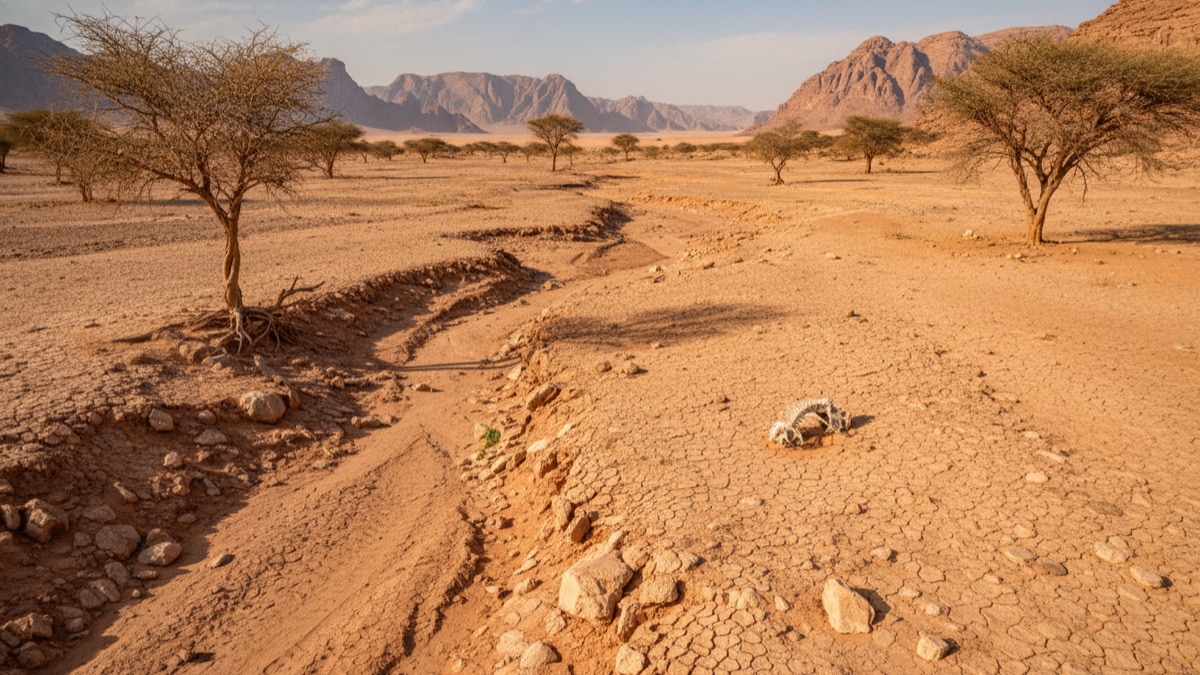
Did You Know Saudi Arabia Has No Rivers?
Saudi Arabia has no permanent rivers.
That is not a metaphor. The Kingdom has no river that flows year-round to the sea, even though it is one of the largest countries in the world by area.
If you assume every large country must have rivers, the Saudi case is surprising. Saudi Arabia is one of the largest countries on Earth to depend almost entirely on non-river water sources.
Why Saudi Arabia Has No Rivers
The reason is climate and terrain. Most of the Kingdom sits in the dry climate of the Arabian Peninsula. Annual rainfall in many regions is very low, often far below what is needed to feed permanent rivers.
Rivers generally need three conditions:
- Regular rainfall or snowmelt in enough volume to keep water moving.
- Sloping terrain that gathers water into a channel.
- A receiving basin such as a lake, sea, or ocean.
In Saudi Arabia, rain is rare, evaporation is high, and many dry valleys carry water only after storms. Even major wadis can flood briefly and then return to dry channels. One example often discussed in Arabic sources is Wadi Al-Raml.
Does That Mean Saudi Arabia Has No Water?
No. Saudi Arabia has water resources, but they are not river-based:
- Groundwater: ancient aquifers and wells have supported settlements and agriculture.
- Desalination: Saudi Arabia is one of the world’s major producers of desalinated seawater.
- Dams: hundreds of dams capture floodwater and support groundwater recharge.
- Water reuse: treated wastewater is increasingly reused in agriculture, landscaping, and industry.
Ancient Cities and Groundwater
Many old Arabian settlements grew around groundwater. Makkah, Madinah, Yanbu, and Al Ahsa all depended on wells, springs, or oasis systems. Al Ahsa, in the Eastern Province, is one of the world’s great oasis landscapes. Its water comes from underground layers, not a surface river. See the general concept of an aquifer.
What Is a Wadi?
A wadi is a dry valley or seasonal watercourse. It may carry powerful water during flash floods after heavy rain, but it is not a permanent river. Saudi Arabia has many wadis, and they are important for drainage, settlement history, and groundwater recharge.
How Saudi Arabia Manages Water
Water management is a major national challenge. Saudi Arabia uses several strategies:
- Demand reduction: the National Water Company’s Qatrah-related programs encourage lower consumption. NWC
- Desalination expansion: coastal and regional projects add large volumes of potable water.
- Municipal planning: city and infrastructure planning affect how water is distributed and conserved. MOMRA
- Research: scientists study water reuse, cloud seeding, and ways to capture humidity and stormwater more efficiently.
The central challenge is that many groundwater reserves recharge very slowly. Water accumulated over thousands of years can be consumed in decades, which makes desalination and reuse essential parts of the future.
Frequently Asked Questions
Does Saudi Arabia have permanent rivers?
No. It has wadis and seasonal flood channels, but no permanent river system flowing year-round.
How does Saudi Arabia get drinking water?
Through desalination, groundwater, water treatment, storage, and distribution systems.
Are there other countries without rivers?
Yes. Several Gulf and desert countries have no permanent rivers. Saudi Arabia is the largest among them by area.
Could climate change create rivers in Saudi Arabia?
That is not expected in the near term. Climate change may intensify storms, but permanent rivers require sustained rainfall patterns.
What is Saudi Arabia’s biggest water challenge?
Groundwater depletion is a major challenge because some aquifers recharge far more slowly than they are used.